Originally published on Twitter on 1 October 2022.
Vinohradská was built long enough ago for people to not know the exact year.
Caution: multiple name changes coming.
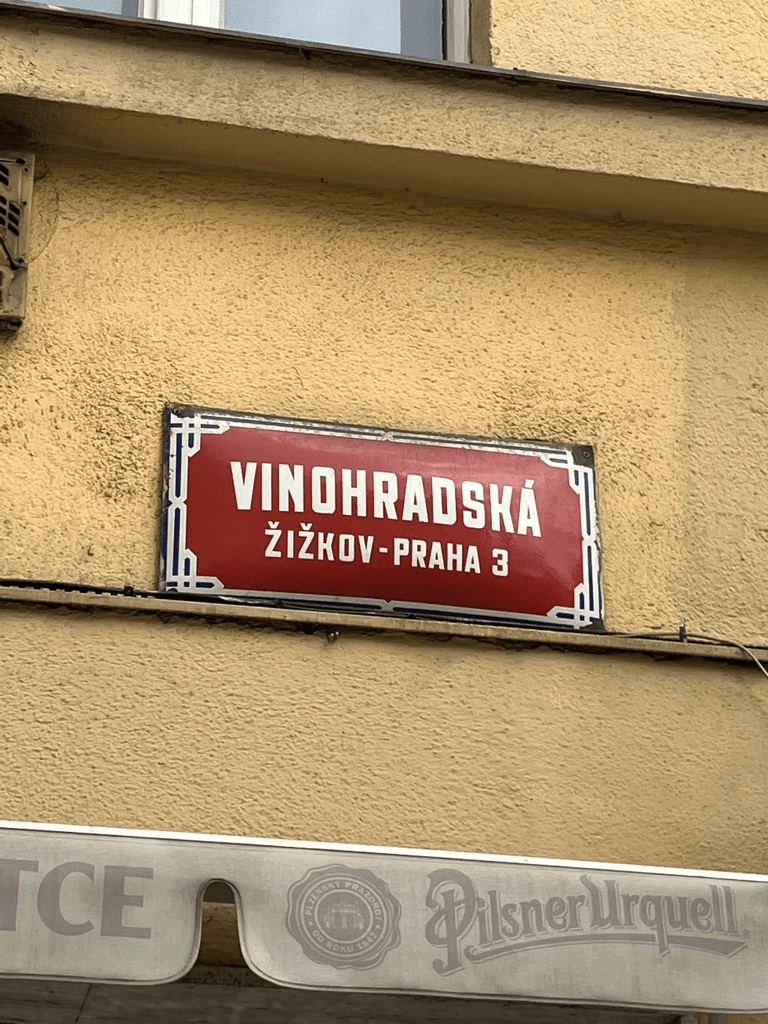
It was originally called Říčanská, as it led to Říčany in modern-day Prague-East (reputedly the best place to live in the country, or so says the Quality of Life Index: https://obcevdatech.cz/en/ricany).
Around 1873, it became Černokostelecká silnice, as it also led to what is now known as Kostelec nad Černými lesy (‘Fortified Church upon the Black Forests’, because this country is awesome), also now in in the Prague-East district.
From 1884 to 1920, it was Jungmannova, after Josef Jungmann (1773-1847), poet, leader of the Czech National Revival and the man often credited with creating the Czech language as we know it today.
Then, from 1920-40, and 1945-6, it was Fochova, after Ferdinand Foch, French Supreme Allied Commander during WW1, who was present at the Armistice and complained that the Treaty of Versailles was too lenient on Germany.
Which leads to the very unsurprising news that the Nazi occupiers changed the name (to Schwerinova, after Kurt Christoph von Schwerin (1684-1757), a Prussian Generalfeldmarschall who was killed in the Battle of Prague (Štěrboholy) during the Seven Years’ War).
From 1946 to 1962, it was Stalinova. I’m not going to give a potted biography but am going to say this: what a c**t.
Vinohradská is obviously named after Vinohrady, which itself is named after the many vineyards the district used to contain.
The most well-known building is probably Český rozhlas / Czech Radio at number 12 (do subscribe to #Vinohradska12 if you’re a Czech speaker, and https://english.radio.cz/newsletter/subscribe… / @RadioPrague if you’re not).
Whereas the most useful but definitely not the nicest is often Atrium Flora, and I have a real soft spot for Vinohradská tržnice (AKA ‘the really stylish Albert’) at number 50.

 What's in a Prague street name
Leave a comment