Originally published on Twitter on 20 October 2022.
Boleslavská was built in 1910.
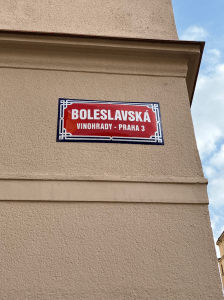
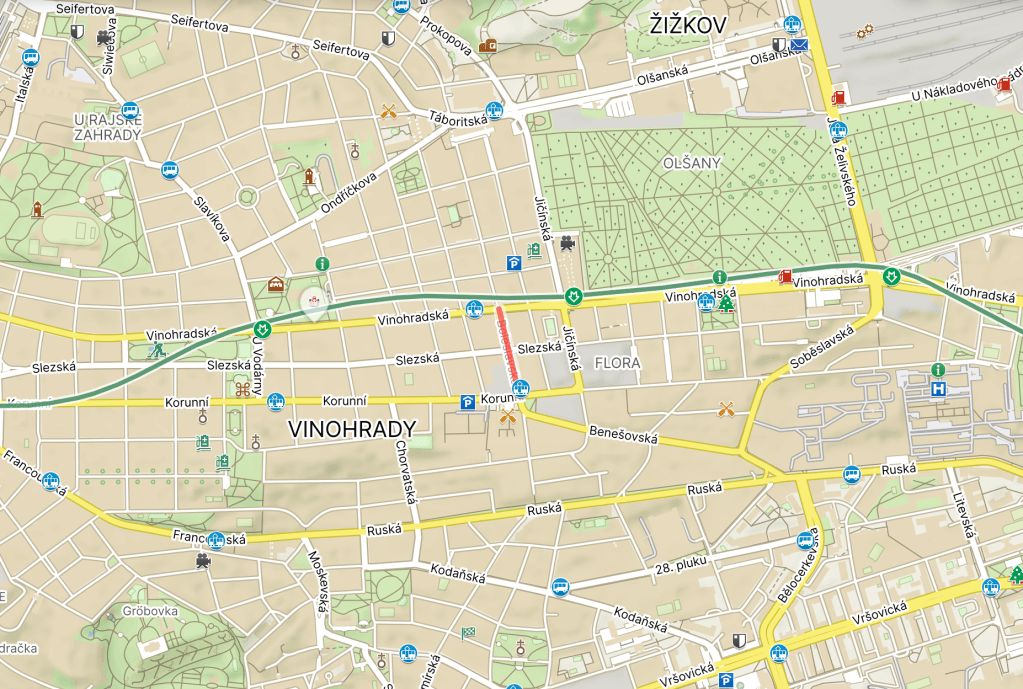
Stará Boleslav came into existence in the early 10th century, when the Přemyšlids built a castle here to guard their Central Bohemian domain.
A church was built too, dedicated to Arab physicians and two Christian martyrs, Saints Cosmas and Damian.
This church gained notoriety in 935, when Václav I was murdered at its door, presumably by his brother Boleslav.
Břetislav I established a basilica, dedicated to Václav, in the mid-11th century. This inevitably became a pilgrimage site, but disappeared in the 14th century.
Like other cities in the region, SB suffered in the Hussite Wars; unlike other cities we’ve mentioned, it didn’t particularly recover after them either, at least not until the late 15th century, when, encouraged by the Jesuits, it became a site for Marian pilgrimages.
The Church of the Assumption of the Virgin Mary in SB, built in the early 1600s, includes an image of the so-called Palladium of the Czech lands, a Gothic metal relief of the Virgin Mary with child.
And SB gets quite significant traffic every 28 September too (the date of Václav’s murder and also Czech Statehood Day.
Despite all this, Le Monde wrote in 2009 that SB might be one of the most unreligious towns in the Czech Republic, i.e. in the world: https://www.lemonde.fr/europe/article/2009/09/25/la-republique-tcheque-marquee-par-l-atheisme-se-prepare-a-la-visite-du-pape_1245096_3214.html
In 1960, the town joined with its neighbour to form Brandýs nad Labem-Stará Boleslav (i.e. ‘doing a Brighton and Hove but 37 years earlier’).
Only one town in the Czech Republic, the wonderfully named Nová Ves u Nového Města na Moravě, has a longer title.
Hněvkovice na levém břehu Vltavy deserves a special mention too.
And for the grammar fans who are wondering why it’s not Starý Boleslav?
In Old Slavonic, the name of the settlement was actually ‘Boleslav’ plus the suffix ‘-jъ’, meaning ‘Boleslav’s (castle).
‘jъ’ was a soft consonant ending, which, as in modern-day Czech, often leads to feminine nouns. At some point, the ‘jъ’ became silent, but ‘Boleslav’ – when not used as a man’s name – remained feminine.
Other examples of feminine cities that you might not expect in Czech include Plzeň (possibly Plzen’s Castle) and Olomouc (Olomút’s Castle).
Whereas other feminine cities that dropped the jъ over time include Mysliboř, Svatoslav, Slaviboř and Telč.

 What's in a Prague street name
Leave a comment