Originally published on Twitter on 23 October 2022.
Perunova was built in 1889.
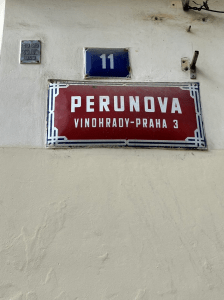

Perun is a Slavic god and quite the multitasker, being the god of the sky, thunder, lightning, storms, rain, law, war, fertility and oak trees.
He’s analogous to Thor and Mars.
There are multiple potential origins for his name – for example, ‘perti’ is an old Slavic verb meaning ‘to beat’, and there’s an analogous Baltic god called Perkūnas whose name means ‘oak tree’.
Perun is first mentioned in the sixth century, though not by name – in his History of the Wars, Procopius states that a South Slavic tribe regarded the ‘creator of lightning’ as their lord.
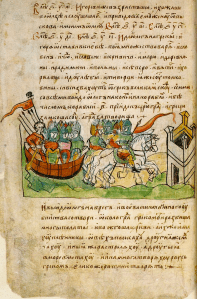
The Nestor Chronicle, or the Rus’ Primary Chronicle, composed in Kyiv around 1113, states that Perun was the divine guarantor for multiple treaties between Kievan Rus’ and the Byzantine Empire between 907 and 971.
When Volodymyr the Great became Grand Prince of Kyiv and ruler of Kievan Rus’ in 980, he erected statues to five pagan gods, including Perun, at his palace. He got rid of them (quite brutally) when he converted to Christianity eight years later.

Place names which are possibly named after Perun include the Pirin Mountains in Bulgaria, the village of Perná in Břeclav district, and the Austrian village of Parndorf.
Surnames stemming from his name include Peruničić (in Montenegrin) and Perunovski (in Macedonian).
Meanwhile, in Slovak, Perun is known as both Perún and Parom; ‘Parom te trestal!’ (‘Parom punished you!’) is used as a curse, as is ‘Do paroma’.
There’s also the Polish ‘idź do pioruna’ (‘Go to Perun / Go to hell’).
It’s been reported that the Azov Regiment worships Perun, lighting a fire, asking Perun to bless their weapons, and then walking over the embers.
Here’s a video of the Azov Regiment erecting a statue of Perun in Mariupol:

 What's in a Prague street name
Leave a comment