Originally published on Twitter on 24 October 2022.
Řipská was built in 1889.
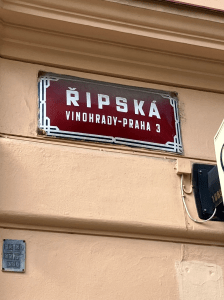
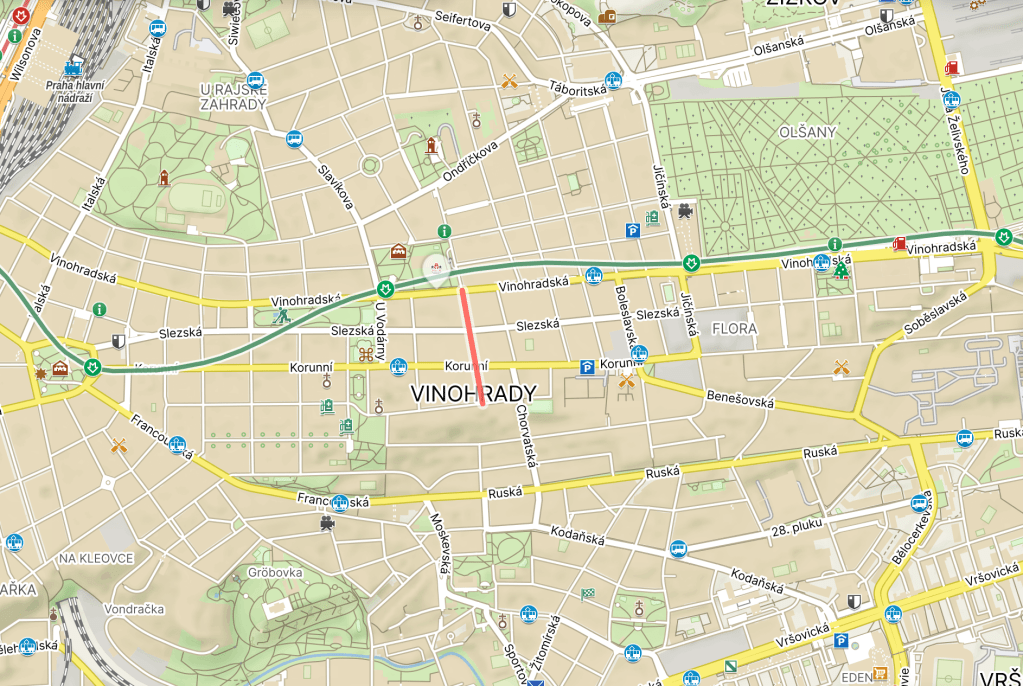
Říp is a hill, 461 metres high, located just south of Roudnice nad Labem, in the Ústí Region.
According to legend, Forefather Čech (Praotec Čech) arrived here with his people and climbed the hill.
He then told his brothers that this was the promised land.
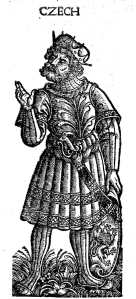
According to the Chronicle of Dalimil (https://whatsinapraguestreetname.com/2022/12/10/prague-3-day-114-dalimilova/), his words were:
“Zemi máme po své vůli.
Budou nám z ní plné stoly
zvěři, ptáků, ryb, včel dosti,
proti nepřátelům pevná dosti“.
Rough translation:
“We have a country at our will.
Our tables will always be full
(It has) enough beasts, birds, fishes and bees
And enough hardness against enemies”.
His brother Lech, meanwhile, went further east, and founded Poland.
Some versions of the tale state that the main reason Čech was fleeing was because he had been accused of murder.
The legend of Říp was revived by Václav Hájek z Libočan (https://whatsinapraguestreetname.com/2022/11/19/prague-3-day-15-hajkova/) in his notoriously ‘inventive’ Czech Chronicle.
The Romanesque St. George’s Rotunda, on top of the hill, is one of the oldest buildings in the country, first mentioned in writing in 1128.
There’s a sign near the rotunda that says ‘Co Mohamedu Mekka, to Čechu Říp’ – i.e. Říp is to the Czechs what Mecca is to a Muslim.
Říp became a popular pilgrimage site; on 10 May 1868, 20,000 people demonstrated there, an event inspired by similar demonstrations in occupied Ireland.
On that day, a stone was taken from Říp which would later become the cornerstone of the National Theatre in Prague: https://dvojka.rozhlas.cz/prvni-tabor-lidu-na-ripu-pochazi-odtud-i-kamen-do-zakladu-narodniho-divadla-8481960
Meanwhile, on this dark Monday morning, my OCD mind is asking itself why it’s Říp with an í but not Řipská with one.

 What's in a Prague street name
Leave a comment