Originally published on Twitter on 29 October 2022.
Náměstí Jiřího z Poděbrad was built in 1896.
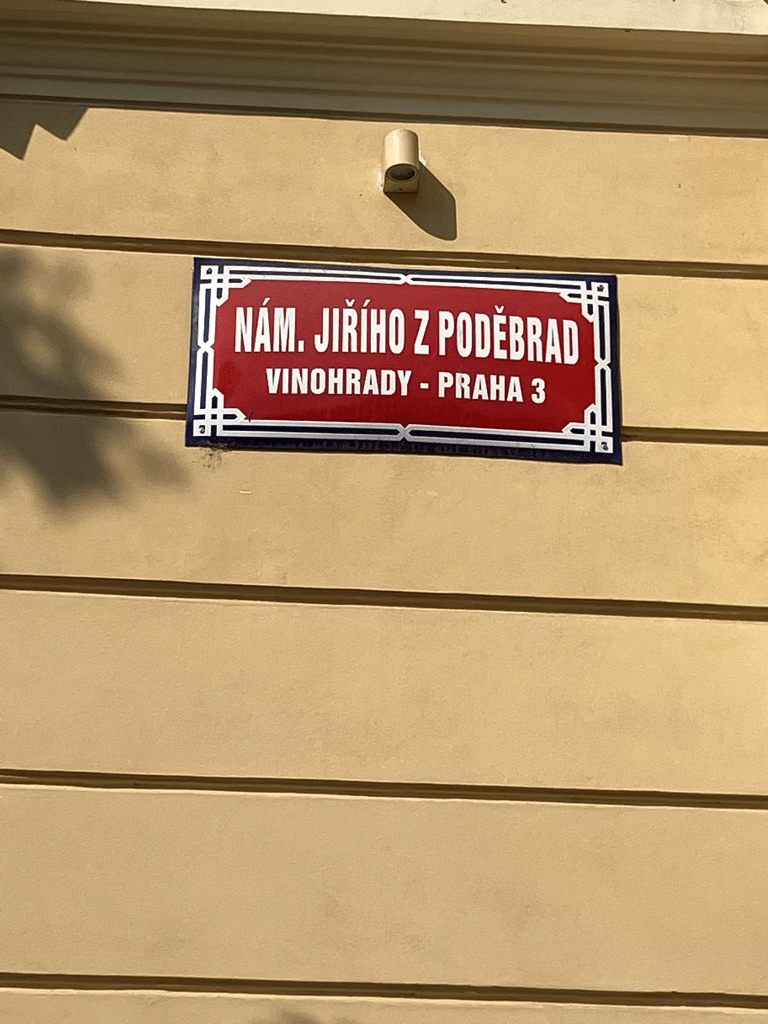
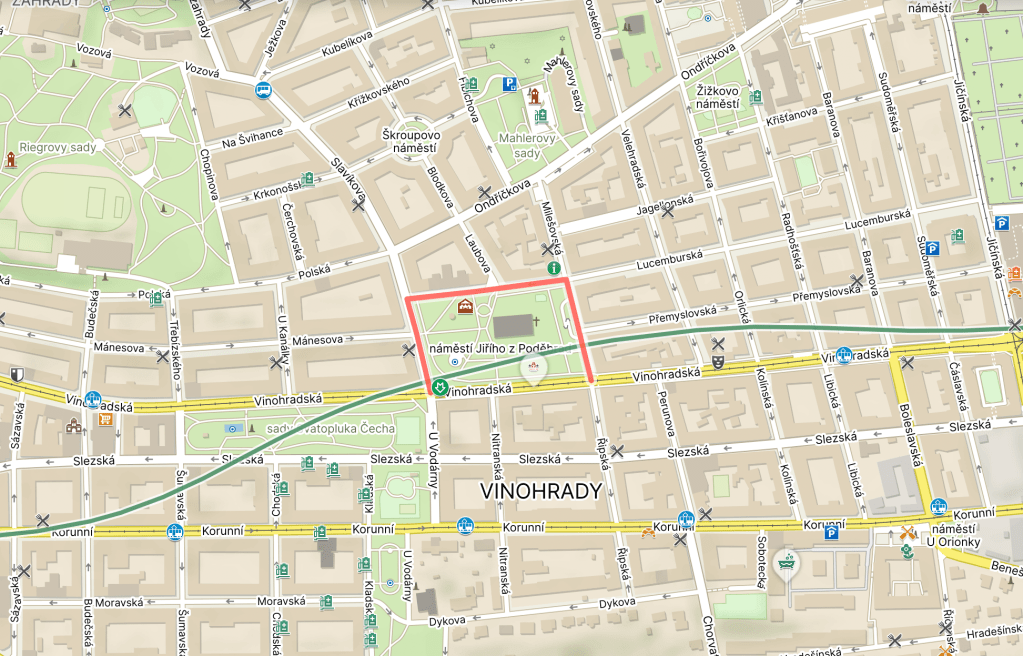
It was called Krále Jiřího (King George) until 1948, and it’s fften known as Jiřák if you’re Czech, often known as J-zee-P if you’re a foreigner (guilty, and I’m from a country where we say ‘zed’).
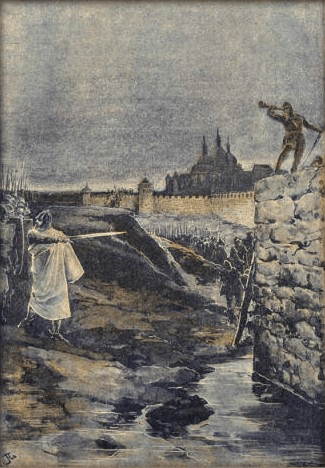
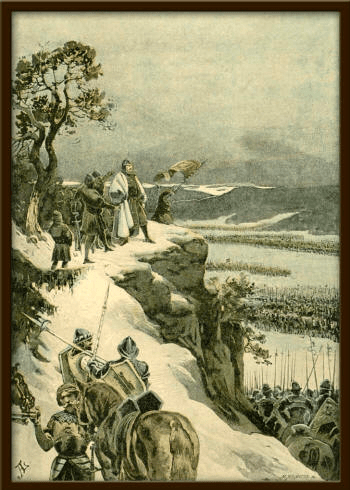
George of Poděbrady / Jiří z Poděbrad was born in 1420; his father was the Hussite warrior Viktorín z Poděbrad, who we can assume was away from home a lot during those early years and died in 1427.
(Pic of dad below)

JzP took part in the battle of Lipany (https://whatsinapraguestreetname.com/2022/12/23/prague-3-day-120-lipanska/) at the age of 14; in his late teens, he joined the so-called ‘Polish party’ which was strongly opposed to a Habsburg taking the throne.
He became a governor in the Boleslav region in 1440, and became head of the East Bohemian Utraquists in 1444.
In 1448, when Bohemia was strongly divided between Hussites and Catholics, JzP marched on Prague, conquering the capital easily. A civil war followed, but Jiří won this without major difficulties.
In 1451, Holy Roman Emperor Frederick III recognised Jiří as governor of Bohemia. The Czech nobility did the same at St. George’s Diet in Prague the following year.
When Ladislav Pohrobek (Ladislaus the Posthumous) died in 1457, it was clear to everyone that having a Catholic king ruling a largely Hussite population was not the easiest.
It wasn’t revealed until 500 years later that Ladislav had died of leukaemia; rumours spread saying that JzP or his wife Johana had poisoned him.
In 1458, the Czech estates elected JzP king. He proved to be a pragmatic ruler, earning the respect of both the Hussites and the Catholics.
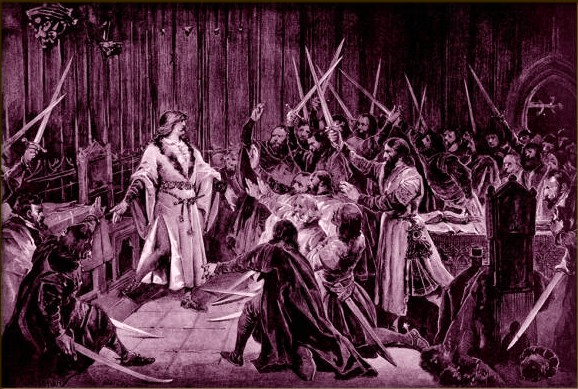
His rule was based on the Compacta of Prague, which promised religious tolerance. However, in 1462, Pope Pius II decided to cancel the Compacts.

JzP suggested a solution which kind of preempted the EU: he proposed a treaty of all Christian powers, whereby all these countries would settle their previous differences.
Rome rejected this, as did Louis XI of France.
In 1465, the Catholic nobility, at Zelená Hora, formed an anti-Jiří alliance, which Pope Paul II encouraged.
In 1466, Paul ordered that JzP be deposed. The Bohemian War ensued, with Jiří putting the Zelena Horá alliance down in 1468, and then dealing with an attack by Matthias Corvinus of Hungary, a former son-in-law.
Matthias was declared King of Bohemia by the Catholic nobility in Olomouc in 1469, but the Hussite nobility refused to accept this.
JzP and Matthias reached an agreement whereby, in the case of the former’s death, he would be succeeded by a member of the Jagiellonian dynasty (https://whatsinapraguestreetname.com/2023/02/26/prague-3-day-154-jagellonska/).
This would come into effect in 1471, when Jiří died and was succeeded by Vladimir Jagellonský.
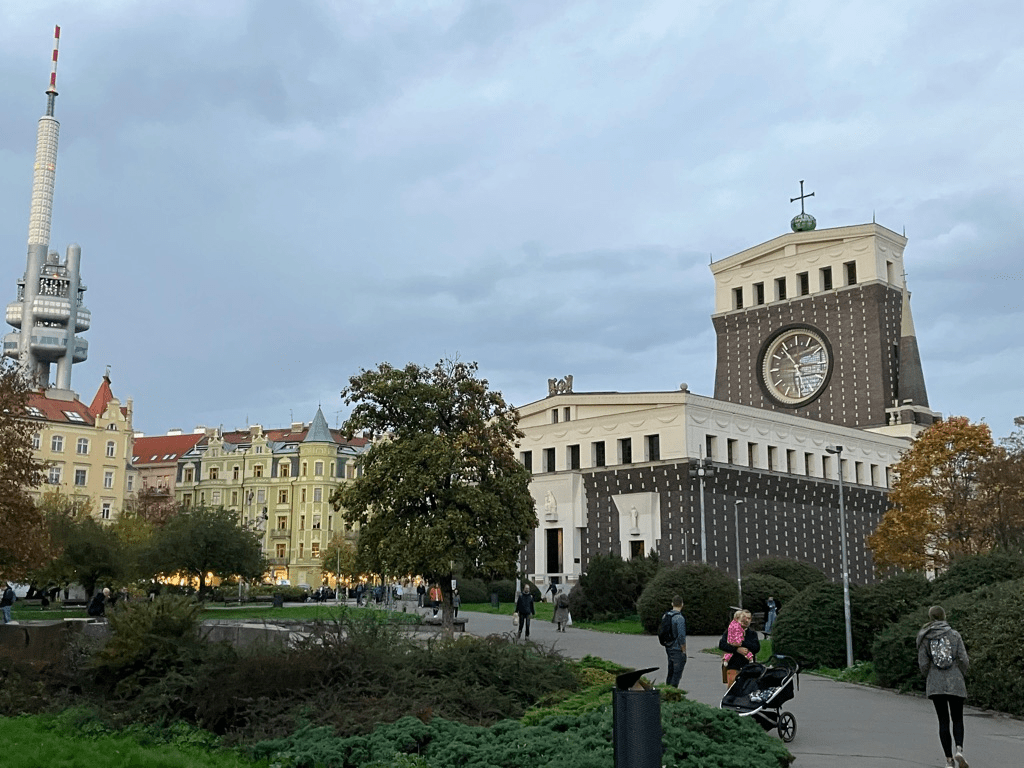
The distinctive church on the square is the Roman Catholic Church of the Sacred Heart of the Lord, by Slovenian architect Josip Plečnik.
The square is also the location of some very good markets.
Insider tip: on Thursdays, there’s an Armenian stall on Thursdays that not only serves an excellent kebab, but may also happen to sell you very strong red wine when all you asked for was pomegranate juice.
A tough afternoon at work followed.
Paintings within this post are by Czech painter Adolf Liebscher (1857-1919).

 What's in a Prague street name
Leave a comment