Originally published on Twitter on 16 November 2022.
‘U Divadla’ translates as ‘By the Theatre’ and was built in 1988.
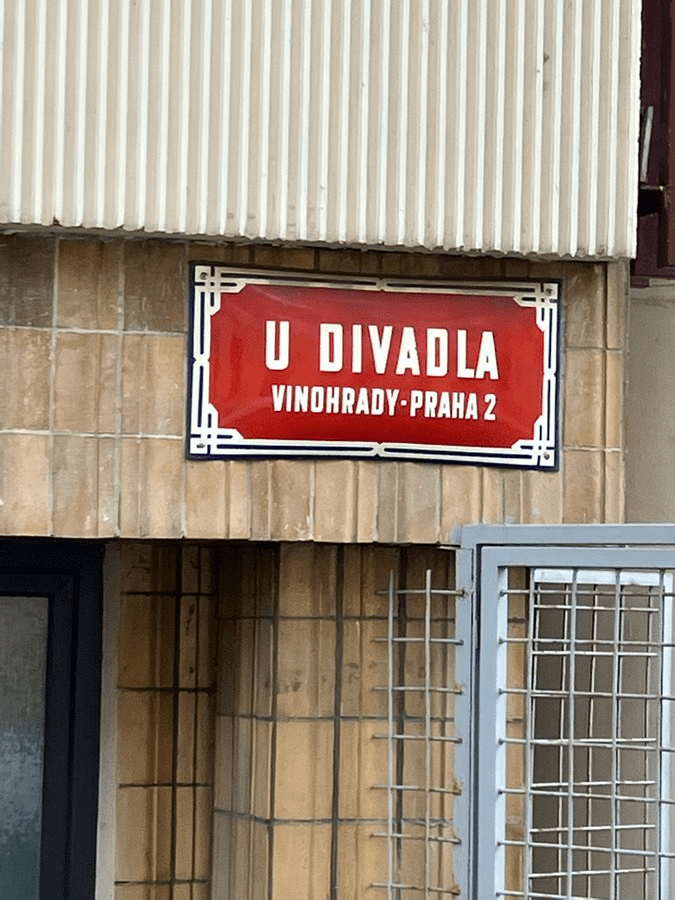

The ‘theatre’ in question is, nowadays, the State Opera, which took the place of the Novoměstské divadlo / New Town Theatre (see https://whatsinapraguestreetname.com/2023/12/24/prague-2-day-7-na-smetance/).
Ever been to this place on a date, wearing a polo neck and jeans, only to realise everyone else is wearing full black tie? I have.
Anyway.
The theatre was built on the initiative of the city’s German-speaking population, who lacked a theatre of their own. The design was by the Vienna-based Fellner & Helmer studio.
These guys designed a heck of a lot of beautiful buildings (check Wikipedia) – here are my not-very-recent pics of the theatres in Zagreb and Bratislava.

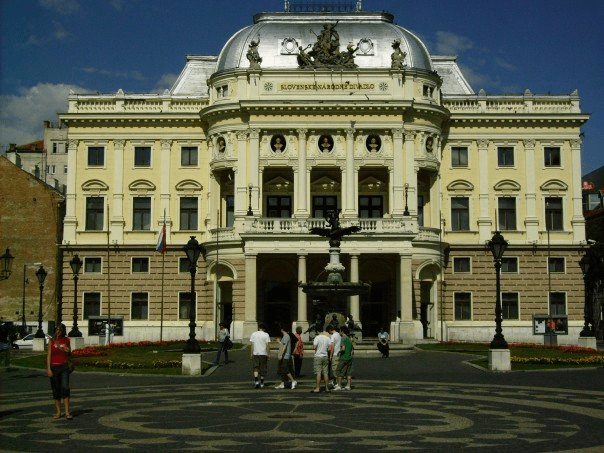
You’ve quite possibly seen a lot of their buildings for yourself.
Other buildings of theirs in the Czech Republic include the Mahen Theatre in Brno, the market colonnades, Grandhotel Pupp, and the Municipal Theatre in Karlovy Vary, and theatres in both Jablonec and Mladá Boleslav.
In Ukraine, they built the theatre in Chernivtsi, the Opera Theatre in Odessa, the Noble Casino in L’viv, and Hotel George, also in L’viv.
I don’t want to nick anybody else’s work, hence the lack of photos, but do give them all a Google.
They didn’t build anything in Russia, a fact which I currently hope architects the world over take inspiration from for decades to come.
The German Theatre started operating in 1888, and its façade still has some pretty clear signs of its origins, with Schiller, Goethe and Mozart all represented.
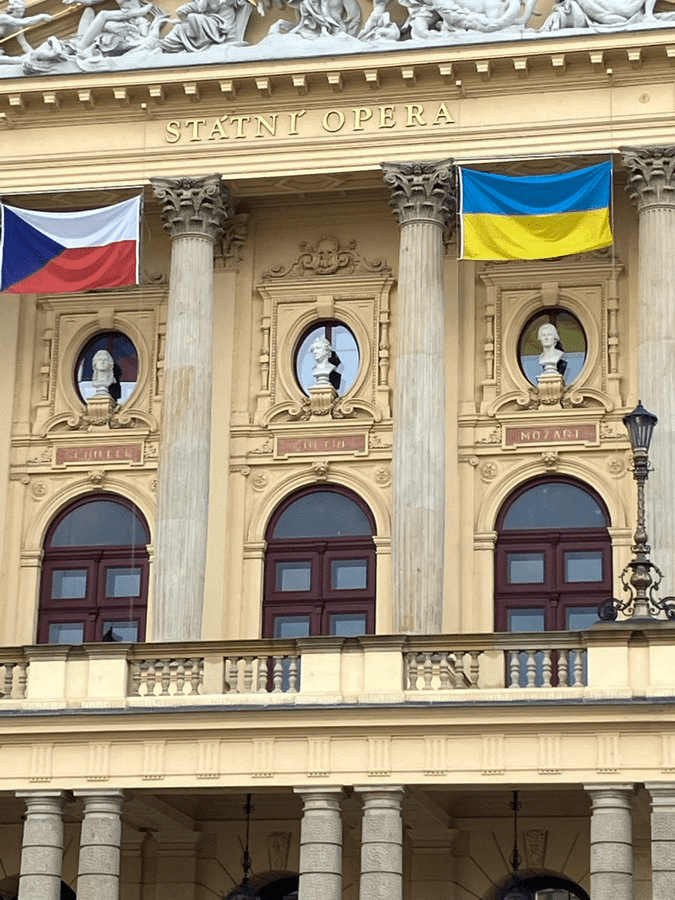
Perceived as liberal and anti-fascist in the 1930s, the Theatre was sold to the state in 1939.
Two months later, the Nazis established the Protectorate of Bohemia and Moravia, and the theatre became the German Opera House. It was used for Nazi political gatherings.
After WW2, the theatre became the location for the Divadlo 5. května / 5th May theatre, an avant-garde venue which, initially intending to rival the more staid National Theatre, became an inconvenience and was ultimately forced to merge with it in 1948.
The theatre reopened as the National Theatre’s second house in 1949, and was called the Smetana Theatre. Being a high-quality venue, it was frequently used to hold performances by guests from abroad.
After the Velvet Revolution, plans were made to make the theatre independent again; the Prague State Opera opened in 1992.
Closing for renovations in 2016, the theatre reopened its doors in January 2020 – but, for obvious reasons, it didn’t play to full houses for very long.
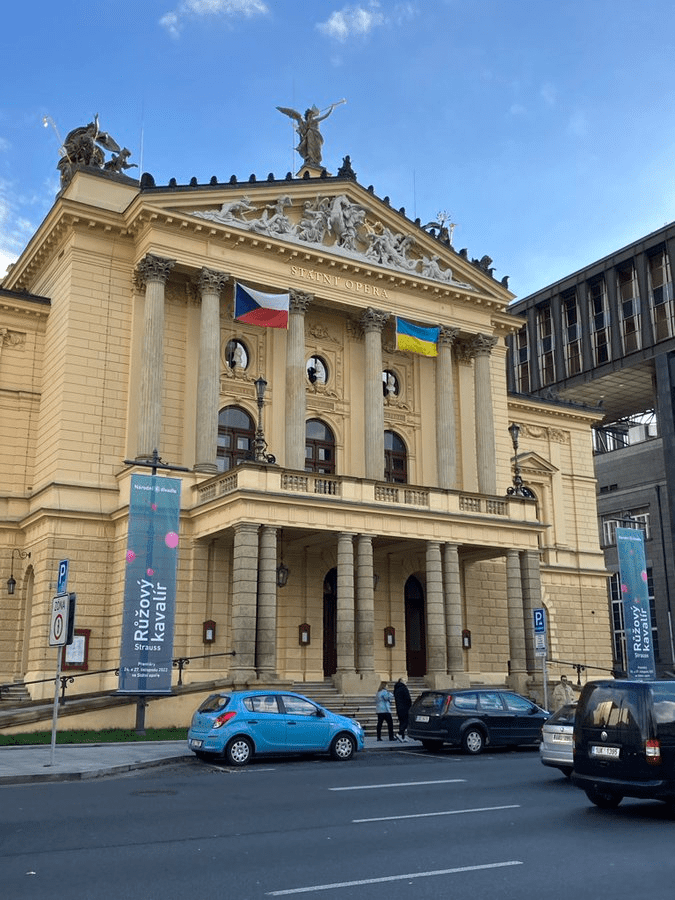
Post-lockdown, the Theatre’s repertoire is consistently impressive; tomorrow, it hosts Flammen, an opera based on the legend of Don Juan and composed by Austro-Czech Jewish composer Erwin Schulhoff (1894-1942).
The performance is part of ‘Musica non grata’, a project by the State Opera, the National Theatre and the German Embassy, promoting the legacy of interwar Czechoslovakian composers who were persecuted under Nazism.

 What's in a Prague street name
Leave a comment