Originally published on Twitter on 17 November 2022.
Mánesova was built in 1889.


From 1934 to 1940, and again from 1945-7, the road was Barthouva, after Louis Barthou, who had served as PM of France in 1913, and became Minister of Foreign Affairs in February 1934, only to be shot and killed while meeting Alexander I of Yugoslavia in Marseille in October.
Alexander, of course, was also assassinated; the killing was carried out by Velicko Kerin, a far-right Bulgarian terrorist, and had been planned by Ante Pavelić, head of the Croatian Ustaše.
British Pathé footage of the assassination is here:
Josef Mánes, meanwhile, was born into a family of artists in Prague’s Old Town in 1820.
From the age of 15, he studied at the Prague Academy of Arts, moving to Munich to continue his studies in 1844.
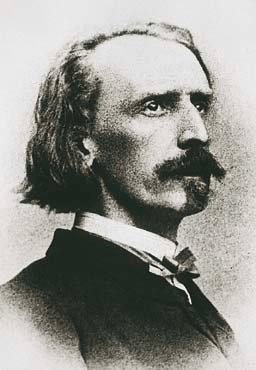
Returning to Prague, he started a relationship with the Mánes family’s maid, Františka Šťovíčková, who became pregnant by him in 1850. Josef’s sister Amálie fired Františka, who was left to raise her daughter, Josefina, by herself.
Sensing his family had him firmly in the ‘doesn’t really make our lives easier’ category, Josef moved to the castle owned by Count Bedřich Silva-Tarouca in Průhonice, staying there for twenty years. He produced many of his best works there.
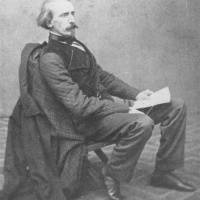
A founding member of artist forum Umělecká beseda in 1863, he designed costumes, banners and diplomas for the Sokol movement: https://cz.pinterest.com/pin/445997169330273785/
In 1866, he was asked to create paintings of the twelve months for Prague’s Astronomical Clock. You may remember the recent reproduction of this not being a roaring success: https://theguardian.com/world/2022/jun/02/pragues-orloj-clock-centre-row-artist-amateur-restoration
In the same year, his mental health started to deteriorate. A study trip to Rome only made things worse; Amálie travelled to Rome, finding him collapsed on the steps of the Trevi Fountain.
He succumbed to his illness in 1871, aged 51. It is believed that his disease was progressive paralysis caused by an advanced form of syphilis which attacked his brain.
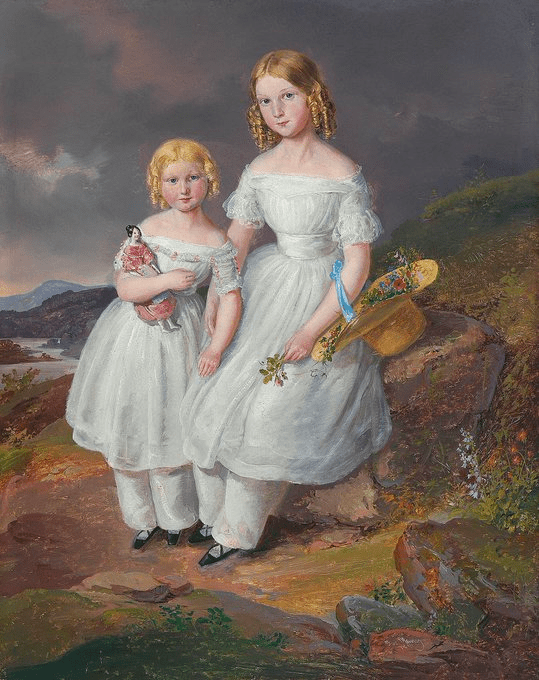
Mánes’s work covered several genres. He did landscapes, portraits and botanical studies. Here are two of his works: the Sisters František and Serafína Kolowrat Krakowská and Švadlenka (Seamstress).

The National Gallery also has a decent selection of his works: https://sbirky.ngprague.cz/katalog?author=Josef+M%C3%A1nes…
And the Mánes Association of Fine Artists / Spolek výtvarných umělců Mánes was founded in his honour in 1887. It’s located in the Diamond House on the Vltava.

Number 20 on Mánesova was the location of the workshop used by painter Otakar Štáfl. On 14 February 1945, an allied bombing raid landed here and killed both him (60) and his wife Vlasta (37), a writer of fairytales and children’s novels.

Number 20 now hosts cafe which I like very much, Kaaba.
At the risk of me getting all maudlin, please get coffee (or whatever you drink) with your friends more often, and let them know you appreciate them.


 What's in a Prague street name
Leave a comment