Originally published on Twitter on 20 November 2022.
Polská was built in 1900.
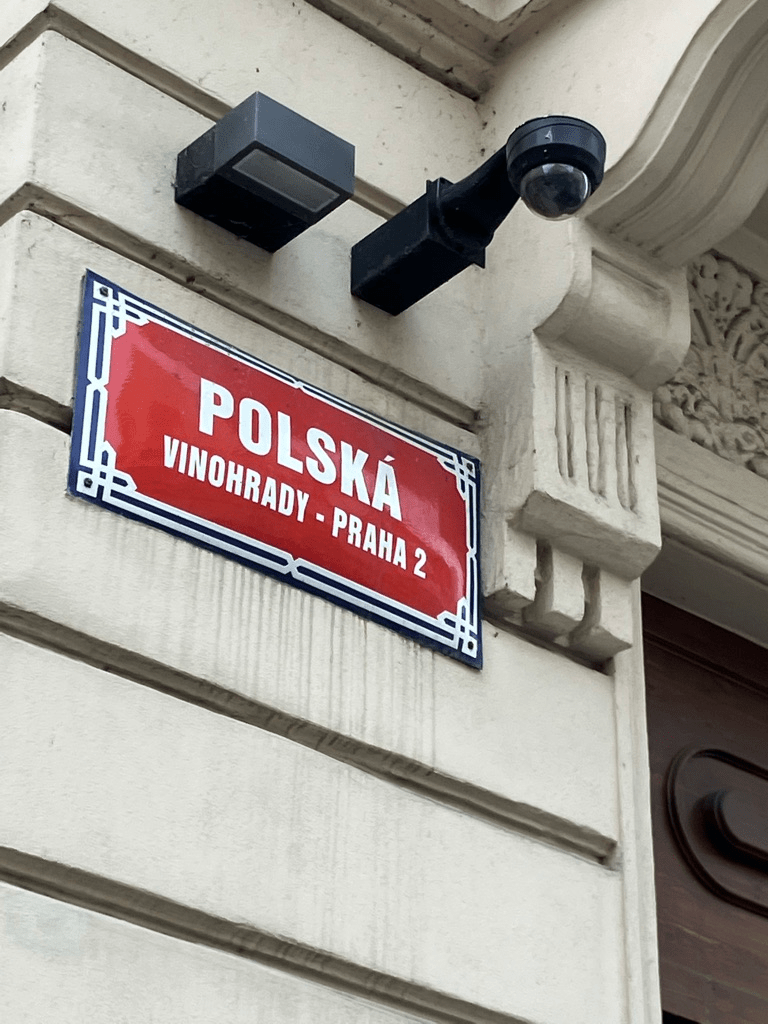
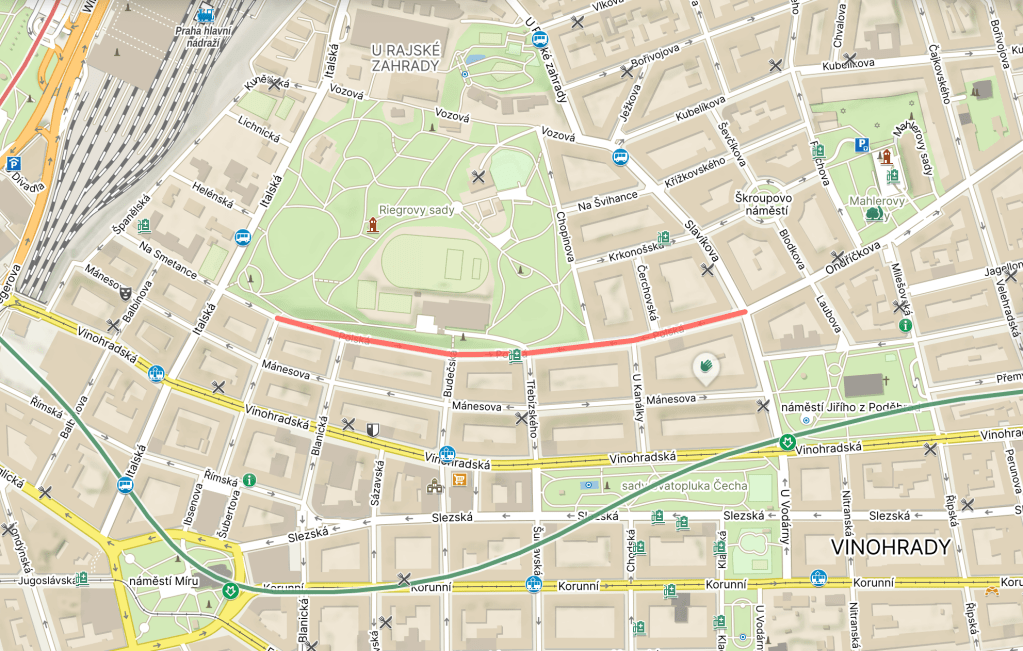
Until 1940, it was Nerudova, after Jan Neruda, journalist, writer, poet, art critic and figurehead of Czech Realism. More on him when I get to Prague 1.

Then, from 1940-5, it was Stifterova, after Adalbert Stifter (1805-68), an Austrian writer known for his vivid descriptions of landscapes.
It reverted to Nerudova from 1945-7.
It took Poland until 1947 to get a street – probably something to do with the fact that, after WW1, Czechoslovakia and Poland were like those two friends you never invite to the same party because they’ll have a very public argument and make everyone feel very uncomfortable.
The reason for this? As so often, borders.
After WW1, Poland and Czechoslovakia both laid claim to Cieszyn Silesia (Těšínsko).
While Těšínsko was mainly inhabited by Poles, it had also been part of the Kingdom of Bohemia, although a larger attraction than the history books was the fact that it was industrialised and rich in black coal.
When the Poles started planning for parliamentary elections in January 1919, the Czechoslovak army entered. The Entente Powers told the Czechoslovaks to damn well stop it, and a new demarcation line was set.
The final division of the territory between the two states was decided at the Treaty of Spa. Czechoslovakia got the west (and a lot of Polish residents to boot), while Poland got the east.
Czechoslovakia endeared itself to its (sort-of) new Polish population even less by declaring that they were actually Slovaks. Further exchanges of territory were ordered by the League of Nations, in 1924.
The border was set in 1925 and hasn’t changed since.
Inevitably, the number of famous Czech-Poles is quite high.
Top of the list is probably singer Ewa Farna, who’s been famous since she was a teenager and has managed to turn this into a major career in both CZ and Poland:
Ewa is from Třinec, as is Albert Černý, the Czech-Polish frontman of Lake Malawi:
2018 presidential candidate Jiří Drahoš was born in Český Těšín to a Czech father and Polish mother: https://www.bbc.com/news/world-europe-42674309
Polish is a language that I would gladly listen to forever.
Also, Poland is ridiculously underrated as a travel destination and has so, so, so much more to offer than Kraków.
When I first went to Warsaw in 2009, there was a multimedia display in the centre about 1989. The sort of thing that’s so good that you wish they’d kept it here permanently.
Here are the Prague bits that I took pics of at the time.


Polská is also the home of the Vinohrady branch of the Sokol gymnastics club. There’s a plaque here in tribute to possibly its most famous member, Alois Eliáš, PM of the Protectorate until he was murdered in 1942 for taking part in the anti-Nazi resistance.

 What's in a Prague street name
Leave a comment