Originally published on Twitter on 21 November 2022.
Horní (Upper) Blanická was built in 1889; Dolní (Lower) Blanická was built in 1896. They became one street in 1948.
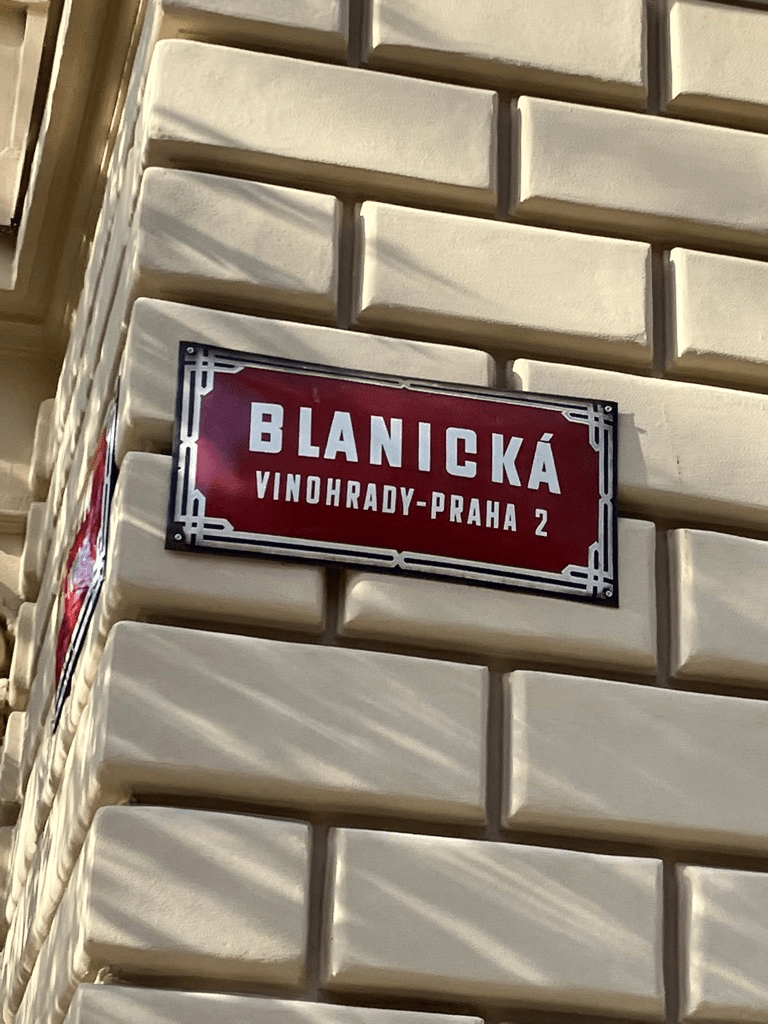

From 1940 to 1945, this was Schlözerova, after the aristocratic von Schlözer family, which included August Ludwig (1735-1809, a historian) and Dorothea (1770-1825, the first woman in Germany to receive a doctor of philosophy degree).
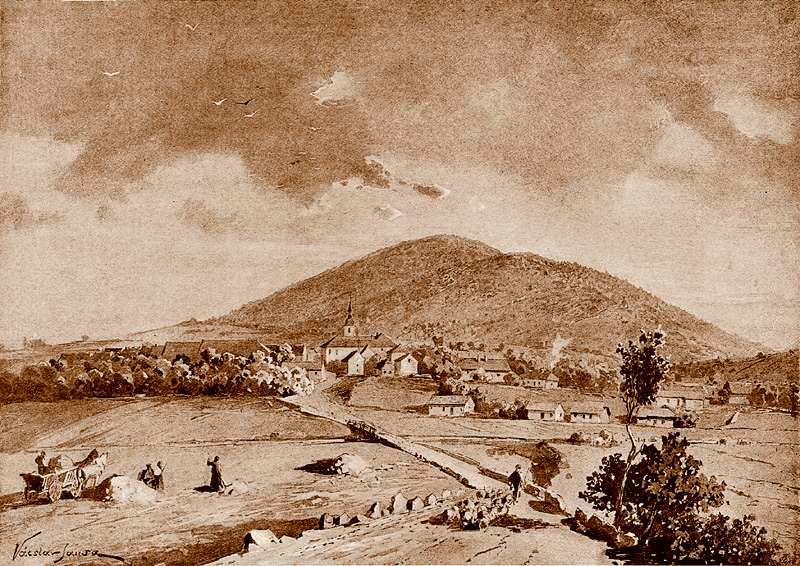
Velký Blaník (638 metres tall) is a forested mountain near Louňovice pod Blaníkem, in Benešov District, about 60 km south of Prague. There’s also a Malý Blaník (580 metres tall) nearby.
(Painting from 1891, by Václav Jansa)
The earliest documented settlement on the hill is a Celtic fort from around 400 BC.
A Celtic legend stated that there was an army sleeping inside the mountain which would come out to help its people at the appropriate moment.
By the 15th century, this legend had been adapted so that the head of the army in the mountain was Saint Wenceslas / Svatý Václav.
Pilgrimages to the church of Mary Magdalene, on Malý Blaník, started in the 16th century.
A new chapel to Mary was built in 1753, and its ruins are still visible.
The chapel was closed down in 1783 as part of Joseph II’s reforms, which abolished monasteries and church buildings.
In the following century, during the Czech National Revival, Blaník received renewed attention.
This led to pilgrimages to the mountain taking place in 1851 and 1867; Blaník also gave its name to the final movement of Smetana’s Má vlast.
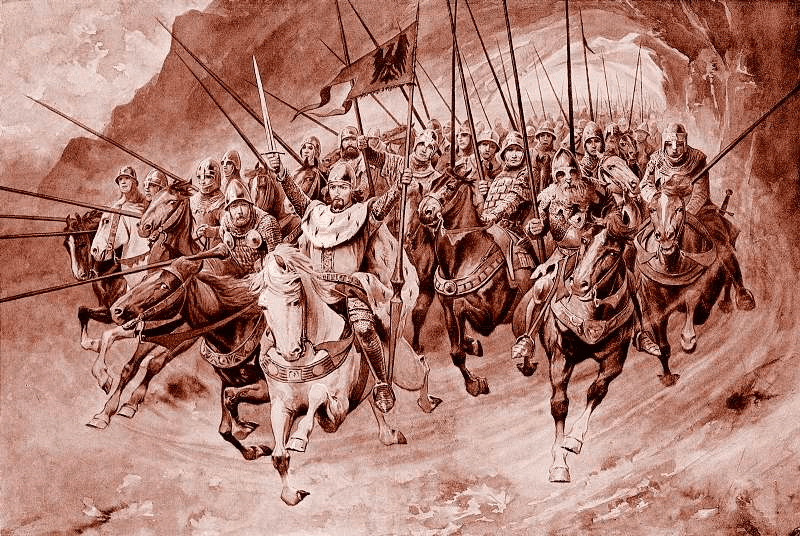
This 1898 illustration by Vénceslav Černý shows the Blaník knights on their way to save the Czech nation.
In 1868, a stone was taken from Blaník to help build the National Theatre in Prague (see also: https://whatsinapraguestreetname.com/2023/12/23/prague-3-day-184-ripska/).
One of the men involved in breaking the stone, Václav Podbrdský, fell 60 metres during the process, and, as he could not be found, was declared dead.
Which made things a bit awkward when he turned up, entirely alive, in 1886.
While Podbrdský managed to sue his employer for his unpaid salary, he then got arrested on suspicion of evading military service.
During his testimony, he said that, after he fell, he woke up in a hall with a beautiful girl, with whom he communicated telepathically.
He then claimed to have met a range of figures from Czech history, including Cyril, Methodius, Karel IV and Jan Hus.
Once this was over, the girl, who was the guardian spirit of the Czech nation, said goodbye to him, and the ceiling turned into a blue sky.
And it was eighteen years later, although Podbrdský thought he was only gone for eighteen hours.
The court, deciding that Podbrdský was suffering from an idée fixe, acquitted him.
The LET L-13 Blaník, produced by Let Kunovice, is the most widely-used glider / sailplane in the world: https://www.blanik.aero/flotila
And Radio Blaník is the most listened-to national commercial radio station in the country, though they’ve missed a trick by being located on nearby Bělěhradská rather than Blanická: https://radioblanik.cz/
At the exact moment of posting, they’re playing something from the Dirty Dancing soundtrack. Happy Monday.


 What's in a Prague street name
Leave a comment