Originally published on Twitter on 24 November 2022.
Chopinova, built in 1910, was called ‘U Riegrových sadů’ (which it is) until 1965.
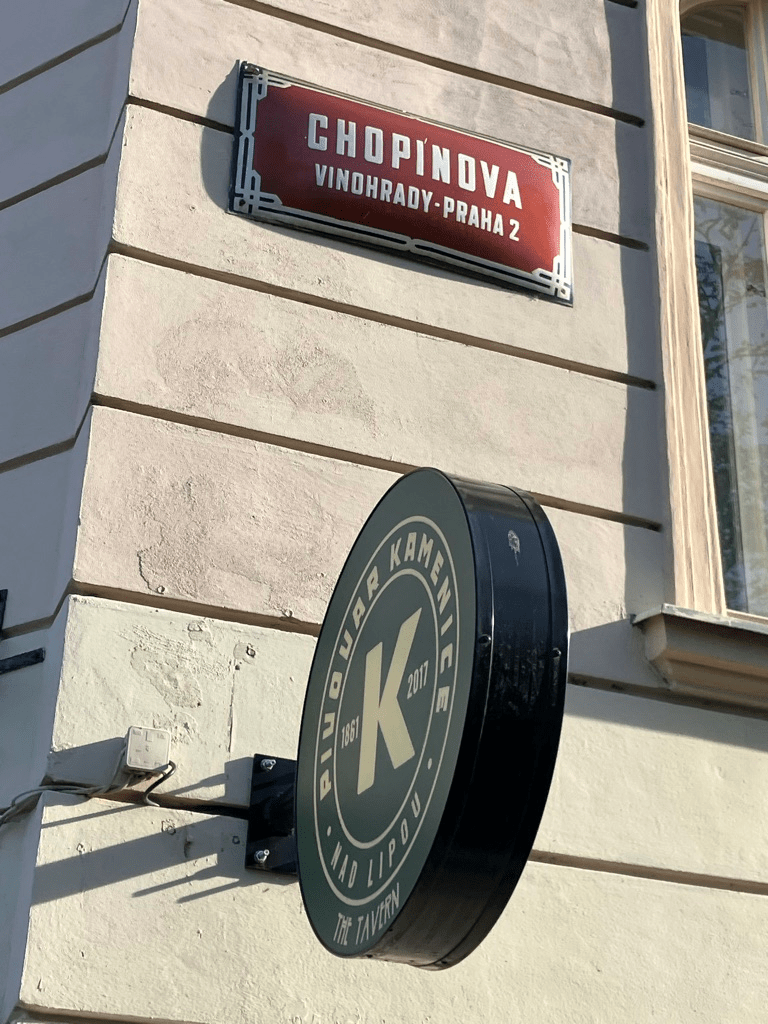
In 1965, the Polish Fryderyk Chopin Society asked for a street to be named after their idol; in exchange, the Warsaw district of Mokotów got itself an ‘ulica Bedrzycha Smetany’.
Fryderyk Franciszek Chopin was born just south of Warsaw to a father from Lorraine, France, and a Polish mother in 1810.
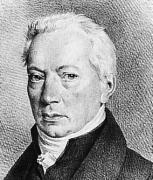
His first piano teacher, when he was six, was a Czech, Vojtěch Živný (portrait below). As was his second piano teacher, Václav Vilém Würfel.
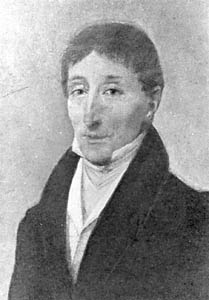
In addition, his first performance of a piano concerto, when he was eight, was of a composition by a Czech composer, Vojtěch Jírovec (below).
Chopin himself started composing before the age of 7, and, at 11, performed at the Sejm in Warsaw, in front of Tsar Alexander I.
He then studied at the Liceum Warszawskie, before moving on to the city’s Music School (now the Chopin University of Music / Uniwersytet Muzyczny Fryderyka Chopina, or UMFC), where he developed a fascination with folk music.
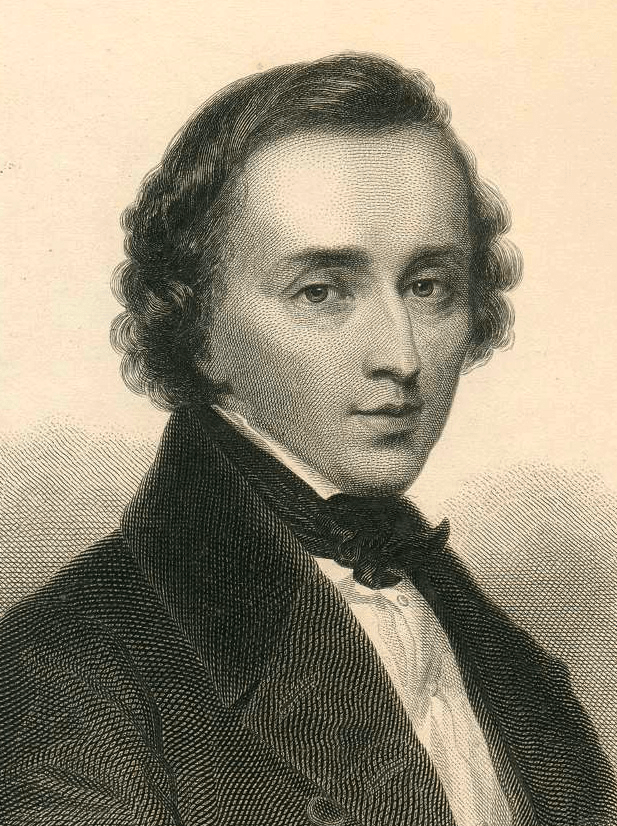
One of his teachers there was a Czech composer, Josef Javůrek.
In November 1830, Chopin left Poland, travelling to Dresden, Vienna and Munich, before settling in Paris. He never returned to Poland.
The November Uprising, a rebellion against the Russian Empire, began in Warsaw 3.5 weeks later. It ended with the Russians liquidating Polish autonomy and closing the University of Warsaw, which the Conservatory had been part of.
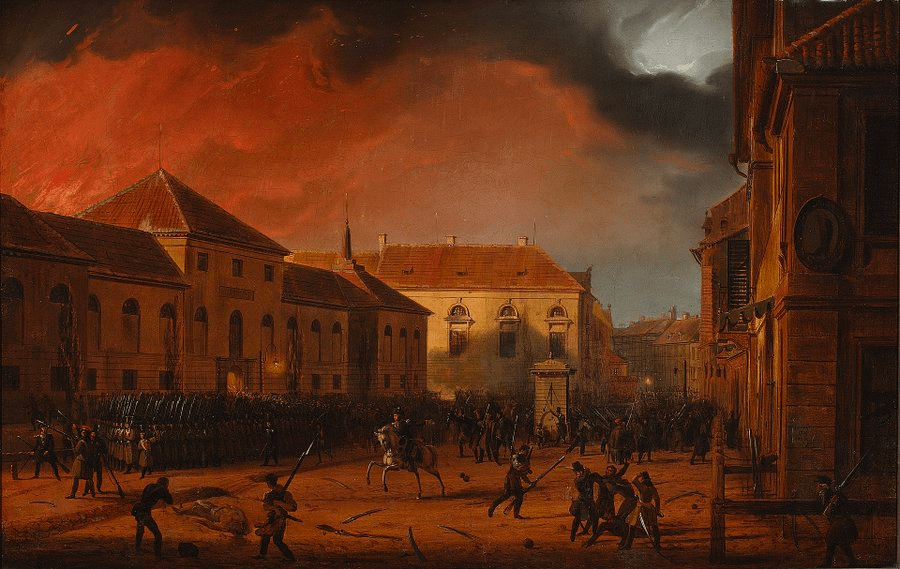
(Marcin Zaleski, Taking the Arsenal, 1831)
In Paris, Chopin gave his first concert in 1832. One of the attendees was Ferenc Liszt, with whom Chopin formed a friendship.
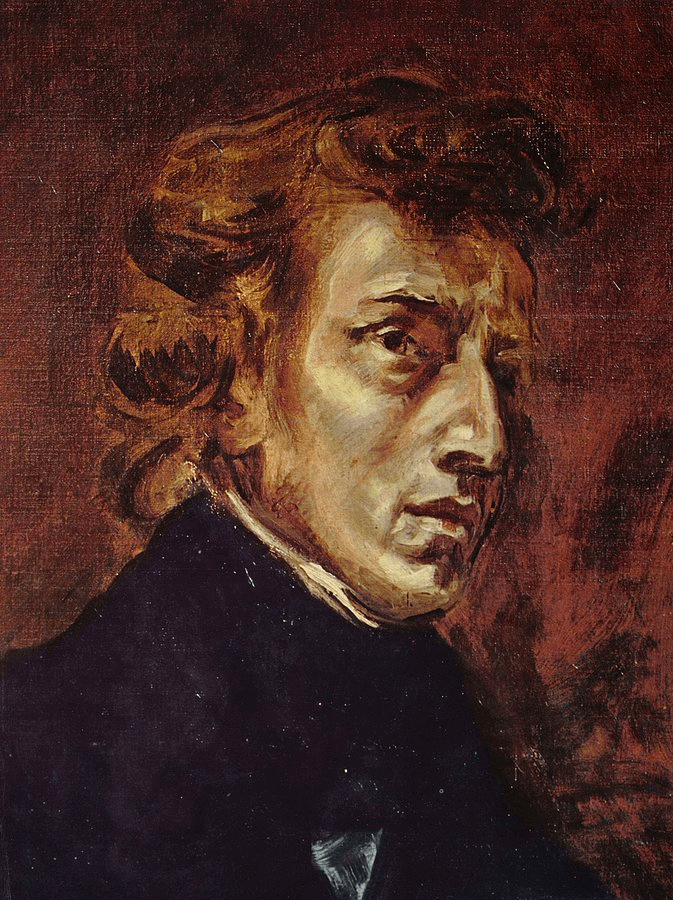
From this point on, Chopin made a living by selling his compositions and giving piano lessons to an illustrious set of clients.
He had a failed engagement to Maria Wodzińska (1836-7; broken off because her family felt Chopin was too sickly), and then a chaotic relationship with George Sand (real name Aurore Dupin), which lasted until 1848.
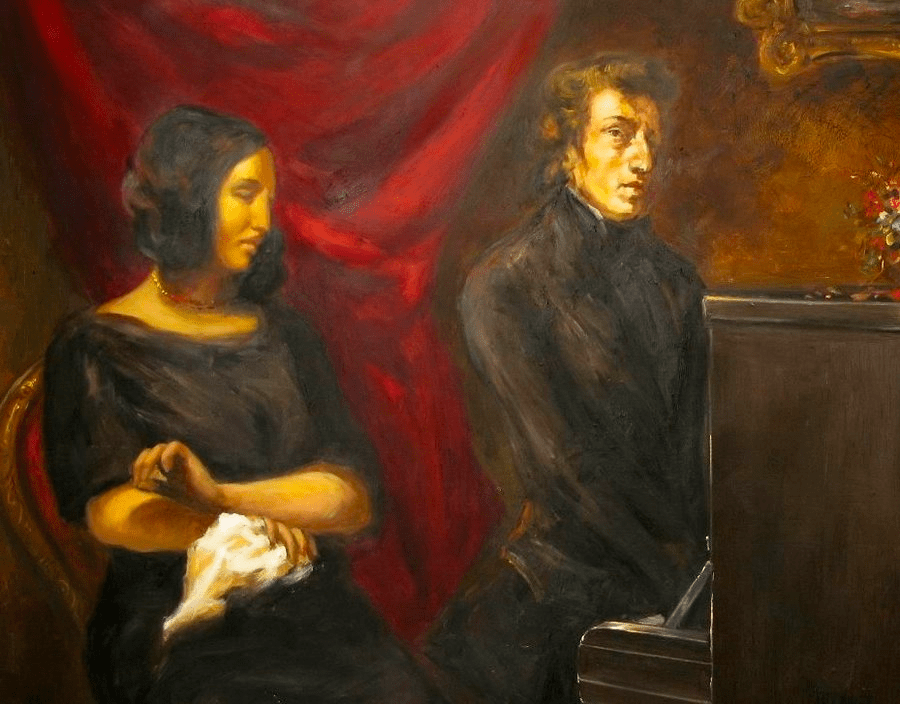
(painting by Eugène Delacroix, as was the previous one)
Sand stated that the relationship was celibate for at least nine years. As Chopin became increasingly ill from 1842 (having never been in brilliant health), she started to feel like a mother and nurse to him.
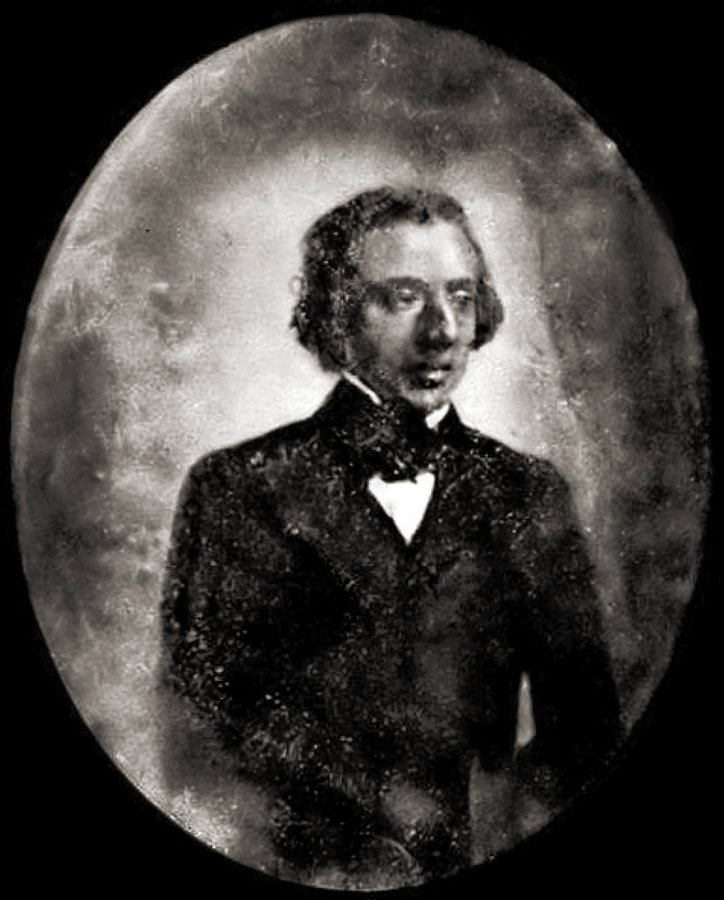
(First known photo of Chopin, 1846, photographer unknown)
When Sand left him, Chopin fell into a deep depression.
When revolution broke out in France in 1848, Chopin left for England, where he gave a concert at the Guildhall in London. Returning to Paris, he was too ill to give frequent piano lessons anymore.
He died in Paris the following year, probably of pericarditis, not helped by his tuberculosis. He was 39.

(Chopin on his Deathbed, Teofil Kwiatkowski, 1849)
Despite never returning to Poland after 1830, Chopin did go to Bohemia more than once, starting with a visit to Prague in 1829. He described the city as ‘quite nice’. Cheers, Fred.
A planned concert in Prague never took place due to stage fright (Chopin wasn’t really a fan of concerts – he only gave 30 public performances in Paris in 18 years).
In 1835, he saw his parents for the last time in Karlovy Vary, and Mariánské Lázně was where he proposed to Maria Wodzińska in 1836.
ML now hosts an annual Chopin festival, and the house he stayed in is now named after him: https://www.marianskelazne.cz/vyznamna-mista/pamatnik-fryderyka-chopina/

 What's in a Prague street name
Leave a comment