Originally published on Twitter on 9 December 2022.
Rubešova was built before 1884, and the history of the road is slightly complicated.

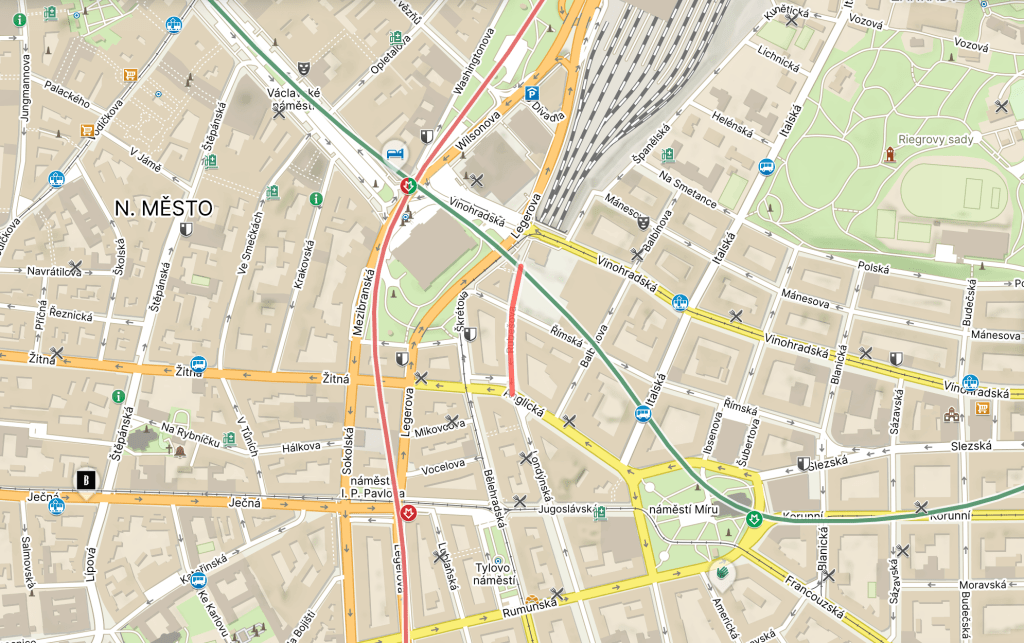
Part of the street, while created around the same time, was originally called Resslova, after Josef Ressel, who was briefly mentioned here as he was a native of Chrudim: https://whatsinapraguestreetname.com/2023/06/24/prague-3-day-177-chrudimska/
While, in 1895, a street called Husova was created to join the two.
For those who are interested, there are 3,927 separate threads about Jan Hus and his merry men in the Prague 3 series.
All three streets joined as one in 1928.
From 1940 to 1945, the street was called Rollerova, after Julius Roller (1862-1946), a Czech-Austrian lawyer who twice served as the Austrian Minister of Justice between 1918 and 1920.
xcept that, when the nearby highway was built/developed, the Husova part became part of Legerova (https://whatsinapraguestreetname.com/2023/12/24/prague-2-day-8-legerova/), the Resslova part became U divadla (https://whatsinapraguestreetname.com/2024/01/05/prague-2-day-10-u-divadla/) and Rubešova went back to its original form.
Anyway, František Jaromír Rubeš was born in Čížkov, Vysočina in 1814. His family moved to Kolín upon the death of his father, a brewer.

He went to Prague to study philosophy, and entered the seminary, then deciding this wasn’t for him, so he became a tutor and also studied law, graduating in 1847.
n 1841, he became the chief author of Paleček, the first humorous Czech magazine (named after Jiří z Poděbrad’s jester).
He contributed until 1845; the magazine folded two years later, partly because readers missed his input.
He also published various novella, most famously Pan Amanuensis na venku, aneb putování za novelou (Mr. Amanuensis on the outside, or wandering for a novella). Not to suggest it was based on his own experiences, but it was about a law graduate who was also a budding writer.

In 1848, Rubeš hid poet Josef Václav Frič in his apartment in Načeradec, as the latter was wanted by the Habsburg authorities after organising fighting on the barricades during the Prague Uprising of 1848.
After losing his interest in literature, Rubeš worked in law. He was working as a court clerk in 1853, when he died in Skuteč, near Chrudim, of a hereditary lung condition. He was 39.
This is a picture of his grave there by Václav Jansa (1859-1913).


 What's in a Prague street name
Leave a comment