Originally published on X on 13 February 2023.
It’s not clear what year Vratislavova was built in.

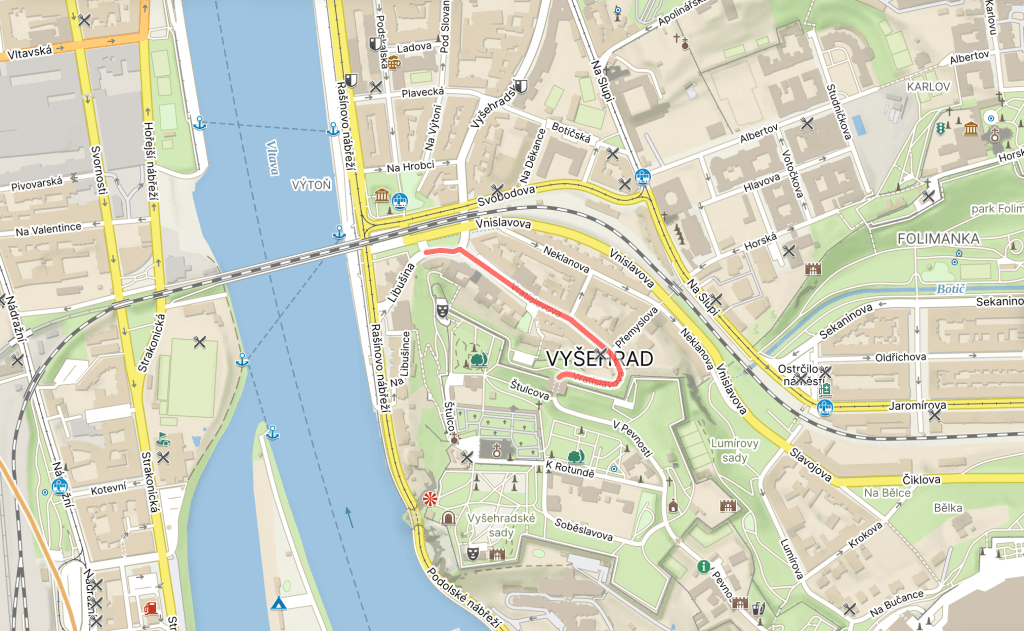
When Vyšehrad was a separate town from Prague, this was Hlavní, Vyšehrad’s Main Street, and included the town hall. It merged with nearby Vyšehradská in 1870, but broke free again in 1891, with its current name.
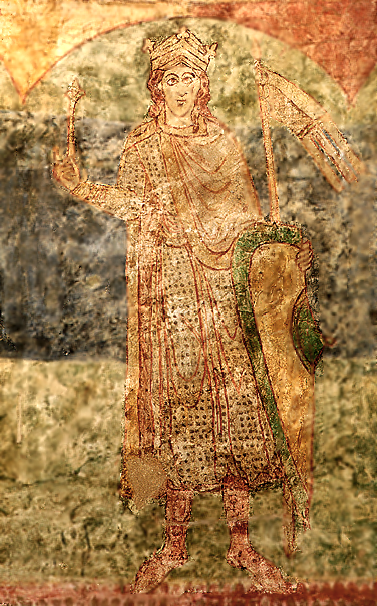
The future Vratislav II was born around 1032 as the second son of Břetislav I, who would be Duke of Bohemia from 1034 to 1055.
Břetislav I made the older son, Spytihněv II, Duke of Bohemia, while Vratislav became Duke of Olomouc. Vratislav left for Hungary after, in true Přemyslid style, the two brothers fell out, but they reconciled in 1058, and Vratislav returned.

When Spytihněv died in 1061, Vratislav also became Duke of Bohemia. In 1068, he appointed another brother, Jaromír, as bishop of Prague.

However – shock alert – this was another tumultuous fraternal relationship. Vratislav had set up a diocese at Olomouc, and Jaromír, sensing a loss of his own power, used force to steal the relics that had been moved from Prague to Olomouc.
Vratislav was a major supporter of Henry IV (King of Germany from 1054 to 1105), particularly during the Investiture Controversy, in which Henry fought with Pope Gregory VII over who had the right to select bishops, abbots, and the Pope himself.
Having given Vratislav permission to wear the same mitre and tunic as his predecessors, Gregory presumably wasn’t all that thrilled about this, but, even when Henry was excommunicated, Vratislav’s relations with the papacy remained decent.
Vratislav supported Henry in campaigns of Saxony, Swabia and Italy; Henry awarded him for his Schillerová-standard devotion by giving him the right to call himself the first King (not Duke) of Bohemia in 1085. However, the title didn’t pass automatically to his successors.
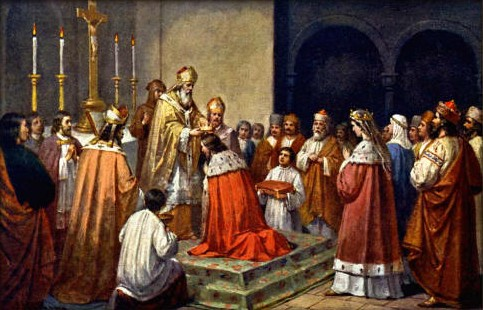
Vratislav also created the Vyšehrad Chapter in 1070.
He died in a hunting accident in 1092, and was buried at St. Peter and Paul’s Church.

 What's in a Prague street name
Leave a comment