Originally published on X on 21 March 2023.
Na bojišti (On the battlefield) was built in the Middle Ages.
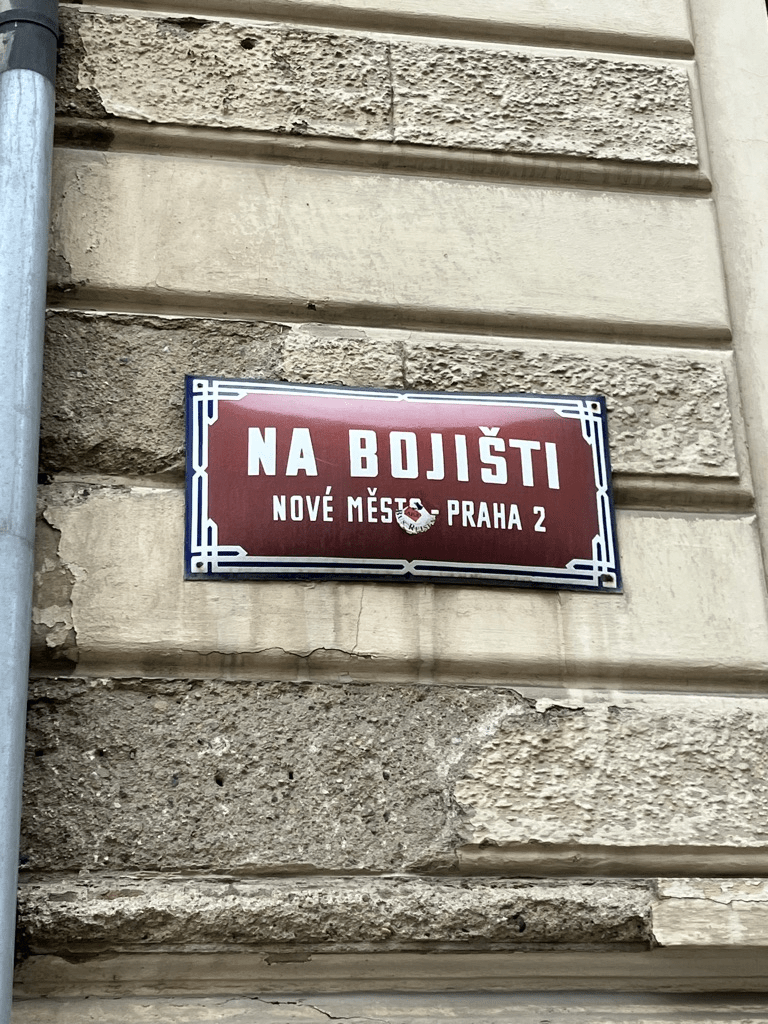
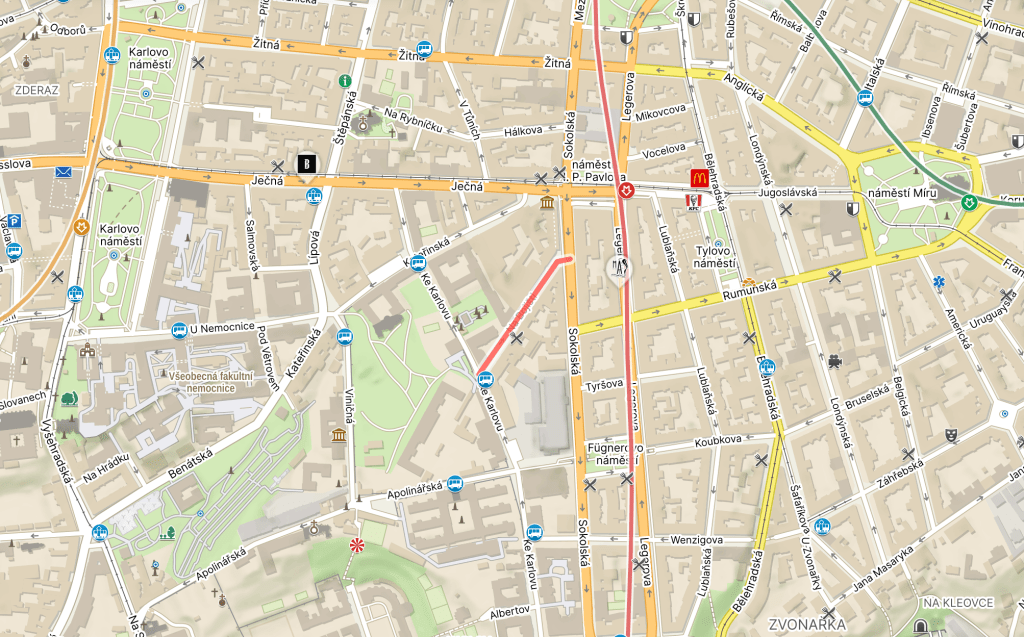
Called Bojiště until 1822, it was then renamed U blázince (‘At the madhouse’) until 1880, after the institution on Kateřinská (https://whatsinapraguestreetname.com/2024/08/28/prague-2-day-128-katerinska/). Thank goodness it’s not called that anymore.
In the mid-to-late 12th century, Henry II, Duke of Austria, started to colonise Vitorazsko, a region which is now shared between Austria (where the main town is Gmünd) and Czechia (where the main town is České Velenice).
Soběslav II, then Duke of Bohemia, got a little bit narked at his territory being stolen, so much so, that, in 1176, he started looting the churches in the region. Henry had a moan about this to Frederick Barbarossa, Holy Roman Emperor.
In 1178, Barbarossa – who already felt that Soběslav was a bit too cocky – had him replaced with Bedřich (who had himself been replaced by Soběslav five years earlier).
Soběslav, however, wanted a rematch. On 23 January 1179, the two men’s armies clashed at Loděnice, near Beroun, where Bedřich was heavily defeated and only escaped death by fleeing.
On 27 January, Soběslav’s army arrived at the Nusle Valley. Bedřich’s army launched an attack where Na Bojišti is located now.
Soběslav’s army, which was less numerous and exhausted by its previous battles at the coldest time of year, was defeated. Soběslav himself retreated abroad, dying in 1180 (we don’t know where).
Bedřich, meanwhile, would rule until 1189, though ‘rule’ may be a strong word, given that he was largely a puppet of the Holy Roman Empire throughout.

 What's in a Prague street name
Leave a comment