Originally published on X on 22 March 2023, when I also forgot to take/add a photo of the street sign. Maybe I’ll go out and take one now.
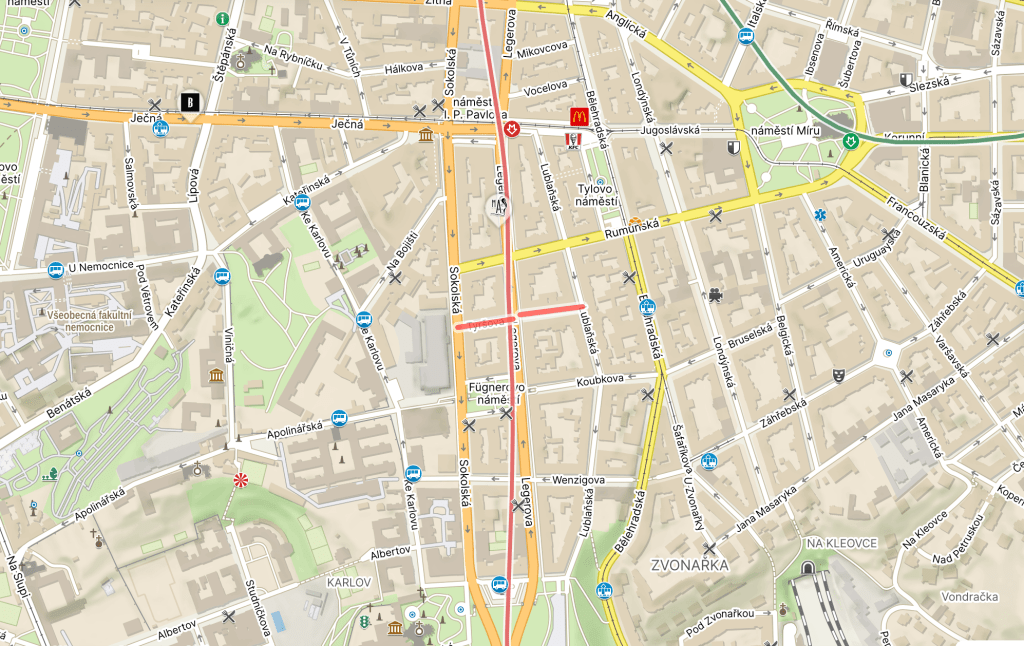
Tyršova was built in 1893.
Fridericus Emanuel Tirsch was born into a German-speaking in Děčín in 1832. By the age of six, he had lost both parents and two sisters (the father and sisters all dying of tuberculosis).
He was then brought up by the family of his late mother’s brother, moving to Prague in 1841. Never in the best of health, he was advised by his doctor here to take up gymnastics.
He also got seriously into Czech patriotism, insisting on taking his final school exams in Czech (not his native language), and changing his first name first to Bedřich, then to Miroslav.
After starting law studies at Charles University, he realised this wasn’t his thing, so he switched to philosophy and aesthetics, graduating in 1855 and becoming a private tutor near Beroun.
During his tutoring years, he also worked on Czech gymnastics terminology, and befriended one Jindřich Fügner (https://whatsinapraguestreetname.com/2024/07/06/prague-2-day-58-fugnerovo-namesti/).
In 1862, he and Fügner created a not so little something called Sokol, which I wrote a not so little something about here: https://whatsinapraguestreetname.com/2024/08/26/prague-2-day-114-sokolska/
Tyrš was a man of many other interests, though, particularly visual arts and aesthetics, which led him to take many study trips to England, France and Germany and produce multiple books on the subject.

After Fügner died in 1865, Tyrš worked as a tutor for his daughter, Renata. They would end up getting married in 1872, when Tyrš was 50 and Renata was, erm, 18.
In 1882, just after Charles University had split into German and Czech parts, Tyrš was appointed a docent at the Philosophical Faculty, and, a year later, a professor of art history.
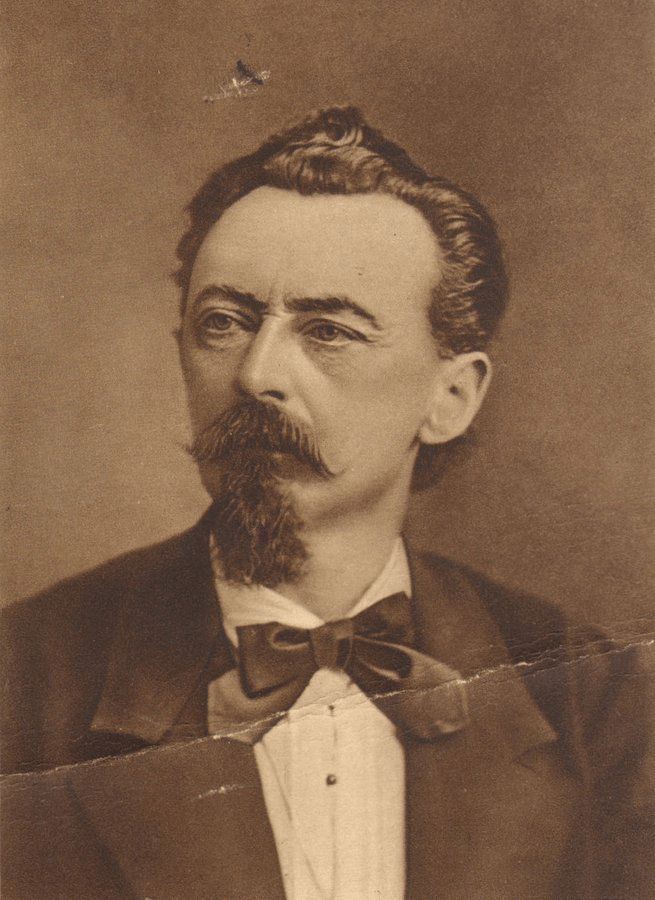
However, when on holiday in the Ötztal (Tirol) in the summer of 1884, he went for a walk and never came back.
His body was found in the Ötztaler Ache river just under two weeks later. The circumstances around his death were never clarified.
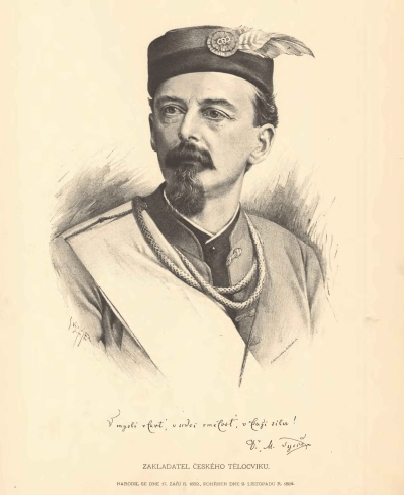
He’s buried next to Fügner in Olšany Cemetery. There’s also a memorial to him at the Sokol on Polská (https://whatsinapraguestreetname.com/2024/01/27/prague-2-day-14-polska/).
A bit further afield (because the Sokols did spread their wings pretty far), there’s a Tiršova street named after him in the Savski venac district of Belgrade, which contains the biggest children’s hospital in Serbia: https://tirsova.rs/
While this list makes it look like street-namers over the years have loved him almost as much as they did Jan Hus: https://commons.wikimedia.org/wiki/Category:Tyr%C5%A1ova_streets_in_the_Czech_Republic

 What's in a Prague street name
Leave a comment