Originally published on X on 26 March 2023.
Pod Větrovem was built in 1894.
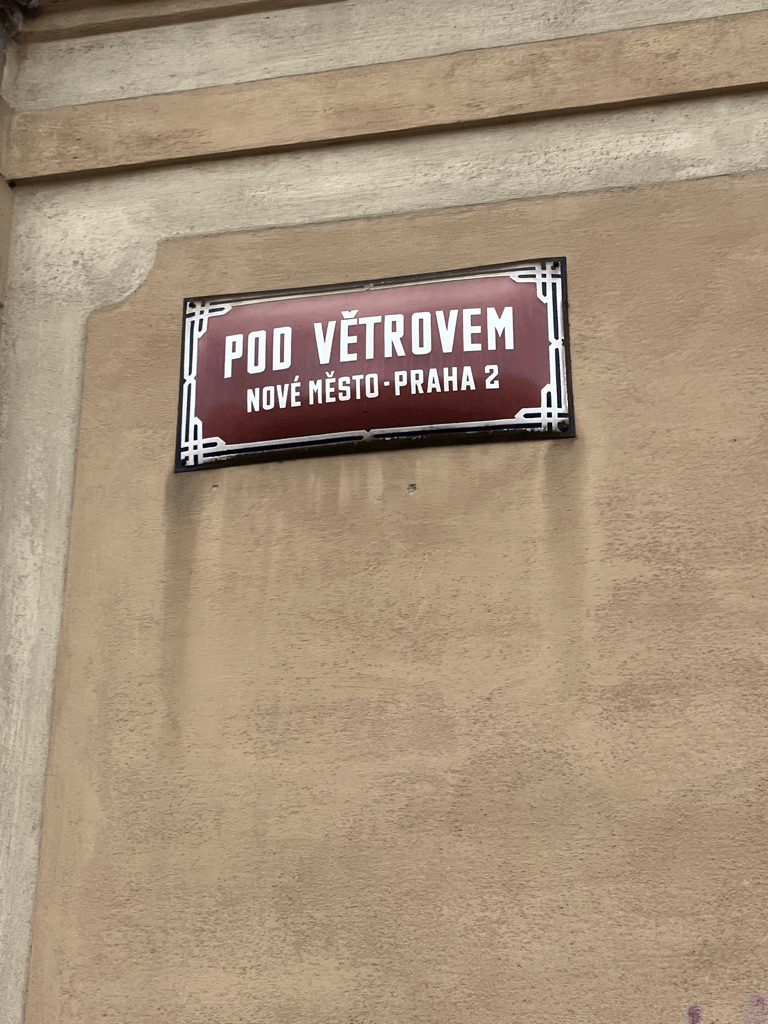
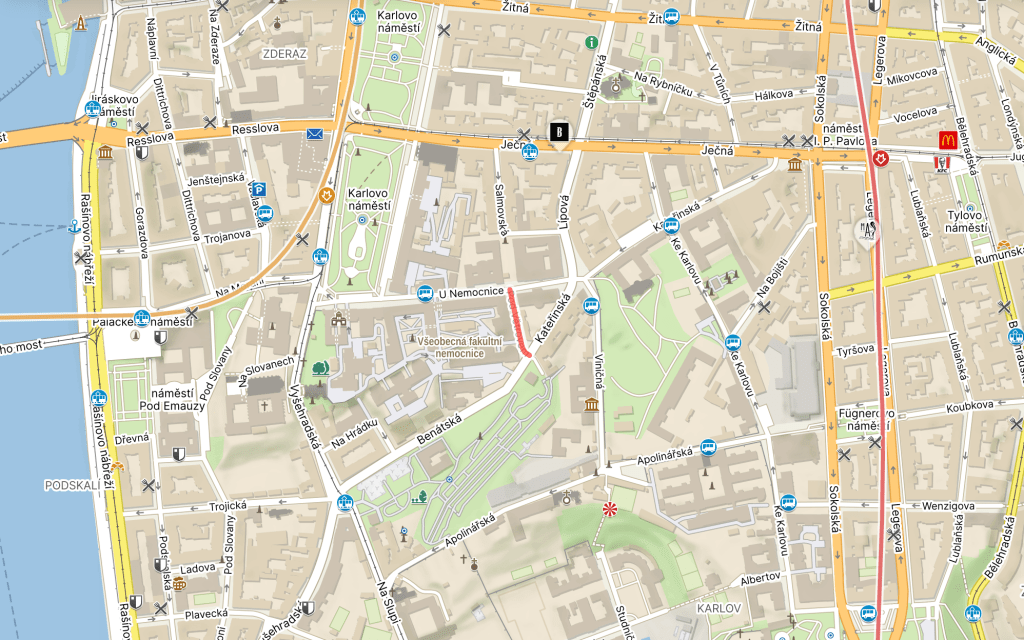
We’ve touched on this one briefly before: Větrník, Větrná hora or Větrov is the (windy) hill which the Church of St. Apollinaire was built on https://whatsinapraguestreetname.com/2024/08/25/prague-2-day-113-apolinarska/.
In a mildly desperate bid to pump this thread up a bit, let’s look at some words for different types of wind (vítr) in Czech, using our old friend, the Beaufort scale / Beaufortova stupnice.
At 0, you’ve got bezvětří, i.e. things are completely calm (unless it’s thirty degrees, in which case you are almost certainly not).
At 1, you’ve got a vánek, a breeze, whereas, at 2, you’ve got a větřík, a ‘small wind’, or a slabý vítr, literally ‘a weak wind’.
At 3, the ‘weak’ wind has become mírný – mild – but go up to 4, and you’re dealing with a dosti čerstvý vítr – a ‘quite fresh wind’. And to think the world makes fun of us Brits for phrases like that.
5 is a čerstvý vítr – a fresh wind, while, when you get up to 6, you’ve got a silný vítr to deal with – a strong one.
This, in turn, becomes a prudký vítr, an intense wind, at 7.
Becoming progressively less fun, 8 is a bouřlivý vítr (a stormy wind), 9 is a vichřice (gale), and 10 is a silná vichřice (a strong gale).
11 is a mohutná vichřice – a hefty wind – and 12 is an orkán, a hurricane.
The windiest place in the Czech Republic is Milešovka, which we covered here: https://whatsinapraguestreetname.com/2023/12/23/prague-3-day-190-milesovska/.

 What's in a Prague street name
Leave a comment