Originally published on X on 2 April 2023.
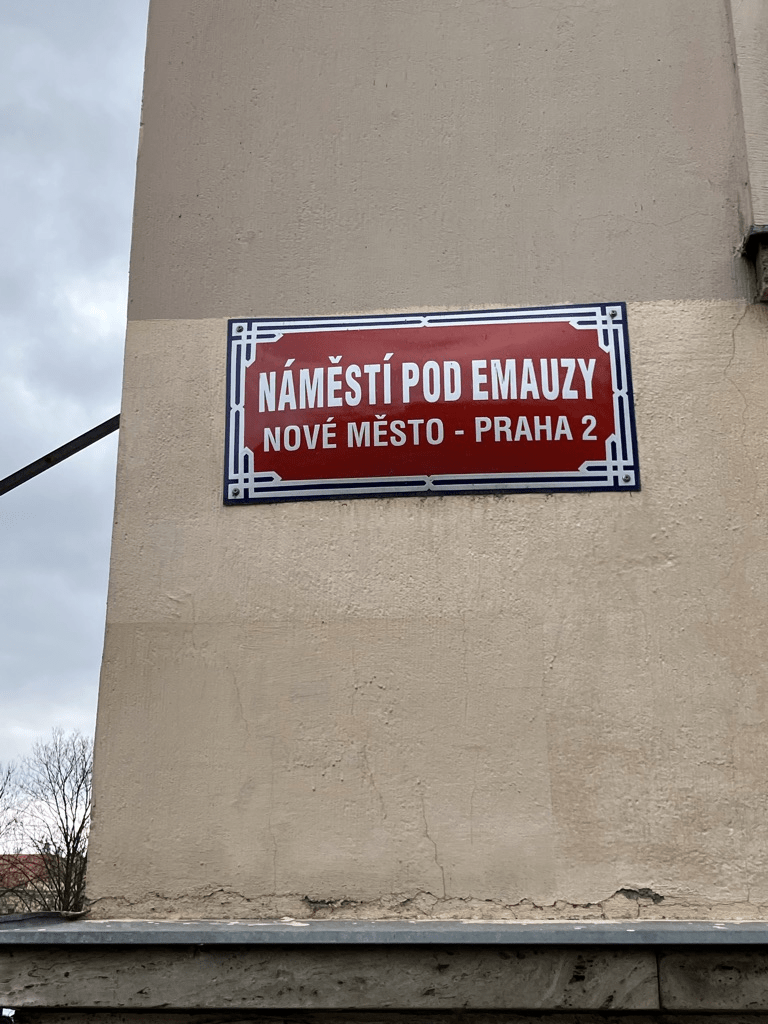
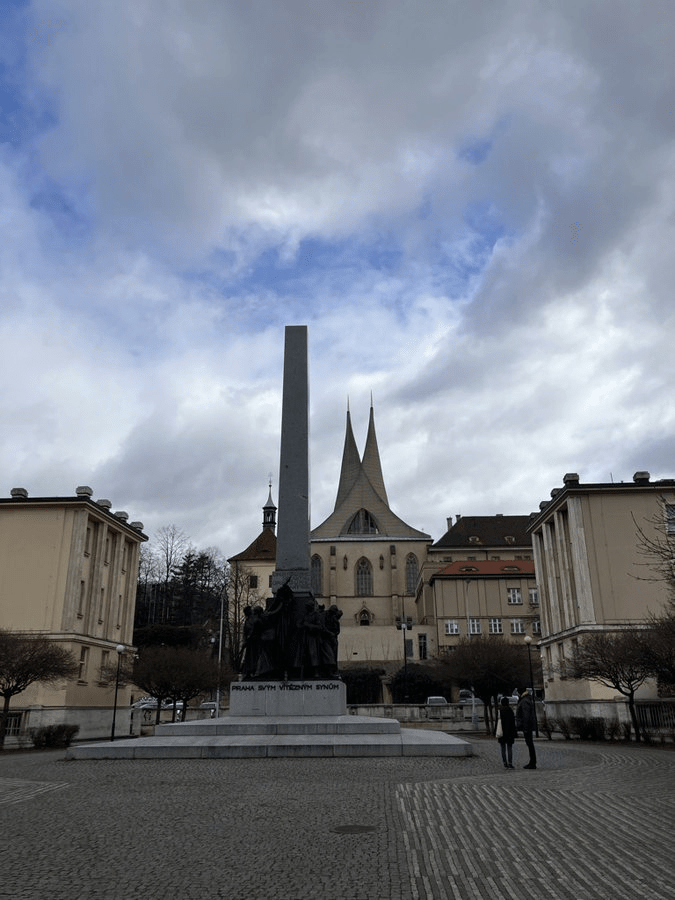
Náměstí Pod Emauzy was built in 1925.

In 1347, a year after the founding of Prague’s Old Town, Karel IV received permission from the Pope to found a Benedictine monastery in Podskalí.
In the 1370s, the monastery was supplemented by a church: https://whatsinapraguestreetname.com/2024/08/31/prague-2-day-140-pod-slovany/
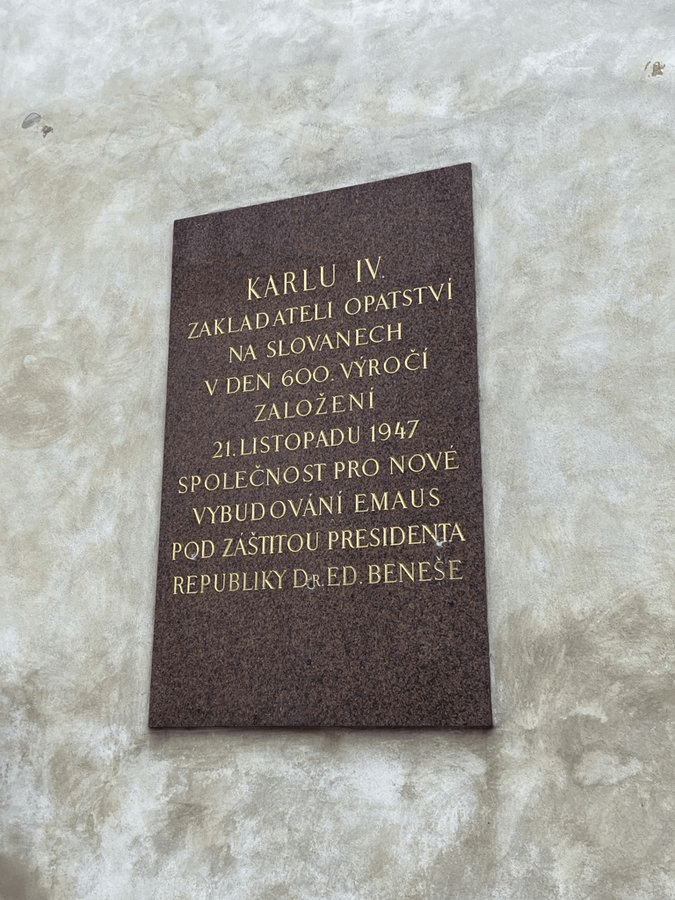
Karel wanted the monastery to be a centre of Slavic church education, so he invited Glagolitic monks from the town of Tkon, on the Adriatic island of Pašman (now in Croatia), among others.
The Hussites took over the monastery in 1419, and, in ‘erm, you’re Hussites, right?’ news, didn’t destroy it.
However, in the 1400s and 1500s, the monastic community gradually disappeared. The Benedictine community wasn’t restored until the 1590s.
In 1636, Ferdinand III sent the local monks to another monastery (in the Old Town), and introduced Spanish Benedictines from Montserrat. They replaced the roof with a distinctive two-tower structure.
In 1880, the monastery was offered as a home for German Benedictine monks who had been forced to leave their town of Beuron during the Kulturkampf (basically Bismarck vs the Catholic Church). They carried out major renovations, including to the towers.

The monastery was closed by the Nazis in 1941 and turned into a military hospital. Earlier in the year, it had hosted Radio Magda, a resistance radio station.
Both towers were then destroyed by Allied bombing in 1945, but reconstruction started in the 1950s. The current design of the towers was the work of one František Maria Černý, between 1964 and 1968.
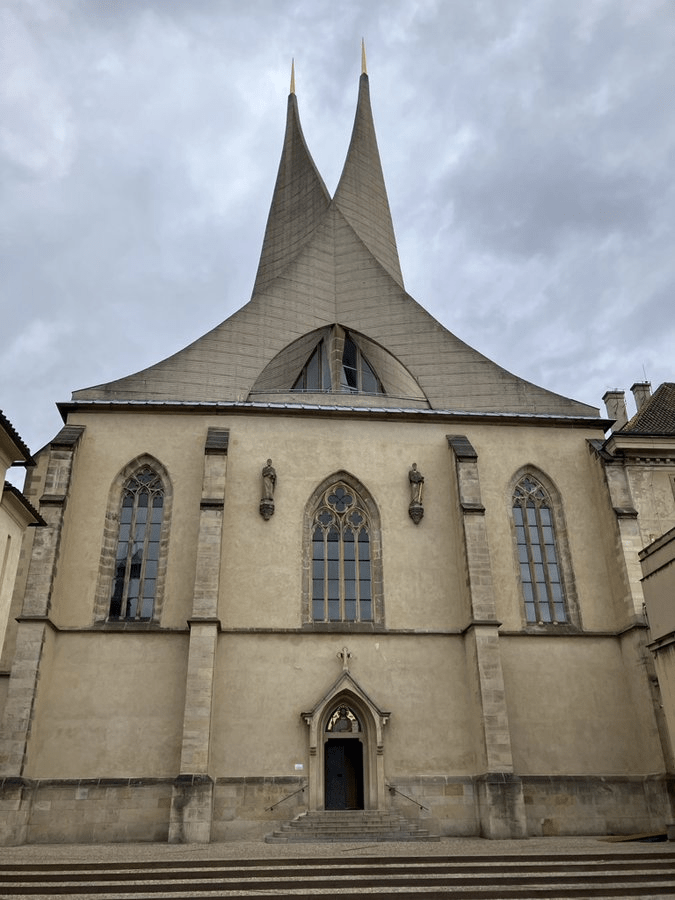
However, this was maybe the one good thing to happen to the monastery in that period – it was forcibly abolished under Akce K, and many of its monks were imprisoned.
A community was formed in exile in 1965, ultimately returning to the monastery after the Velvet Revolution. There are currently three or four monks there (different sources, different info, etc).
The square is also known for ‘Praha svým vítězným synům’ (Prague to its victorious sons), a monument whose original was created by Josef Mařatka and unveiled in 1932.
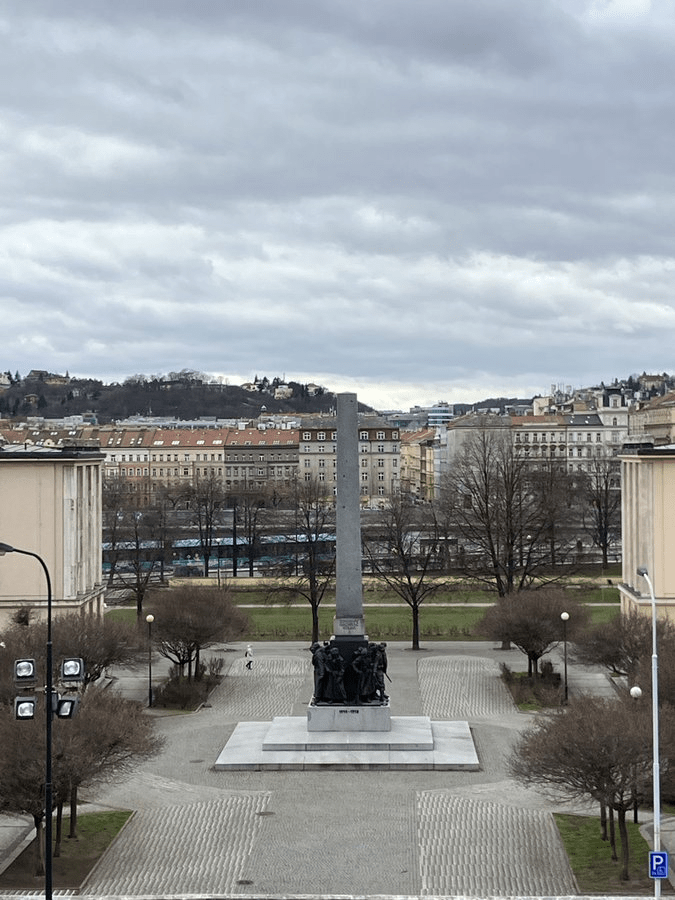
It commemorates the Czechoslovak Legion and the victims of World War One. The obelisk is surrounded by seven legionnaires (four French, two Russian, one Italian), with another French legionnaire in the centre, and a woman (Praha) with a linden branch.

The flagpole includes a quote from poet Viktor Dyk: Opustíš-li mne, nezahynu, opustíš-li mne, zahyneš (‘If you leave me, I will not perish; if you leave me, you will perish’).
Unsurprisingly, the monument did not survive the Nazi occupation.
On 28 October 1998, the 80th anniversary of the founding of Czechoslovakia, a new version, created by Kateřina Amortová based on the original designs, was unveiled.
And as for the name: Emmaus is a town of unknown location, mentioned in the New Testament. According to the Gospel of Luke, Jesus appeared to two disciples on the road to Emmaus, after he had been crucified and his tomb had been found to be empty.


 What's in a Prague street name
Leave a comment