Originally published on X on 11 April 2023.
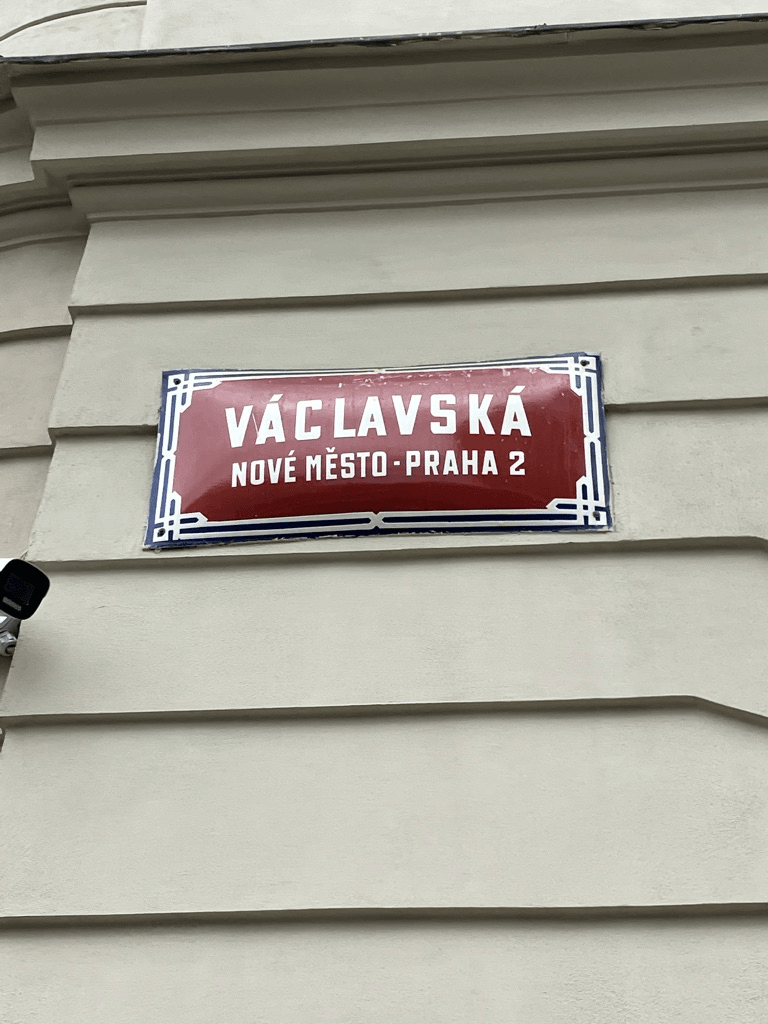
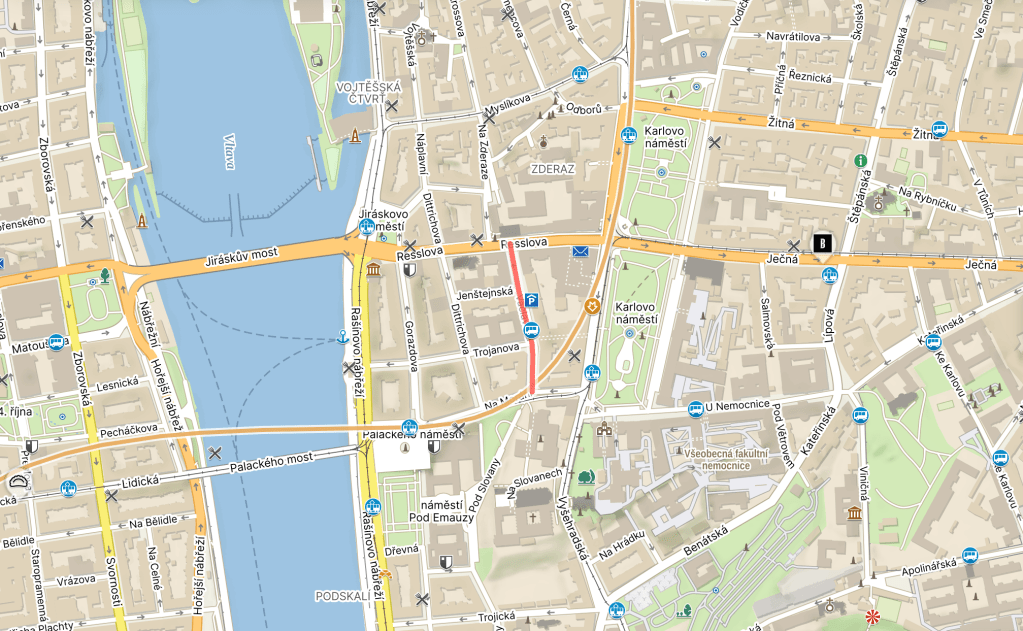
Until 1839, the street had various names. One of these was Na Lávkách (on the footbridges), so called because there was a footbridge leading from the Old Town to Podskalí along here.
A second name was Korunní, probably because of a house on the street that had three crowns above its door. Another was U Václavských lázní (At the Wenceslas Spa – see https://whatsinapraguestreetname.com/2024/09/01/prague-2-day-150-dittrichova/).
The street is named after Kostel svatého Václava na Zderaze. Zderaz is a former settlement here, which we’ll discuss more in a few days’ time.
A church (of Peter and Paul) was mentioned here in 1115, but this was destroyed and had to be replaced. A report from 1278 talks about the consecration of the new church having taken place in 1181, with the church being adjoined to the adjacent monastery.
A new, Gothic church was built in the late 14th century, following the founding of the Old Town. Inevitably, the church’s monastery was burned down by the Hussites, who took control of the church itself.
It was then restored, and, in 1586, Emperor Rudolph II invested in further reconstruction. After the Battle of Bílá Hora, Emperor Ferdinand II would invest in a new monastery, inhabited by the Order of Discalced Augustinians.
The church had to be repaired yet again after the Thirty Years’ War, as the Swedes had sent cannonballs in its direction in 1646.
In 1785, as part of Joseph II’s reforms, the monastery was deconsecrated and turned into a prison. The church served the prison’s needs until 1884, when the latter was moved to Pankrác.
The monastery was destroyed in 1904, but the church survived, and had its most significant reconstruction in the 1920s after being purchased by the Czechoslovak Hussite Church. It was reconsecrated in 1929.
There are some great pictures of the church circa 1910 on https://www.historicka-praha.cz/kostel-svateho-vaclava/.

 What's in a Prague street name
Leave a comment