Originally published on X on 15 April 2023.
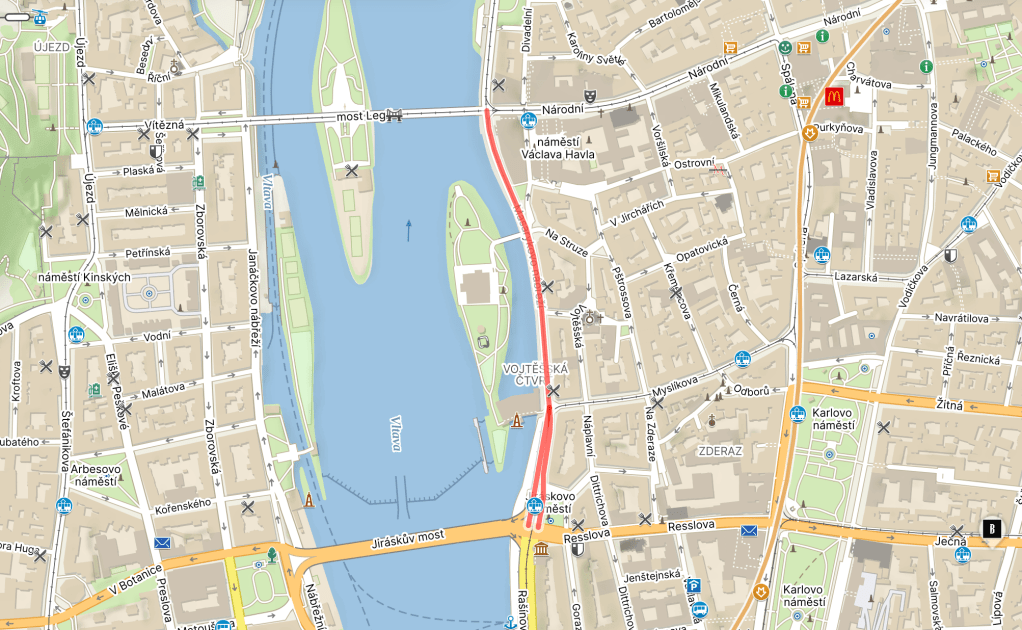
Masarykovo nábřeží (Masaryk Embankment) has existed in its current form since 1903.

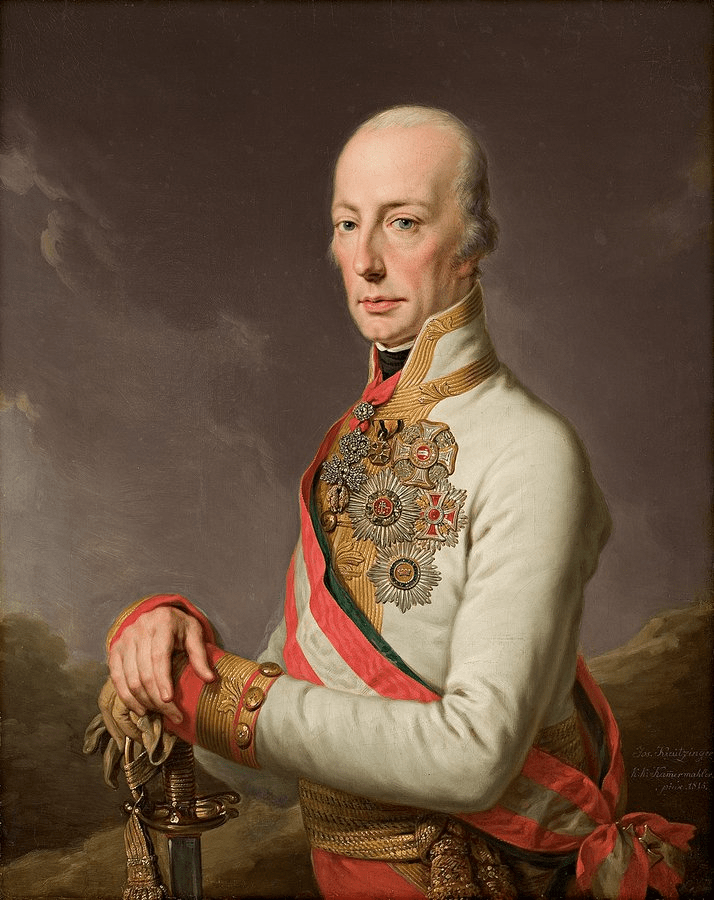
From 1903 to 1912, this was Františkovo nábřeží, after Francis II, who ruled Austria, Hungary, Croatia and Bohemia from 1792 to 1835.
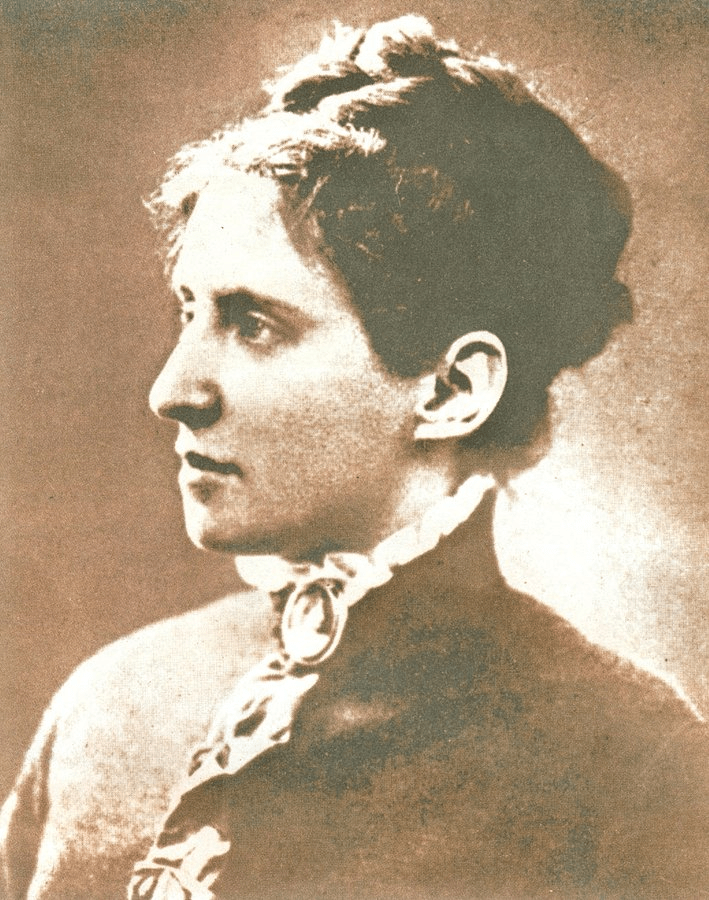
Then, from 1912 to 1940 (and again from 1945 to 1946), it was Riegrovo nábřeží, after František Ladislav Rieger (1818-1903), politician, publicist, and early leader of the Czech nationalist movement.
The Nazis renamed it Vltavské nábřeží, before making us all feel a bit sick by renaming it Reinhard-Heydrich-Ufer.
The Communists made us feel less sick, but still sick, by calling it Gottwaldovo nábřeží (after Klement Gottwald (1896-1953), first Communist leader of Czechoslovakia), which stuck until 1990.
Tomáš Jan Masaryk was born to a poor family in Hodonín, South Moravia, in 1850. He attended the gymnasium in Brno, then finishing his schooling in Vienna in 1872.
The relatively late age at which he finished school was due to his parents’ inability to support his studies financially, as well as an interruption caused by the Prussian-Austrian War in 1866.
Staying in Vienna, he studied philosophy, then continuing his studies in Leipzig, where he met an American lady who was visiting one of his friends. Her name was Charlotte Garrigue; they married in New York in 1878 and he took her surname in addition to his own.
In 1882, just after Charles-Ferdinand University had been split into Czech and German sections, they moved to Prague, where Masaryk became professor of philosophy.
His rationalism, broad outlook on life, and willingness to criticise the church meant that he clashed with several conservative nationalists – but also made him popular with students.
In 1883, he founded Athenaeum, a magazine devoted to Czech work in science.

It was in Athenaeum that Masaryk would put forth the notion that the Manuscripts of Dvůr Králové and Zelená Hora were 19th-century forgeries (take a look at https://whatsinapraguestreetname.com/2024/08/22/prague-2-day-91-lumirova/ – it’s quite the story).
From 1886, the Masaryks lived in Vila Osvěta, where their eldest son, Jan, was born. The street the villa is on now bears his name: https://whatsinapraguestreetname.com/2024/03/17/prague-2-day-46-jana-masaryka/.
Differences of opinion between Masaryk, the owner of the villa, Václav Vlček, and others, on the famous Manuscripts, eventually meant the Masaryks had to move out in 1889.
In 1891, Masaryk was elected to the Imperial Council in Vienna, as a Member of the Young Czechs, staying in this position until his departure in 1893, following disputes with more radical members of the party.
In 1899, Masaryk spoke out in favour of Leopold Hilsner, a Jewish man accused of the murder of two young women (the prosecution stated that these were ritual murders so that the Jews could use the blood of young Christians in their own ceremonies).
Hilsner would spend 19 years in prison before being pardoned in 1919.

In 1900, Masaryk founded the Czech People’s Party, later known as the Realist Party / Realistická strana, serving as their representative in the Imperial Council from 1907 to 1914. At this time, he still believed that Austro-Hungary was reformable as a federation.
When WW1 broke out, he changed his mind, deciding that an independent Czechoslovakia was necessary. He went into exile in late 1914, as there was a warrant for his arrest back home, and worked hard to get foreign leaders on side.
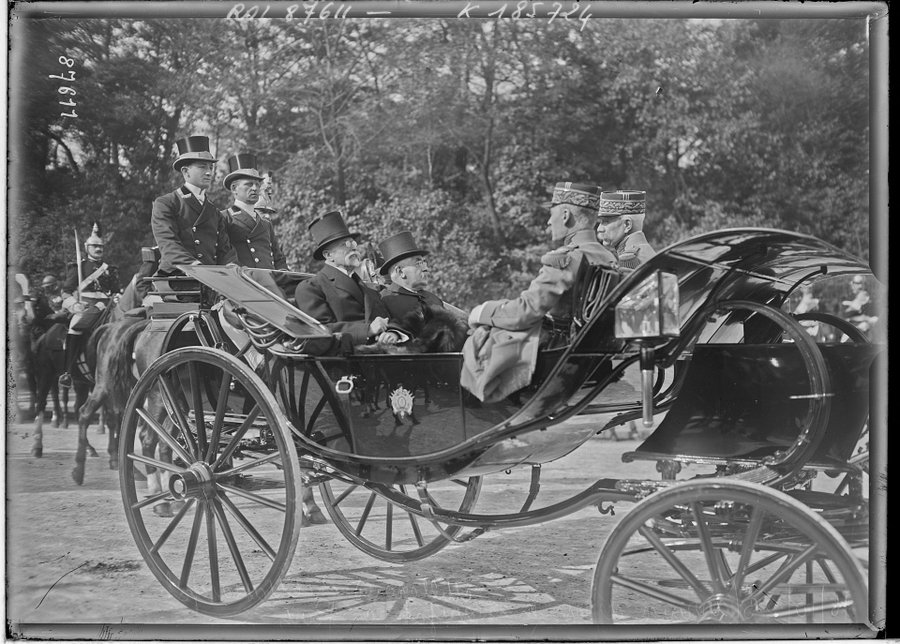
In 1916, the Czechoslovak National Council was founded in Paris, and Masaryk became its chairman. This picture is not of the founding, but was taken in Paris.
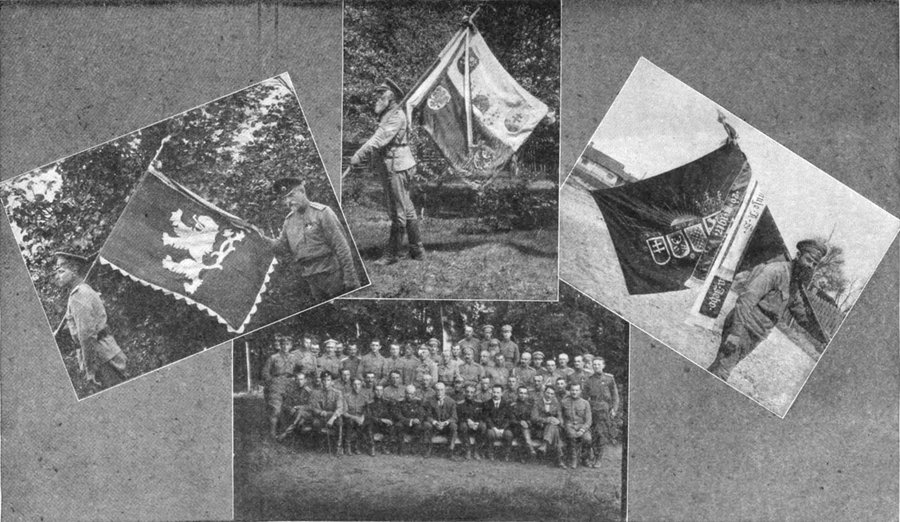
After the February Revolution in 1917, he went to Russia to set up the Czechoslovak Legion (which eventually numbered 50,000) to fight against the Austrians.
In early 1918, he would go to the US, and won the support of President Woodrow Wilson. In Chicago, he was met by a 200,000-strong parade (https://czechcentennialchicago.cz/cz-centennial/).
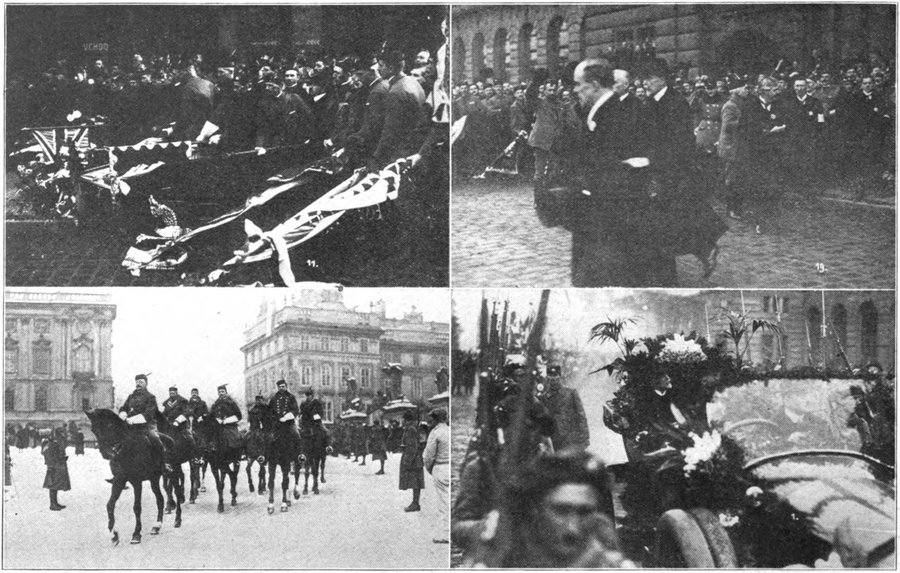
Masaryk was still in the States on 28 October, when Czechoslovakia was created and when he was elected President in absentia. He returned in December.

In 1919, Masaryk University, the second Czech-speaking university, was founded in Brno. Masaryk had proposed its creation to the Imperial Council back in 1891.
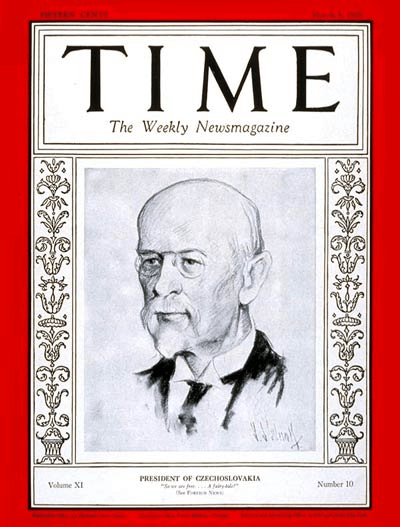
He would be reelected President three times (1920, 1927 and 1934), before abdicating due to ill health in 1935. Charlotte, meanwhile, died in 1923 following a stroke and heart problems.

While his power as President was limited, his presence gave Czechoslovak politics some sort of consistency, at a time when Czechoslovakia had 15 governments in 17 years.
Masaryk died in 1937 of “purulent bronchopneumonia of the right lower lobe of the lung and bilateral hypostasis of the lung”.
In his lifetime, he had been nominated for the Nobel Peace Prize 17 times.

In 1997, San Francisco rock band Faith No More released an album called ‘Album of the Year’, with Masaryk on the cover. It was the last before their split in 1998 (they reformed in 2009).
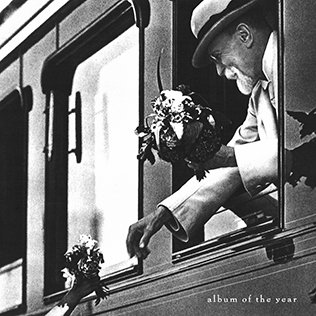
Their bassist, Billy Gould, had spent a lot of time in Prague, and ended up in a shop that had several magazines covering Masaryk’s funeral. He connected this with the imminent death of the band: https://www.irozhlas.cz/kultura/hudba/americka-kapela-ma-na-albu-masaryka-skvela-myslenka-ktera-umira-rika_1706031000_rez

 What's in a Prague street name
Leave a comment