Originally published on X on 22 April 2023.
Spálená was built in the Middle Ages.
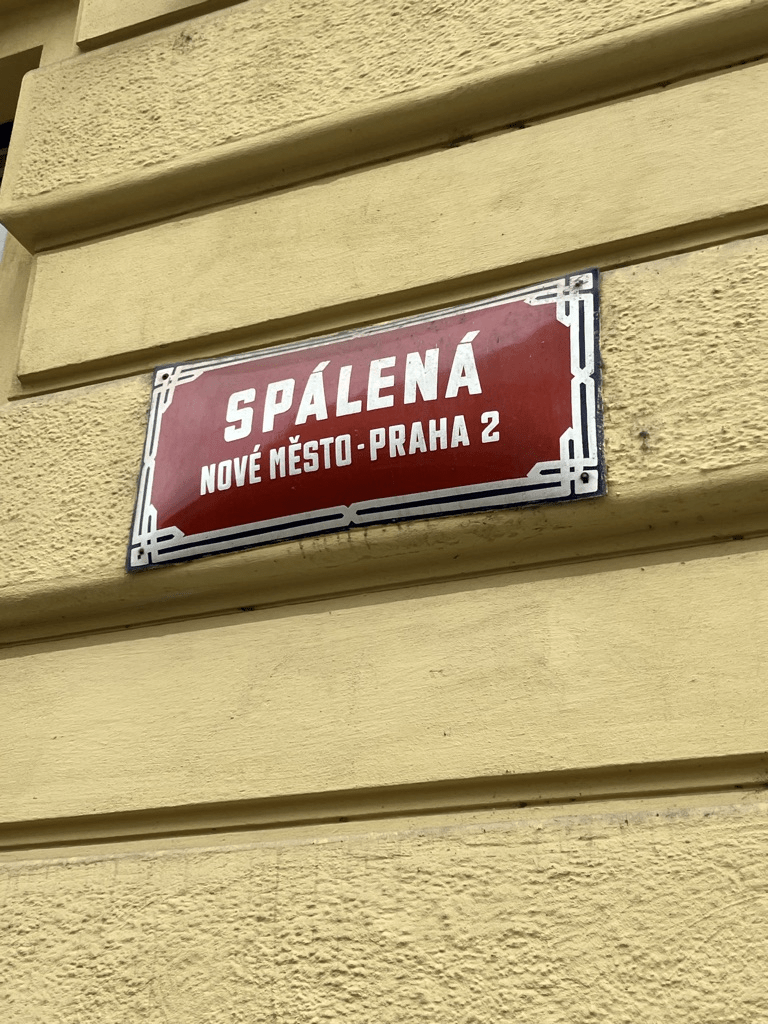
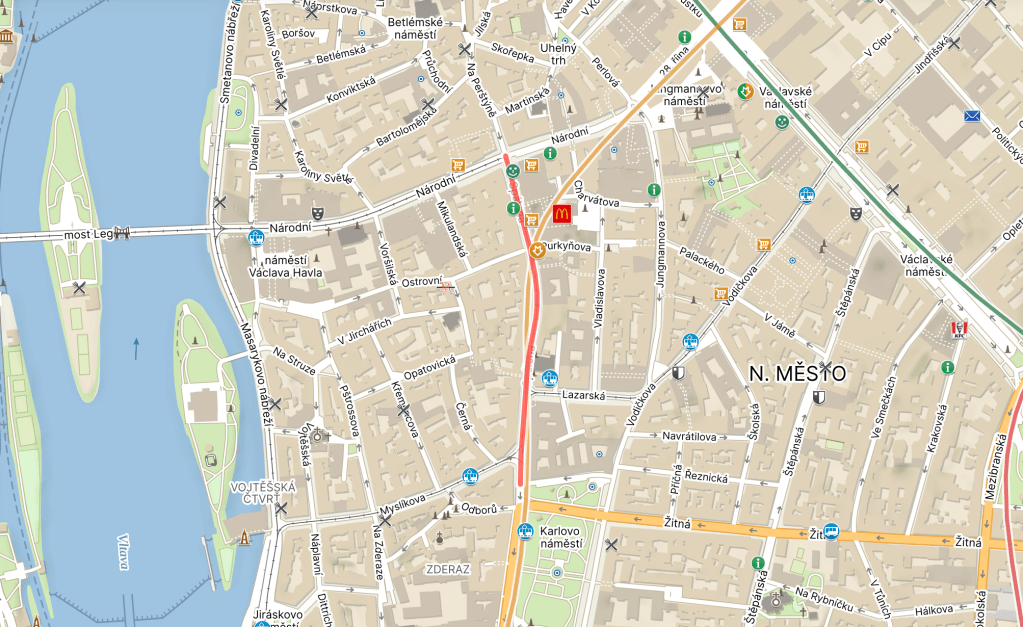
Before the founding of the New Town in 1348, this was part of a road leading from Vyšehrad to Prague Castle, and which was therefore known as Vyšehradská cesta.
As well as founding the New Town, Karel IV evicted various tradesmen from the Old Town, including blacksmiths.
A blacksmith is a kovář, and several of them decided to set up shop here – so, during the 14th century, the street was renamed Kovářská.
In the early 15th century, it became known as Flašnéřská. A flašnéř is similar to what is nowadays known as a klempíř, i.e. a tinsmith, i.e. someone who works with sheet metal.
In June 1506, Flašnéřská was hit by a fire so severe that it destroyed twenty houses on the street. In 1518, the street’s name was recorded as ‘Spálená’ – meaning ‘burnt’.
Spálená is famous for, amongst other things, the ‘Máj’ shopping centre, AKA the first time I ever saw a multi-storey Tesco so big it had its own boomerang section (that was in 2005; no boomerangs now).
Great pic of Máj from the Velvet Revolution: https://commons.wikimedia.org/wiki/Category:Obchodn%C3%AD_d%C5%AFm_M%C3%A1j#/media/File:1989_sametova_revoluce_15.jpg
I also have a soft spot for the Olympic building, a functionalist building designed by Jaromír Krejcar, and completed in 1928 – or, at least, a soft spot for its logo: https://commons.wikimedia.org/wiki/Category:Obchodn%C3%AD_d%C5%AFm_Olympic#/media/File:Sp%C3%A1len%C3%A1_16_Obchodn%C3%AD_d%C5%AFm_Olympic_1.jpg
I know these two are on the Prague 1 part of the street, but who’s keeping count?
(I am, admittedly)

 What's in a Prague street name


Leave a comment