Originally published on X on 23 April 2023.
Karlovo náměstí (Charles Square, or Karlák if you’re a local) was built in 1348.
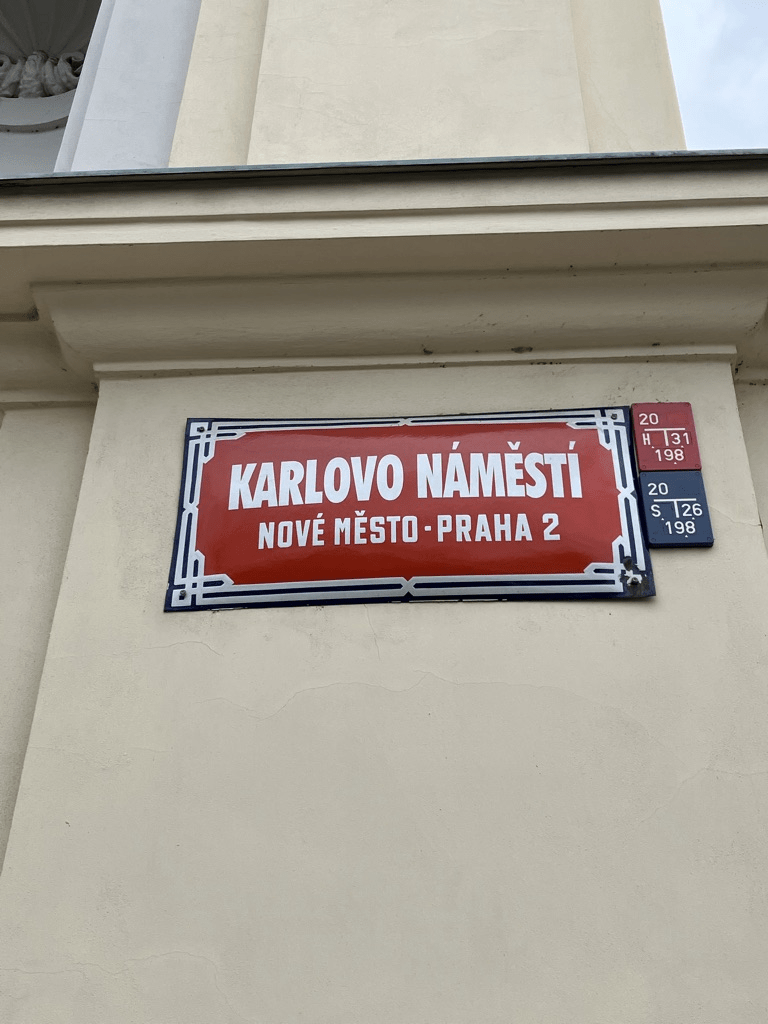
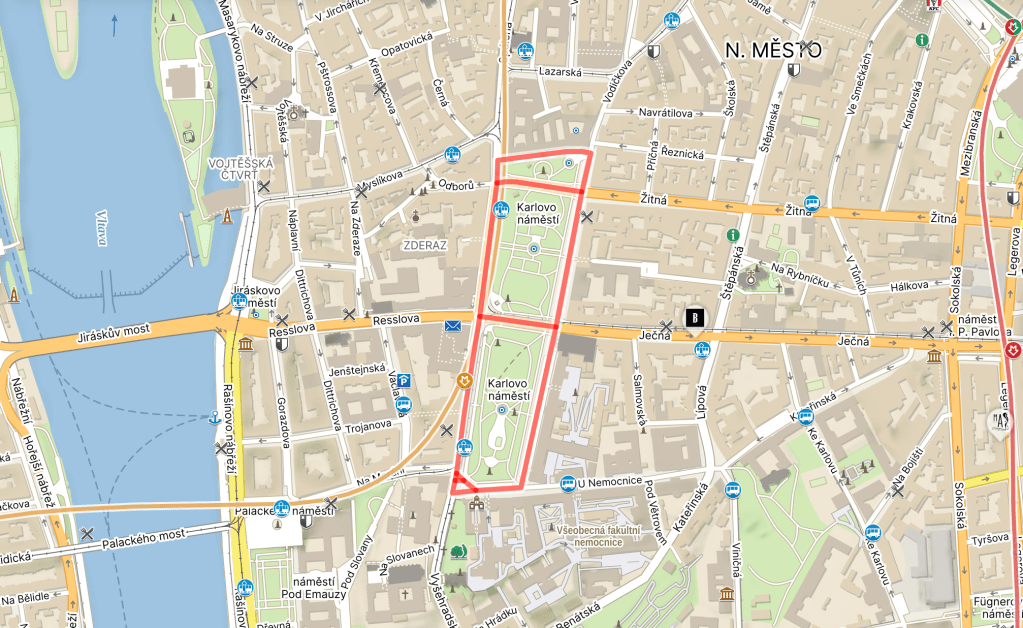
The square promptly became the centre of the New Town, being called Dobytčí trh (Livestock Market) until 1848.
Upon its construction, it was the largest town square not only in Prague, but also in Europe (it was bigger then than it is now, though, stretching far as Lazarská).
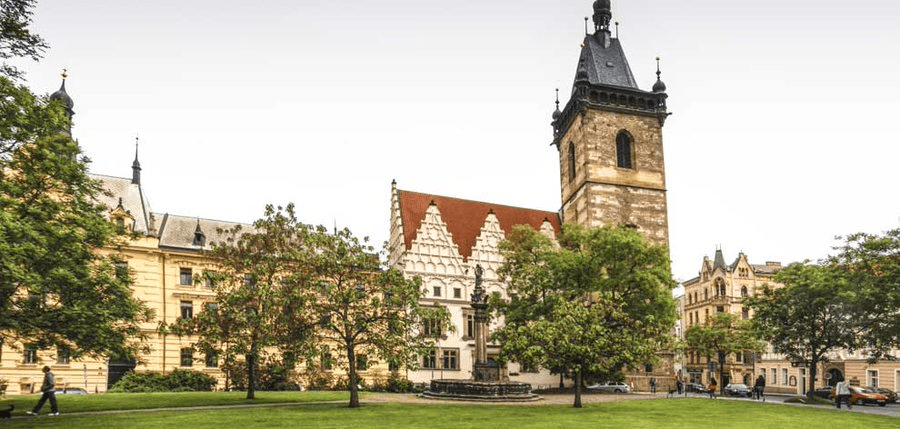
It’s therefore not surprising that the square became (and still is) the location for the New Town’s Town Hall, built between 1377 and 1398, with additions in 1411.
(pic from https://nrpraha.cz)
The Town Hall’s place in history would be ensured on 30 July 1419, when the Hussite priest Jan Želivský led his followers on a march, protesting the fact that the town council was refusing to free its Hussite prisoners.
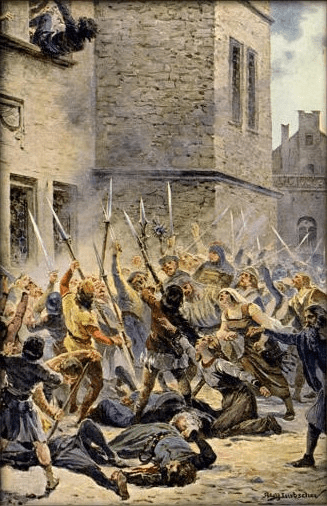
A stone was allegedly thrown from the Town Hall, hitting one of the protestors. The crowd stormed the building, throwing the judge, the mayor and five others out of the window to their deaths. This was the First Defenestration of Prague.
(Painting by Adolf Liebscher)
Václav IV would die of a heart attack within the next three weeks, supposedly because of the shock. And the Czech Lands would be plagued by the Hussite Wars until 1436.
In the 1860s, the market was torn down and Karlák was turned into a park-slash-square, with František Josef Thomayer turning it into an English-style garden in 1884.
Karlák is also known for the Baroque Church of St Ignatius, built between 1655 and 1677 and (pictured in 1858), once part of the third-largest Jesuit complex in Europe.
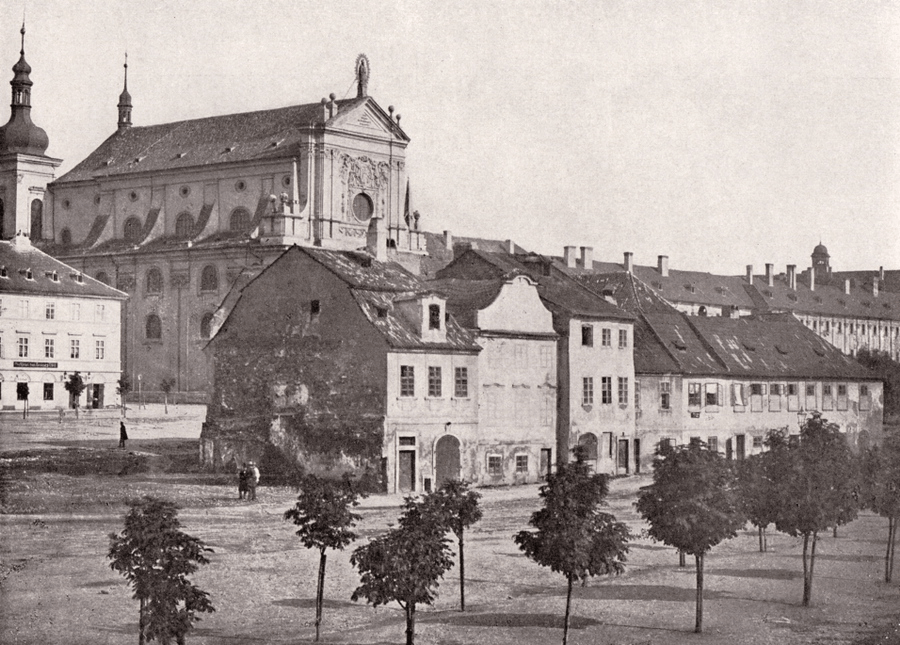
It’s also got the Faust House, which, in the 14th century, it was lived in by Prince Vaclav of Opava, who was into alchemy. Then, during the Reign of Rudolph II, it was lived in by the astrologer Jakub Krucinek, and then by the alchemist Edward Kelley.https://commons.wikimedia.org/wiki/Category:Faust%C5%AFv_d%C5%AFm#/media/File:057_Faust%C5%AFv_d%C5%AFm.JPG
Since 1985, Karlák has had a metro station, on the B / yellow line. It was originally meant to be called Palackého náměstí, and, reading that, I now feel a bit less dumb for spending my first six months in Prague assuming that Palackého náměstí *was* in fact Karlovo.
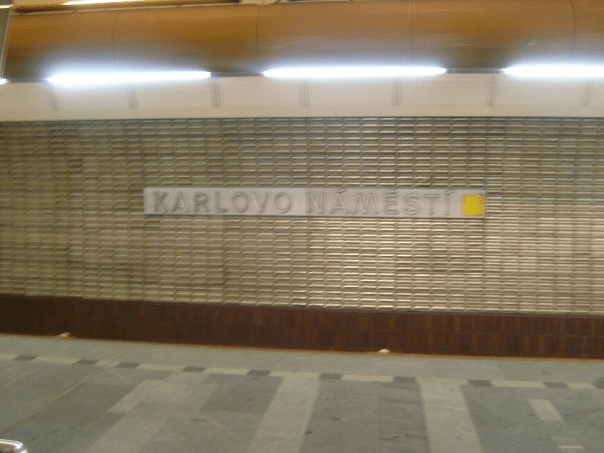
The station got flooded to hell and back in 2002 and needed a heck of a lot of reconstruction; it took seven months before the exit onto Palackého could be used again.
Karlák was also the scene of Prague’s biggest tram accident of recent times on 16 March 2005, when the last chassis of a number 22 tram derailed and rammed into waiting passengers. Two people were killed: https://www.prahain.cz/doprava/video-karlovo-namesti-misto-kde-se-stala-nejvetsi-nehoda-tramvaje-2362.html
And, because I haven’t actually covered the street name yet, there’s a (highly) potted bio of Karel IV on https://whatsinapraguestreetname.com/2023/02/26/prague-3-day-152-premyslovska/ (if you want more details, I’m pretty sure they’ll end up being part of the Prague 1 series on more than one street/occasion).

 What's in a Prague street name

Leave a comment