Originally published on X on 26 April 2023.
Štěpánská was built in the mid-14th century.
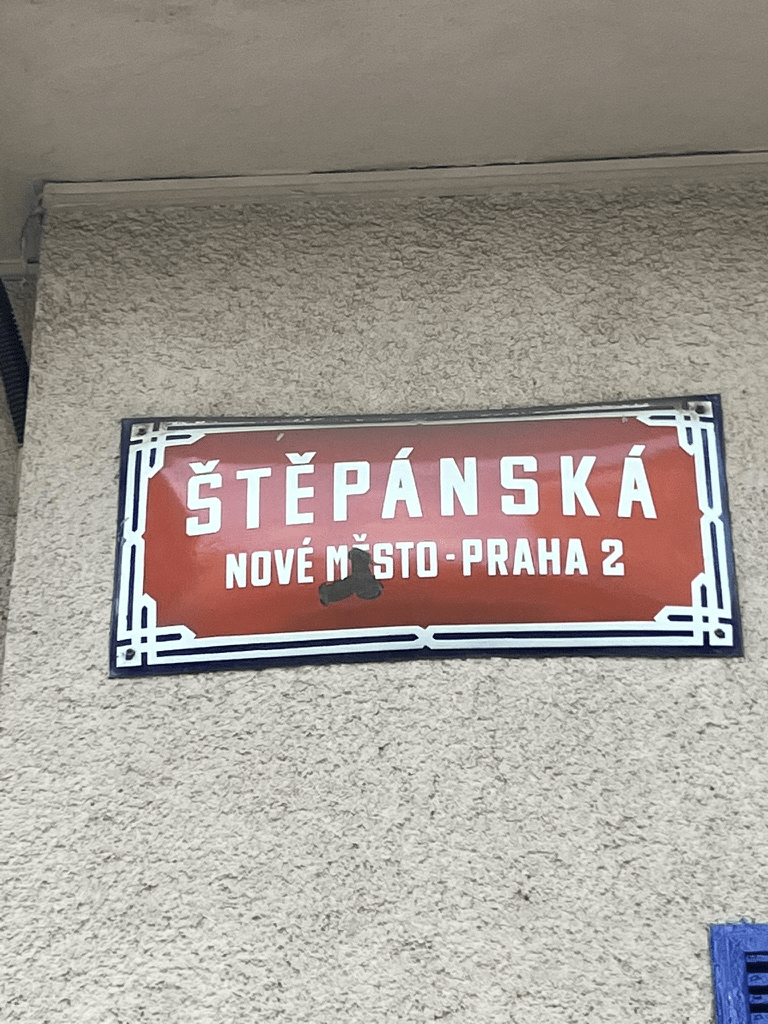
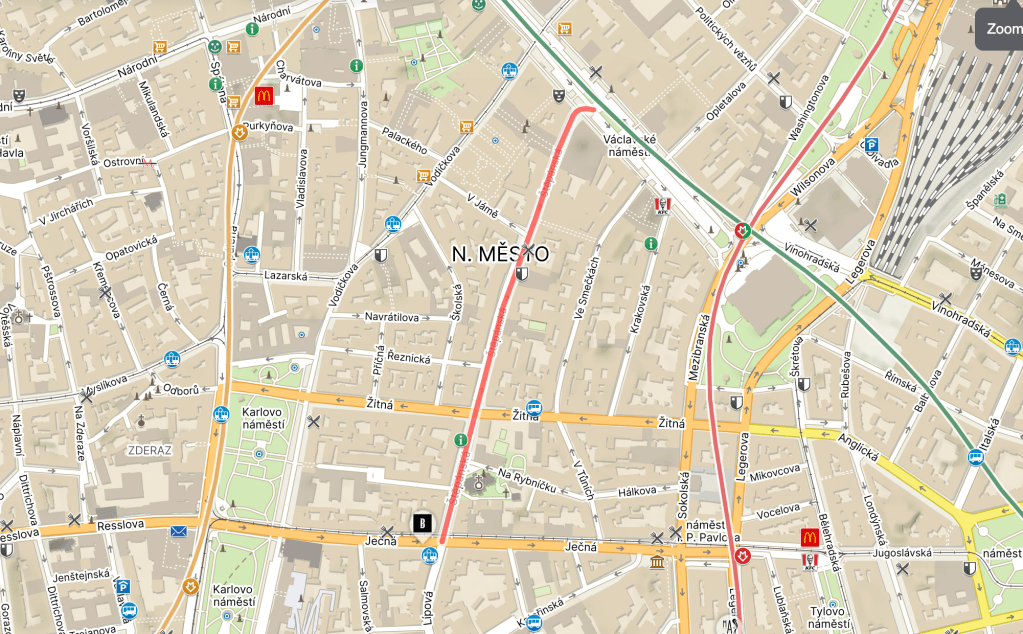
Up to the 15th century, the street was known by various names: Svatoštěpánská (linked to its current name), Nad Jámou (Above the Pit – after its geographical location), or Nad Louží (Above the Puddle – there was a settlement round here called Rybníček which had three ponds).
In the 15th century, it became Provaznická, after the ropemakers who lived and traded here (a ropemaker is a provazník).
It then became Široká ulice u svatého Štěpána in the 16th century, and subsequently Květoňská in the 17th, after a building at number 22 called Na Květoni (which now hosts the Akademické gymnázium Štěpánská).
The name Štěpánská has stuck since the 18th century.
When the New Town was founded, the Church of St Stephen / Kostel svatého Štěpána was too, being completed in 1401 and serving as the parish church for the upper New Town.
The church had a cemetery so large that it could accommodate the remains of 15,000 people who died in a plague epidemic at the start of the 16th century.
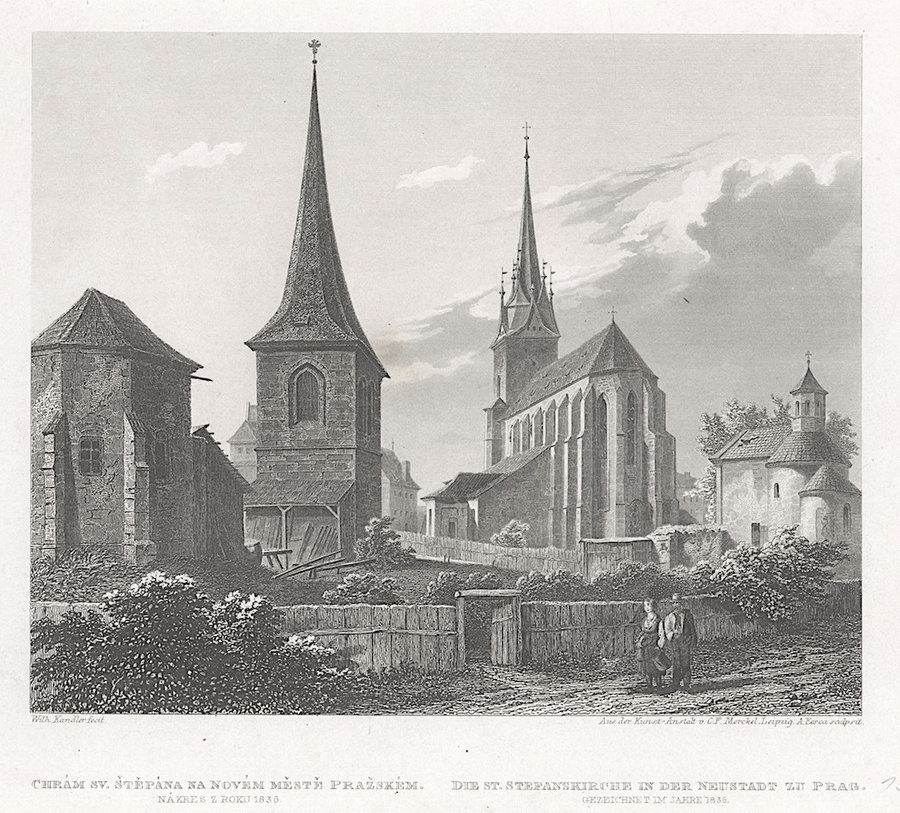
The church has undergone various renovations since, particularly from 1874–1879.
It also hasn’t done too badly in terms of visitors – Antonín Dvořák’s daughter Otilie got married here to the composer Josef Suk.
Other marriages here include those of Bedřich Smetana and Miroslav Tyrš (https://whatsinapraguestreetname.com/2024/08/31/prague-2-day-132-tyrsova/).

 What's in a Prague street name
Leave a comment