Originally published on X on 3 August 2023.
You don’t get a normal street sign today, but you do get this.
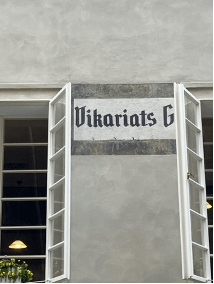
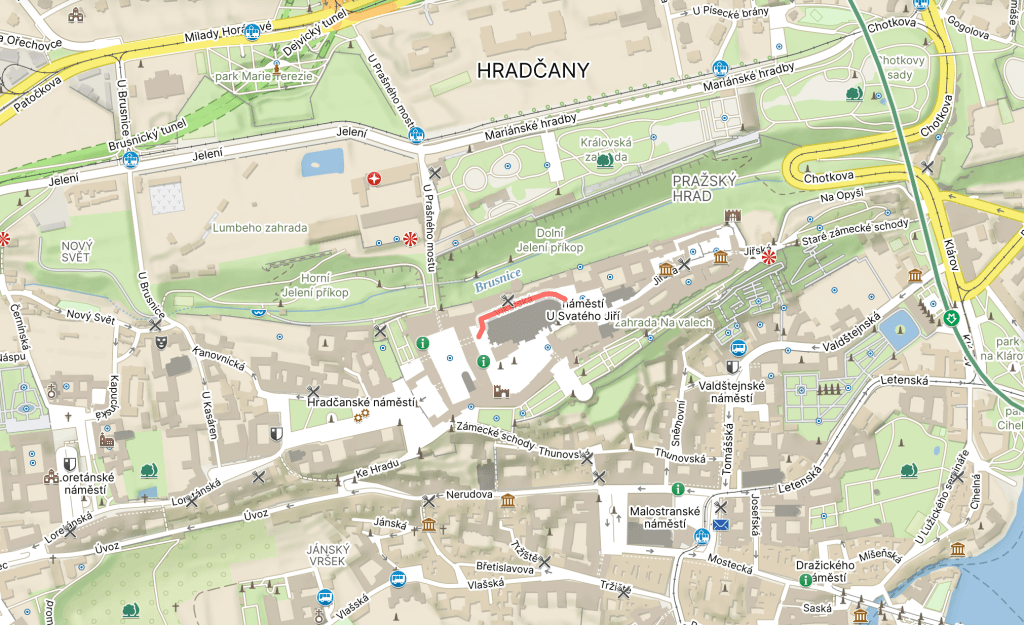
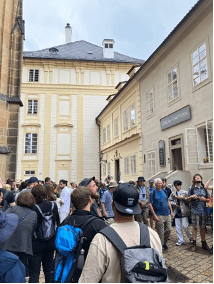
If you’ve ever been on this street, it’s probably because you were queuing there for ages and ages, waiting to get into St Vitus Cathedral (see example of The Long Wait below).
In Latin, vicarius means ‘substitute’, which is how we get people telling you they’re ‘living vicariously’ through your Instagram travel pics. This then led to the Old French vicaire, meaning a deputy, or second-in-command.
When the word crossed the English Channel, it gave us ‘vicar’ – as, while a rector would receive tithes (taxes) from his parish, a vicar would not and was therefore subordinate.
In Bohemia, a vikář would be a representative of the parish priest; during the First Republic, bishoprics were divided into vikariáty.
And you may have noticed that this street is next to some cathedral or other – the Prague Metropolitan Chapter was logically set up here in 971. It then became an archdiocese in 1344, and remained close to the Catholic Church even when the Hussites wanted otherwise.
Canons of the chapter have had awesome names even from the get-go: Heřman, Tutha, Menhart, Walkun, Mlaz, Benco, Dětřich, Chvalko, Burchard, Eppo, and Něpr, we salute you, and that’s only taking us up to 1216 and leaving a lot of your people out.
The chapter’s headquarters stood in this street, and its members and servants lived here until about the mid-16th century.
Even before getting a name in the 18th century, Vikářská included Malá Vikárka, Velká Vikárka and the Chapter Deanery, also known as Mladotův dům, as its rebuilding was ordered by Adam Ignác Mladota, the chapter dean, in 1705-6: https://www.santini.cz/cz/praha/kapitulni-dekanstvi
Just to prove languages are worth devoting your life to, the Breton for ‘vicar’ is person, and German-speakers of a mildly teenage disposition will probably find it quite amusing that the word has turned into ficer when used in Welsh.

 What's in a Prague street name
Leave a comment