Originally published on X on 4 August 2023. It’s a story of two parts.
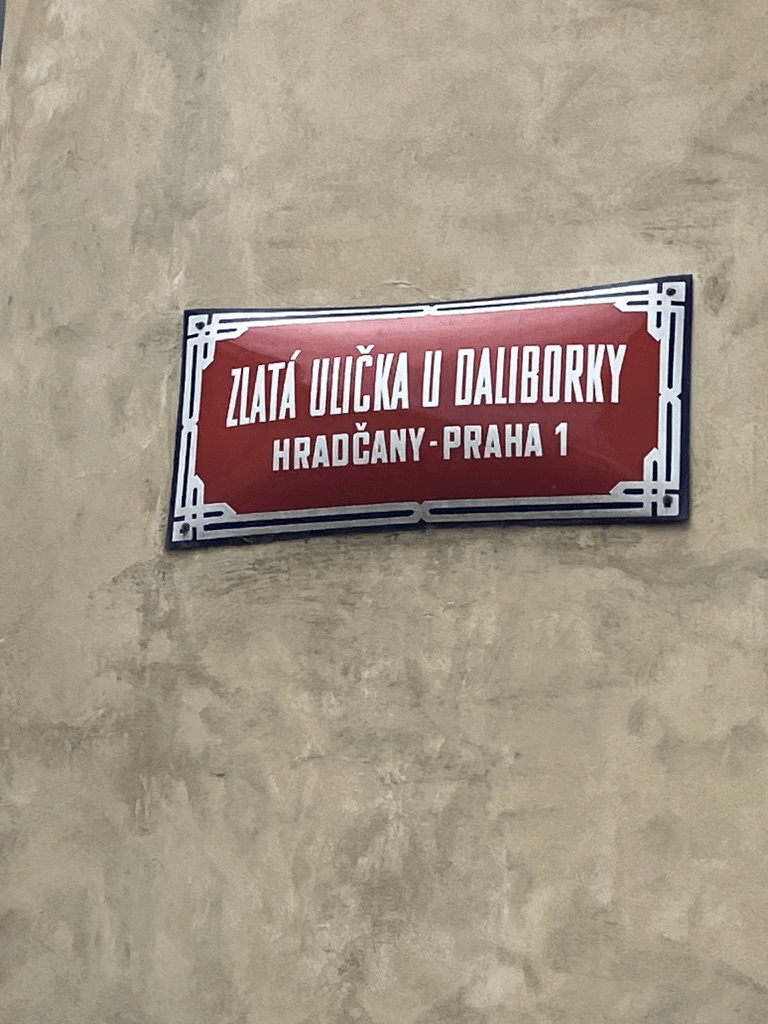
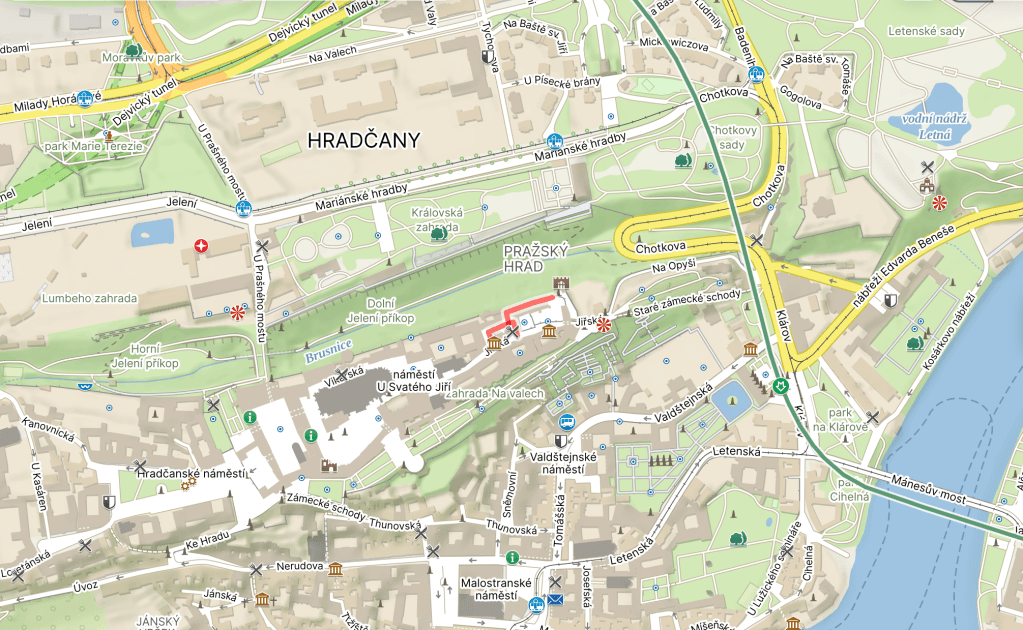
Back in the 16th century, this was an alleyway, and the poorest part of Hradčany. Legend has it that it was called Zlatička at the time, with the following theories abounding:
– Goldsmiths might have lived here (unlikely if it was a street for the poor)
– Alchemists lived here and tried to produce gold
– Members of the castle guard lived here, and wore gold in their uniforms
– ‘Hilarious’ joke about the street’s poverty
At the end of the century, Emperor Rudolph II gave the castle guards permission to live here, but didn’t give them any money towards building their houses, which they had to finance themselves.
It was a convenient location for castle staff, but also a very cramped one; in 1864, most of the houses were removed to make space.
In the late 1800s, the street was turned into what you might uncharitably call a tourist trap, offering views of the (then inaccessible) Jelení příkop / Deer Moat.
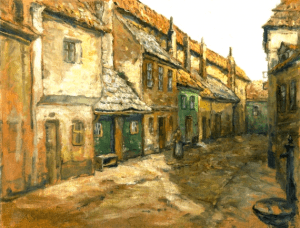
The street also became popular with creative types, with its most famous resident being Franz Kafka, who lived at number 22, rented by his sister, for five months in 1916-7.
Another famous inhabitant, in 1929, was Jaroslav Seifert (https://whatsinapraguestreetname.com/2023/01/13/prague-3-day-125-seifertova/), while a famous Prague fortune-teller, Madame de Thebes, also operated here before WW2.
Zlatá Ulička was done up significantly in the 1950s; since 2002, you’ve had to pay to enter, as part of your Prague Castle entry ticket. It always seems to be rammed, and, like me, you may decide that, after a day at the castle, it’s just one crowd too far (sorry).
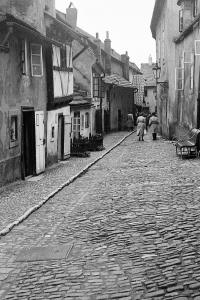
The first two pics on https://commons.wikimedia.org/wiki/Category:Zlat%C3%A1_uli%C4%8Dka_u_Daliborkysum… this up quite well, in case you were judging me.
But now I read it’s free entry in the evenings? Can anyone confirm?
Anyway, time for Part 2.
Dalibor z Kozojed was born in the 15th century. Towards the end of said century, the common people of Bohemia weren’t having the best of times, which led to a series of revolts.
In one of these, a crowd attacked the estate of one Adam Ploskovský in Drahonice. He promised to free them from servitude, and they ‘took refuge under the protection of’ another local nobleman – Dalibor.
Dalibor saw this as a nice little opportunity to get his hands on Adam Ploskovský’s property; in 1497, the provincial court decided that taking rebellious subjects under your protection was a crime.
So Dalibor got imprisoned, and, in March 1498, he was sentenced to death. He would be beheaded by the Black Tower (https://whatsinapraguestreetname.com/2024/09/03/prague-1-day-2-jirska/) on the same day.
And the tower that he was imprisoned in? That has since become known as the Daliborka, as it had been built in 1496 and he was its first prisoner.


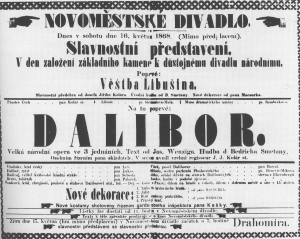
In 1868, the story of Dalibor would get its premiere in opera form, as composed by Bedřich Smetana.
You can now go inside the Daliborka as part of your Prague Castle ticket. It’s inevitably got torture instruments and the like.

 What's in a Prague street name
Leave a comment