Originally published on X on 11 September 2023.
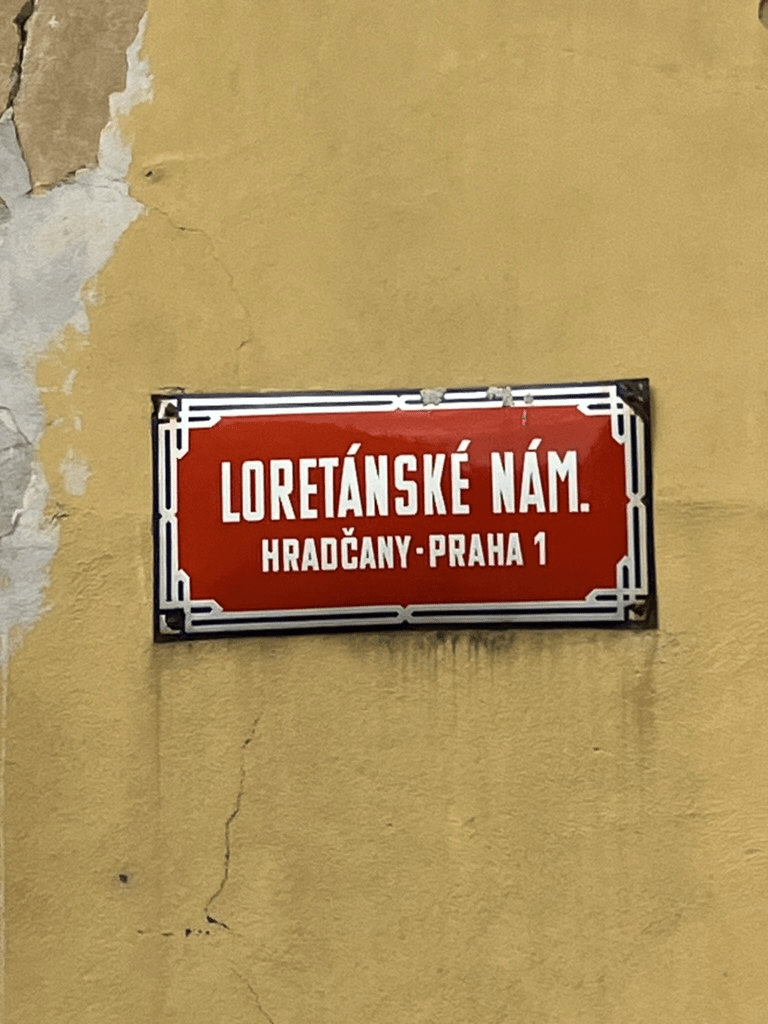
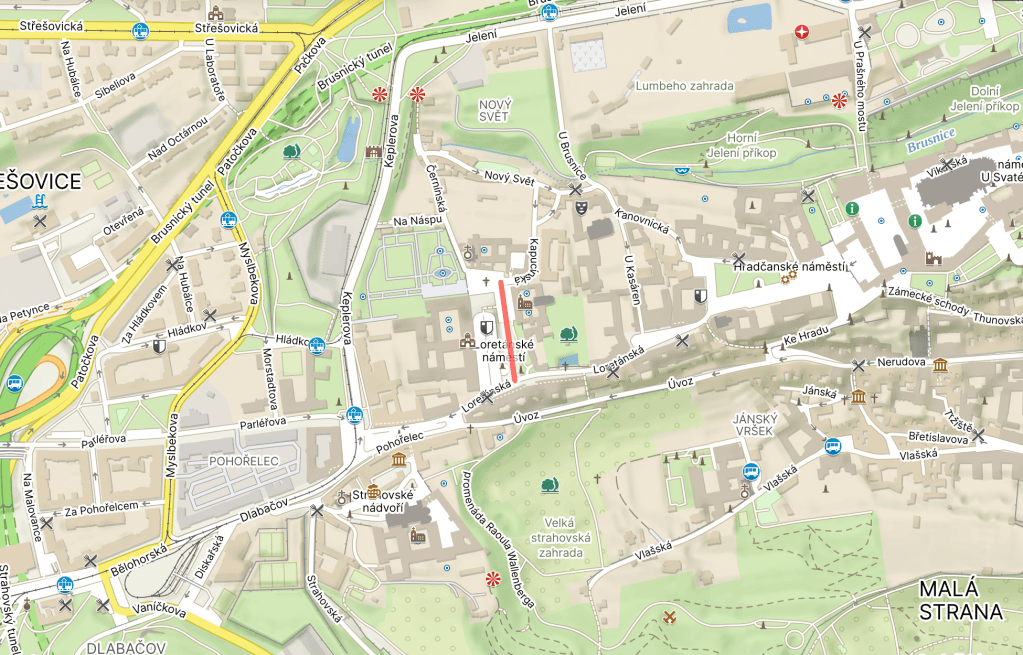
Let’s start this one in Italy, where Loreto, on the Adriatic coast, and with a population of about 12,000, houses the Basilica della Santa Casa, which some Catholics believe was inhabited by the Virgin Mary.
Rather than being a nice Italian holiday home for the… Mary and Joseph didn’t have surnames, did they, medieval traditions suggested that the house was originally located in Nazareth.
After Jesus’s Ascension, it was turned into a church, which, in 1291, was reputedly carried to Dalmatia by angels in order to stop it from being attacked by Muslim soldiers.
The legend then has it that the church was carried, again by angels, to Loreto in 1294. Whether this was done to get it away from hordes of Czech tourists remains unknown.
Inevitably, Loreto is therefore a popular pilgrimage site – Italy’s second most popular after Rome – and a building seen as worth emulating elsewhere, for example in Prague.
In 1626, construction started, led by Italian architect Giovanni Orsi, and financed by one Countess Benigna Kateřina z Lobkowicz, who had bought many properties in Hradčany after these had been confiscated post-Bílá Hora.
The chapel was consecrated in 1631; Benigna died in 1654 and would be buried here – there’s a crypt for the Lobkowicz family.
The Loreta is administered by the Capuchin monks, who conveniently live right next door: https://whatsinapraguestreetname.com/2024/09/07/prague-1-day-16-kapucinska/.
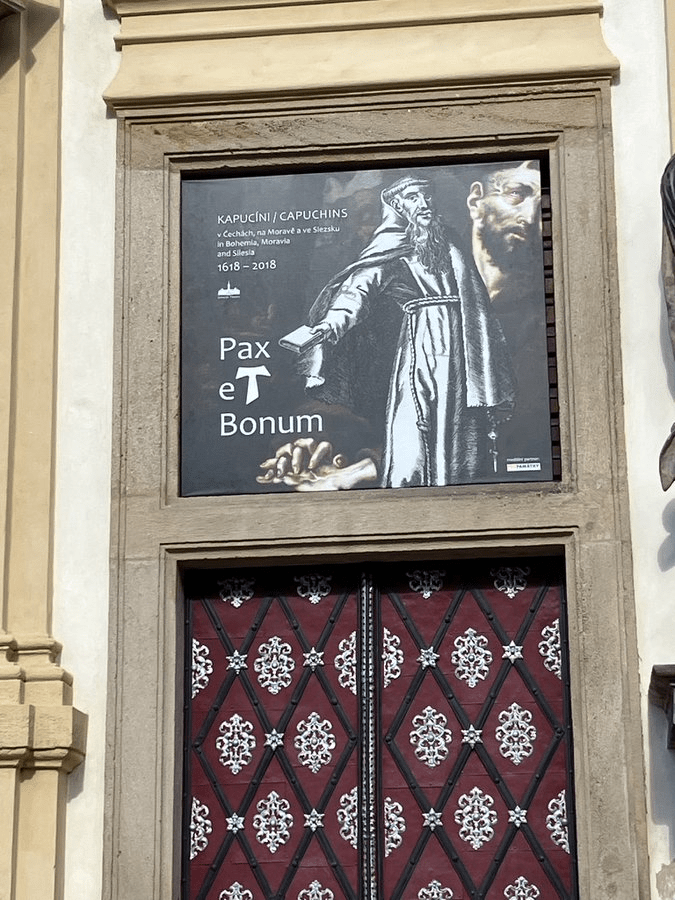
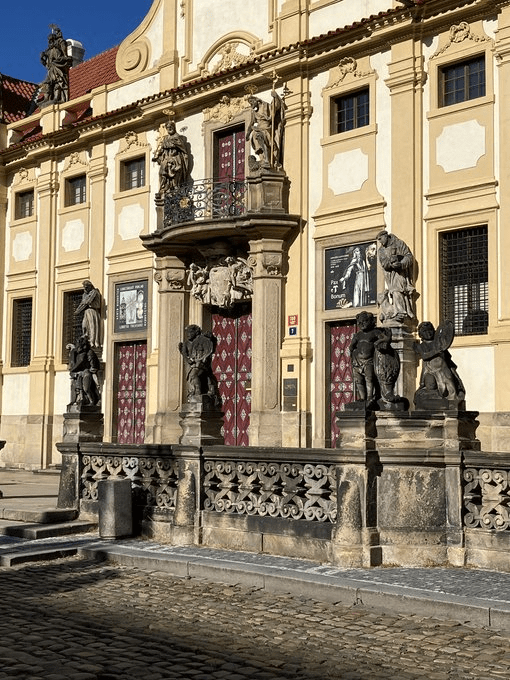
‘Loreta’ is also the name given to the whole range of Baroque buildings on the square: https://loreta.cz/en.
The main façade of the complex is pretty spectacular and contains a *lot* of saints and angels (possibly taking a break from transporting entire buildings from Croatia).

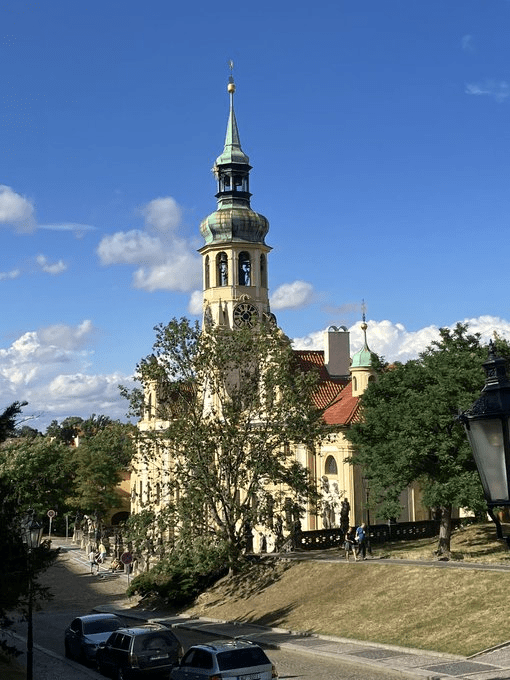
The Loreta also hosts Europe’s biggest church carillon, first rung in 1695 (30 bells, of which 27 play, and three apparently are just there to look nice).
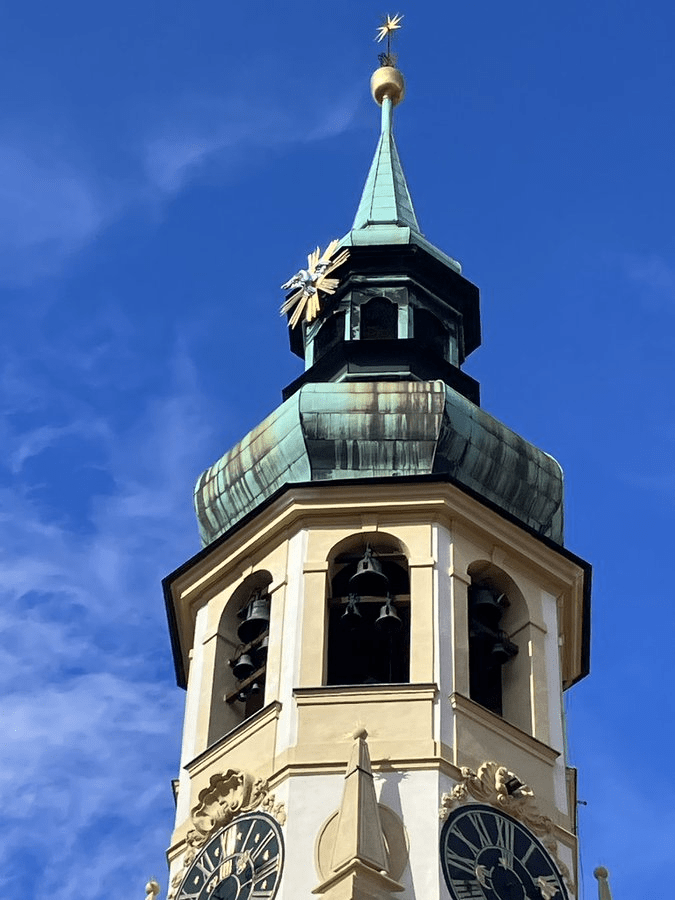
During the day, they currently play Maria, Maria, nad slunce jasnější every hour, having played another song for a century until this was changed in 2020.
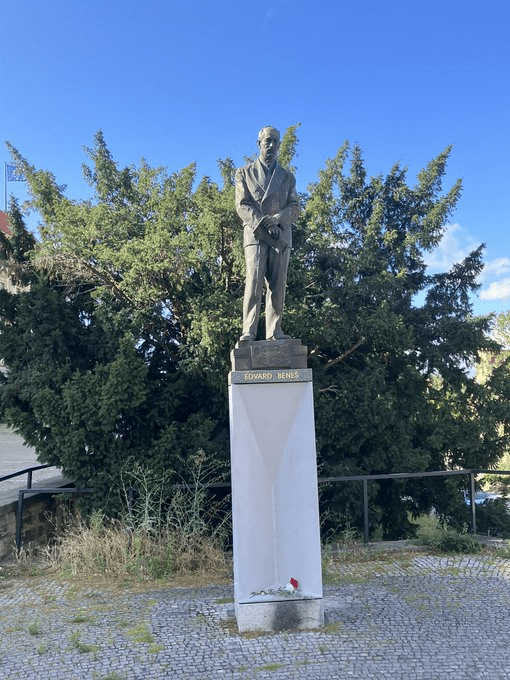
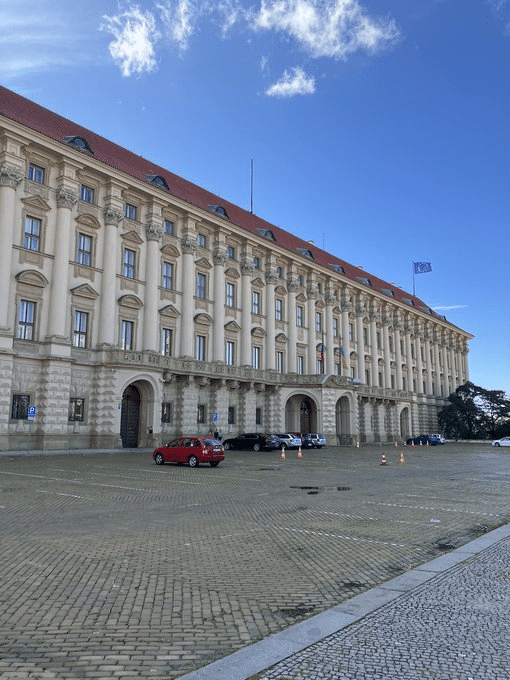
The square is also home to this 2005 statue of Edvard Beneš (by Karel Dvořák), conveniently close to his beloved (?) Ministry of Foreign Affairs.
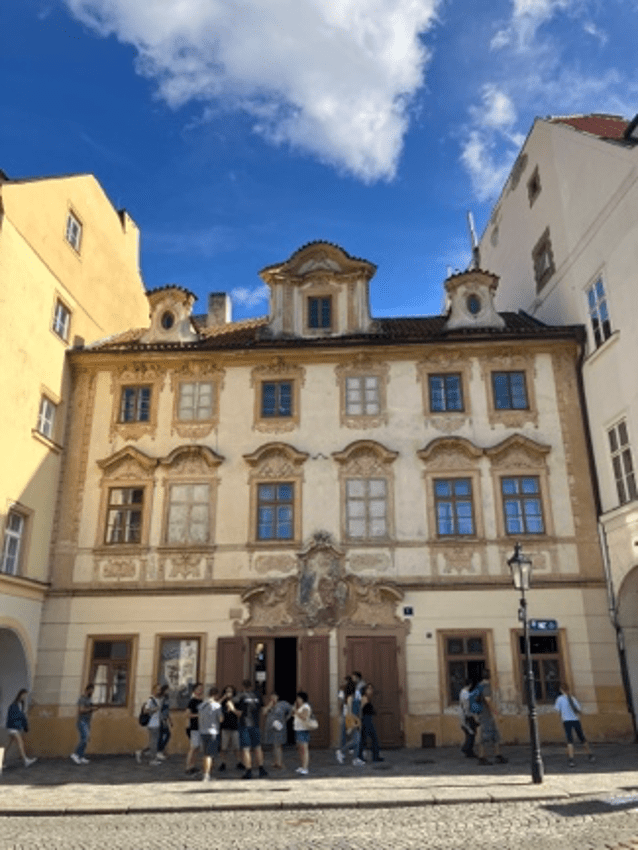
The square also includes the building where, in 1957, SAPO, the first programmable computer in Czechoslovakia, was made. The house (U Pešků) was the location of the Research Institute of Mathematical Machines.
Finally, if you want to get a drink, pretend it’s not this decade, *and* support a good cause, U Černého vola (The Black Ox) was opened in 1965, and proceeds from sales go to Jaroslav Ježek’s (https://whatsinapraguestreetname.com/2023/01/14/prague-3-day-136-jezkova/) nearby school for the blind.
At least 52 further Loretas were built in Bohemia and Moravia, though many haven’t survived (including one in Prague’s New Town on Jungmannovo).

 What's in a Prague street name
Leave a comment