Originally published on X on 9 August 2023.
Badeniho was built in 1905 and shared with Prague 6 and Prague 7 (yes, I know that’s a 6 on the sign).

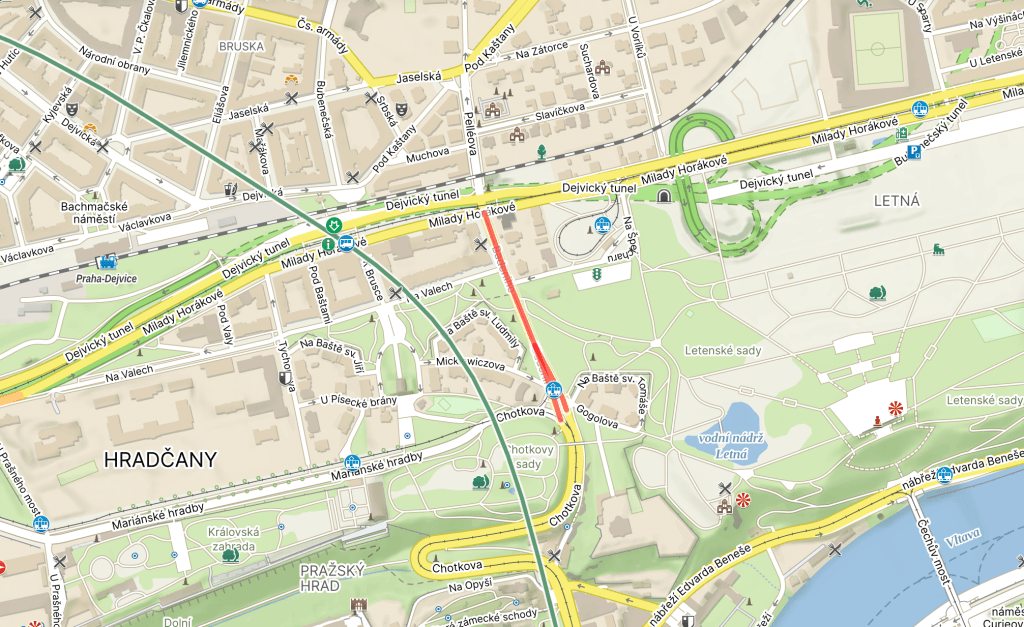
Kazimierz Feliks Badeni was born into a noble family in the village of Surochów (then Galicia, now south-east Poland) in 1846.
Graduating from his law studies in Kraków, he joined the Austrian civil service in 1866, initially working in the Ministries of the Interior and Agriculture, before becoming a district governor in Zhovkva (now in Lviv Oblast), then in Rzeszów (now in Poland).
In 1888, he would become governor of Galicia – but a much more powerful role was going to come his way a few years later.
Franz Joseph tasked Badeni – a devoted monarchist who had managed to reduce Polish-Ukrainian tensions in Galicia – with forming a government.

As Prime Minister, Badeni promptly did the most likely thing to get the Young Czech Party / Mladočeši on side, and ended the state of emergency. In 1896, he also got rid of Prince Franz Anton von Thun und Hohenstein, the unpopular Governor of Bohemia.
In the same year, Badeniho extended the range of people who could vote to include men over the age of 24 who, previously, had not been allowed to vote due to not paying sufficient taxes.
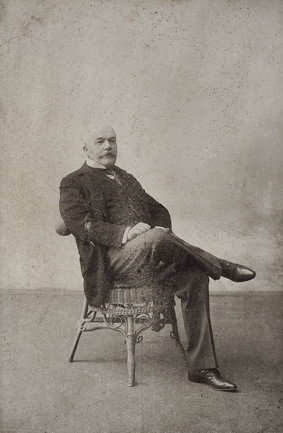
Still trying to get Young Czech support, Badeni declared in April 1897 that the civil service in Bohemia would use Czech and German equally, and that civil servants would have to be proficient in both by 1901. A similar ruling for Moravia followed in the same month.
Most of the Germans in the civil service reacted to this even worse than your expat friends in the Czech Republic do when they find out they need to reach A2 to get permanent residency.
The Young Czechs were quite pleased; the Vienna press were not, and German nationalists decided that rioting was a more useful reaction than asking their friends if they knew a decent, well-priced Czech teacher.

By November, Franz Joseph had decided to let Badeni go, after two years at the helm. It probably hadn’t helped that, two months earlier, Badeni had reacted to an insult by nationalist politician Karl Hermann Wolf by challenging him to a duel (and got injured).
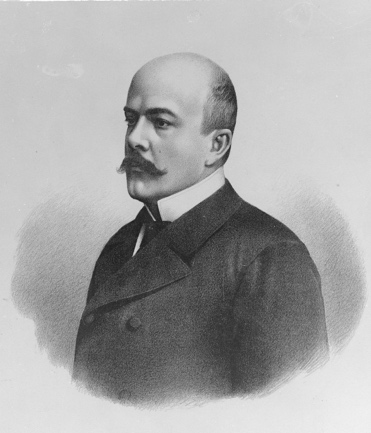
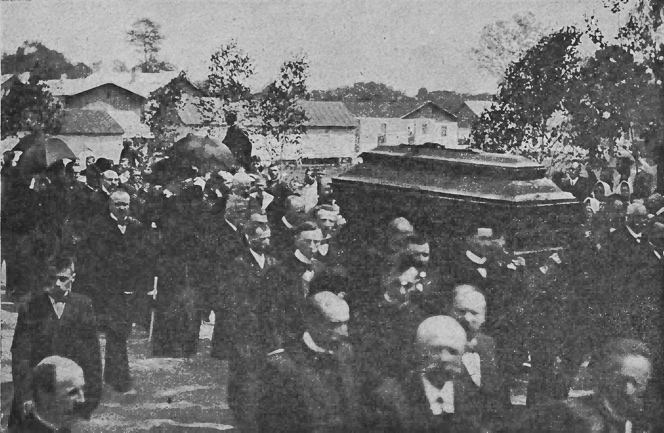
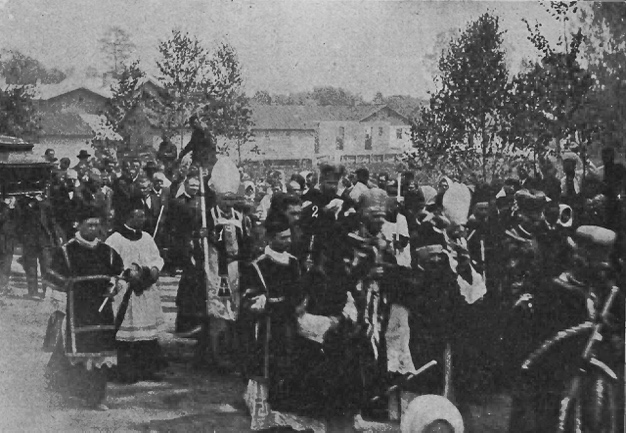
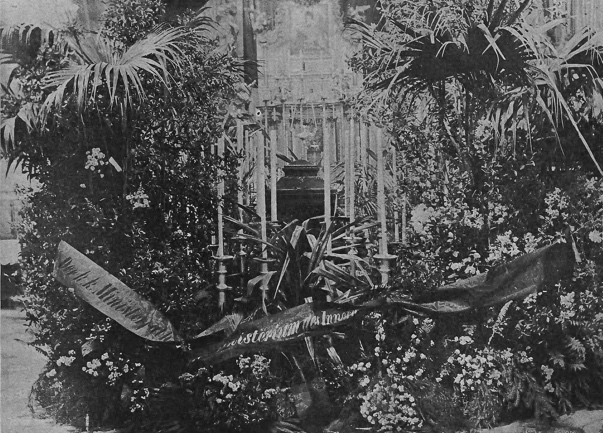
Badeni would die on a train in 1909, while travelling back to Galicia after a stay in Karlovy Vary, where he had been treated for diabetes. These pictures, by an unknown author, are of his funeral.
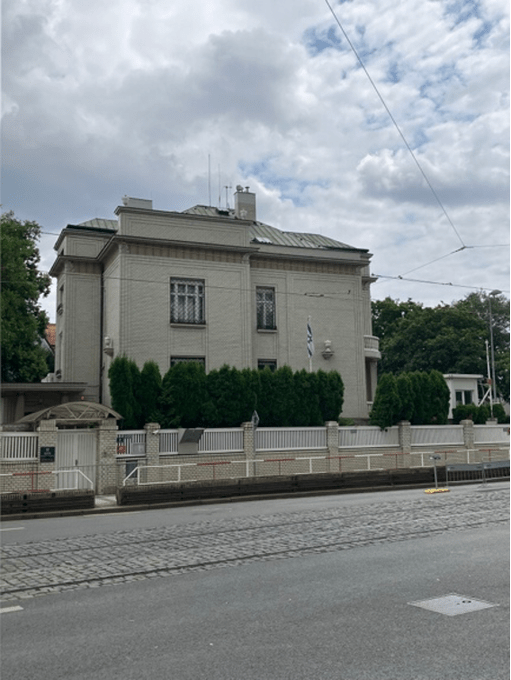
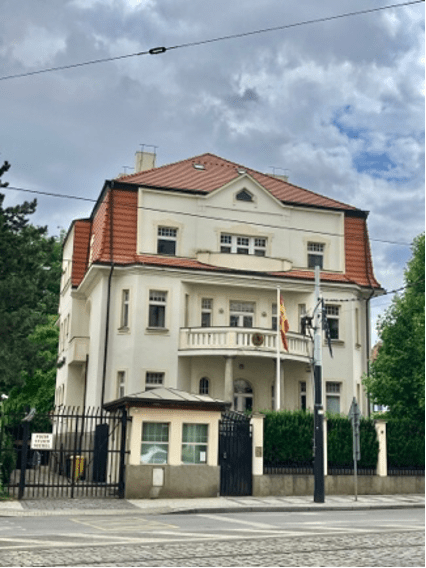
Badeniho contains both the Israeli and Spanish embassies – but not in the Prague 1 part.
And while we don’t get a Badeniho / Praha 1’ sign, we do get this quite nice commemorative plaque.
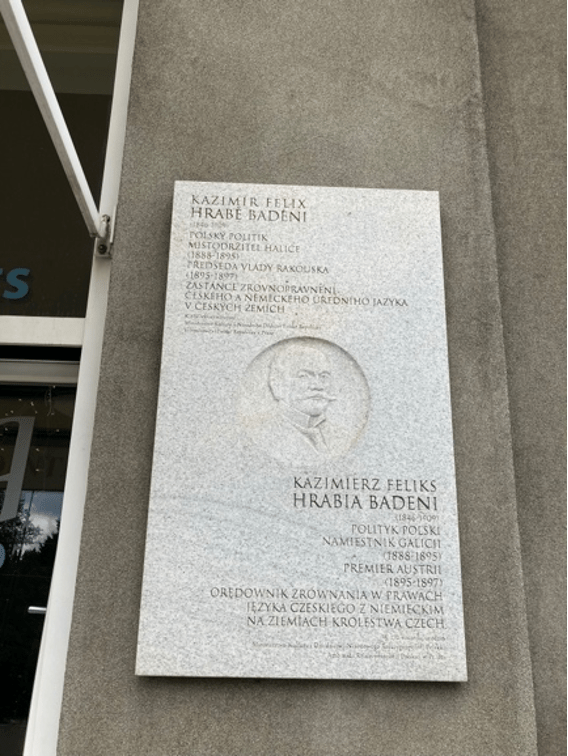

 What's in a Prague street name
Leave a comment