Originally published on X on 23 September 2023.


Raoul Wallenberg was born on Lidingö, an island in the Stockholm Archipelago, in 1912. His father had died of cancer three months earlier.
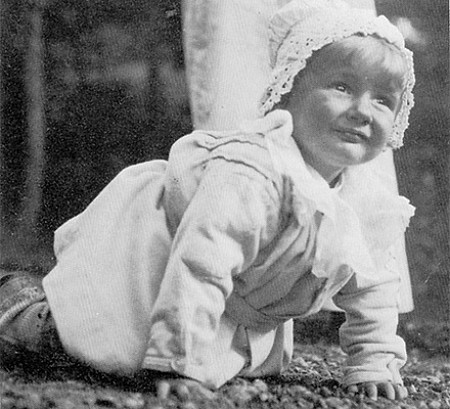
His grandfather was, at this time, Swedish Ambassador to Japan, and made it his mission to show Raoul the world.
Wallenberg studied in Paris, and then studied achitecture at the University of Michigan in Ann Arbor, graduating in 1935. After this, his grandfather sent him to work in South Africa, then in Haifa.
In Haifa, he met Jews who had fled from Nazi Germany. Wallenberg, one-sixteenth Jewish through his mother’s family, became hugely interested in their plight.
In 1941, Raoul’s cousin and godfather, Jacob, arranged a job for him at Melaneuropeiska Handelsaktiebolaget (The Central European Trading Joint Stock Company), which dealt in trade in food between Sweden and Hungary.
Raoul would visit Hungary on both 1942 and 1943, at a time when the country was highly discriminatory towards its Jewish population, but had, so far, refused to send them to the concentration camps.

Wallenberg’s boss, Kálmán Lauer, was a Hungarian Jew, and felt increasingly unable to visit his native land – hence Raoul becoming his representative.
Hitler ordered the occupation of Hungary in March 1944, and a puppet state was set up. Mass deportation of Hungarian Jews to concentration camps in Poland would commence within weeks.
The US government’s War Refugee Board (WRB) expressed its desire to send somebody from neutral Sweden to help to rescue the Jews. At the same time, the Swedish legation in Budapest was finding itself overloaded with requests for protection.
In June 1944, Sweden’s Ministry of Foreign Affairs gave permission for Wallenberg to join the country’s legation in Budapest, financed by the WRB. Arriving in July, Wallenberg developed his plan to issue protection documents in order to save as many Jews as possible.
Negotiations led to the bearers of such passports being regarded by the authorities as Swedish citizens – thereby saving them from deportation.
Wallenberg also rented multiple buildings in Budapest and declared them to be protected by diplomatic immunity; almost 10,000 people would be housed in them.
The Soviet Army launched an offensive against Budapest in October 1944. On 17 January 1945, Wallenberg, accused of espionage on behalf of the US, was called to their headquarters in Debrecen.
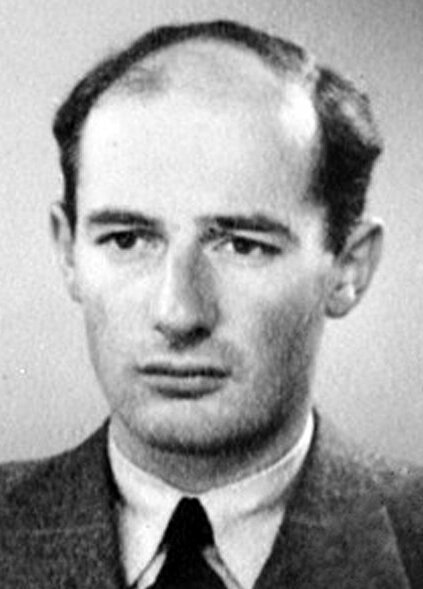
Promptly transferred to the Lubyanka Prison in Moscow, there would be no news of him until 1957, when the Soviet authorities announced that he had died of an infection a decade earlier, when he was 34.
However, even as late as the 1980s, there were prisoners in Siberian gulags who claimed to have seen a man fitting his description.
In 2016, the Swedish Tax Agency declared him deceased in absentia, and gave a year of death of 1952: https://www.bbc.com/news/world-europe-37824692
Wallenberg is an honorary citizen of Israel, Hungary, the UK, Canada and Australia: https://www.reaganlibrary.gov/archives/speech/remarks-signing-bill-proclaiming-honorary-united-states-citizenship-raoul
In Budapest, there’s a memorial park named after him just behind the Dohány Street Synagogue, one of Budapest’s most-visited landmarks, located on what was the border of the Budapest Ghetto.
Warsaw also has a street and a plaque dedicated to him: https://um.warszawa.pl/-/odsloniecie-tablicy-raoula-wallenberga
And Bratislava has a memorial: http://jewishbratislava.sk/wallenberg/
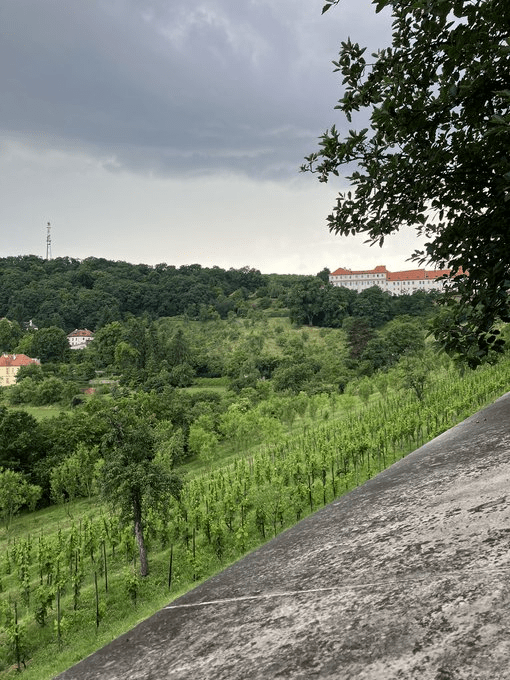
As well as being a place that really makes you think, the Promenade has maybe the best view of Strahov that you’re ever going to get.


 What's in a Prague street name
Leave a comment