Originally published on X on 29 September 2023.

Way, way, back (as in ‘invading Macedonia in 270 BC’ way back), there was a Celtic tribe known in Latin as the Volcae.
Their name found its way into Proto-Germanic as *Walhaz, which came to mean a foreigner who spoke a Romance language, or a Celt who had become romanised. Later, it also came to mean ‘nomad’.
The word then started to refer to a huge number of places that you might be familiar with.
*Walhaz, in Old Frankish, became *Walholant, the Land of the Romans. Those of you who remember that French ‘gu’ is often equivalent to Germanic ‘w’ may already have worked out that this then led to Gaule (French) and Gaul (English).
*Walhaz made it way into Old English as Wealh, and, proving that humanity hasn’t changed that much over the centuries, started to be used to refer to any inhabitant of the Western Roman Empire. The Anglo-Saxons started to use it to refer to what we now call, yes, Wales.
There was also a Wealh presence in the south-west of Britain, in a part of the island that looked a bit like a horn, or a carnu-. You might know it as Cornwall.
Meanwhile, back on the mainland, *Walhaz also gave its name to Wallonia, and, for the first time, I now also (sort of) understand why Swiss Germans refer to the French part of Switzerland as ‘Welscher Schweiz’.
And then there’s Wallachia, a principality founded in the 14th century, and united with another principality, Moldavia, in 1859. Seven years later, the two would adopt a single name – Romania. In Serbia, vlah is still used to denote a Romanian speaker.
‘Vlach’ has also been used, at different times and in different places, to refer to Slovaks, Hungarians, Bulgarians, Serbs and Albanians.
This is all well and good, and has covered a heck of a lot of ground (literally). But Vlašská isn’t named after any of these.
Because ‘Vlach’ has also been used to refer to Italians – and, indeed, it still is in Polish, where Italy is called Włochy (plural alert), and in Hungarian, where an Italian is an olasz and their country is Olaszország.
And, in the mid-1500s, Italians settled in the area where the street is now. We got there eventually!
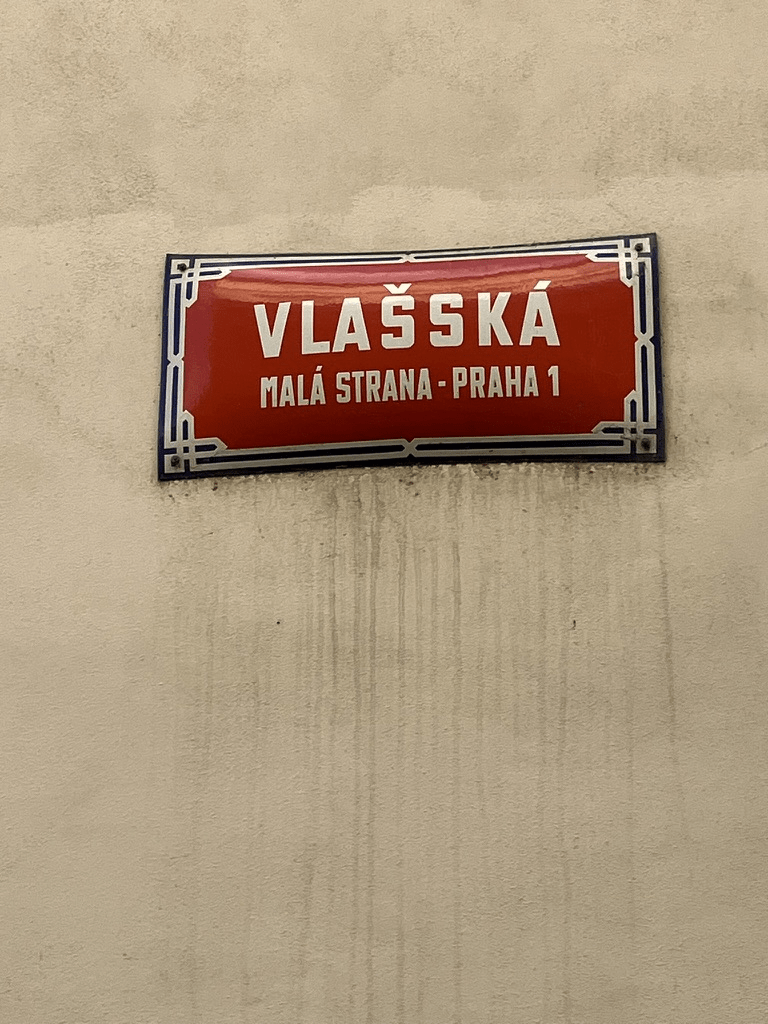
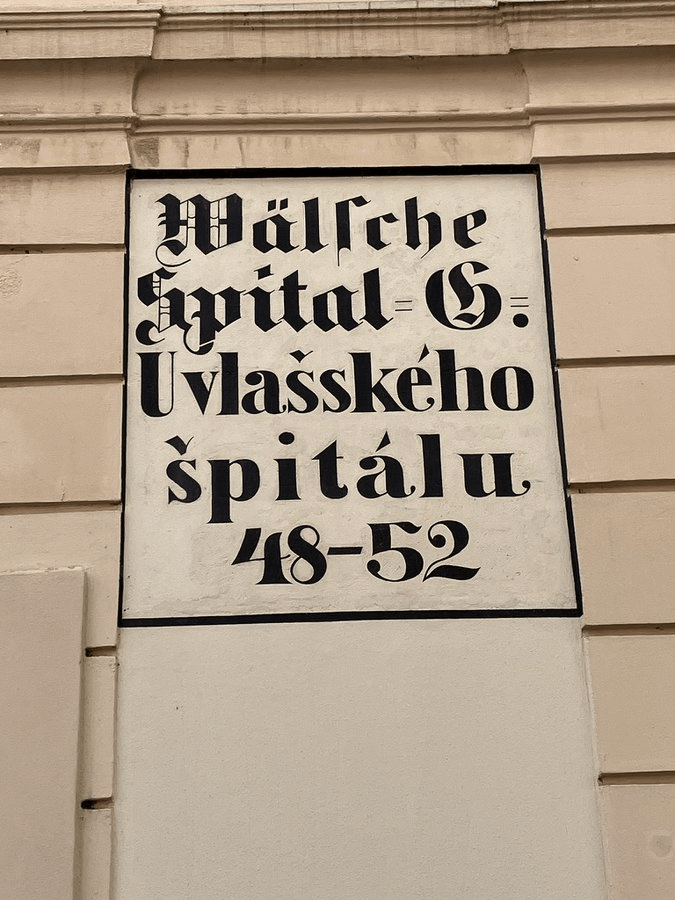
In 1573, the Italians had become so numerous that they founded the Wallachian (later Italian) Congregation. It operated until 1942. My pic of the Congregation’s still-standing hospital isn’t the best, so enjoy this excellent old-school street sign instead.
Vlašská includes a particularly important European embassy, but not the Italian one – that’s on Nerudova. Lobkowicz Palace hosts the German Embassy (it was also the Chinese one for a few years from 1949 onwards).
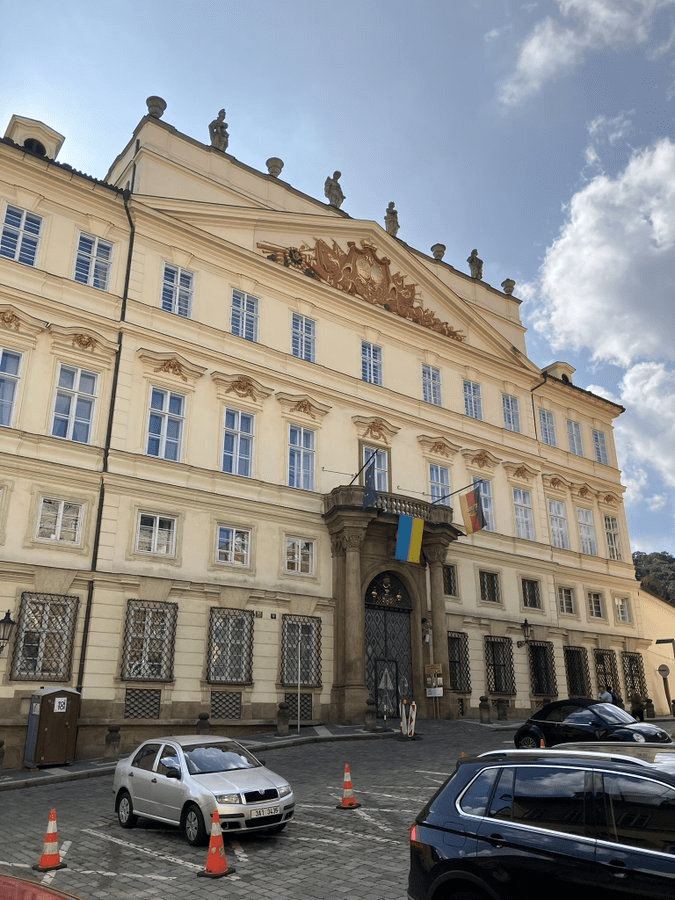
The embassy was seen on televisions all over the world in 1989, when its garden became a temporary home to East Germans wishing to flee to the West.
And to end today’s lesson about words which can really mean anything you want, Moravské Valašsko / Moravian Wallachia is the part of Moravia which borders Slovakia and contains Vsetín.
It’s so called because ‘Vlach’ came to mean ‘shepherd’ or ‘pastor’ too.
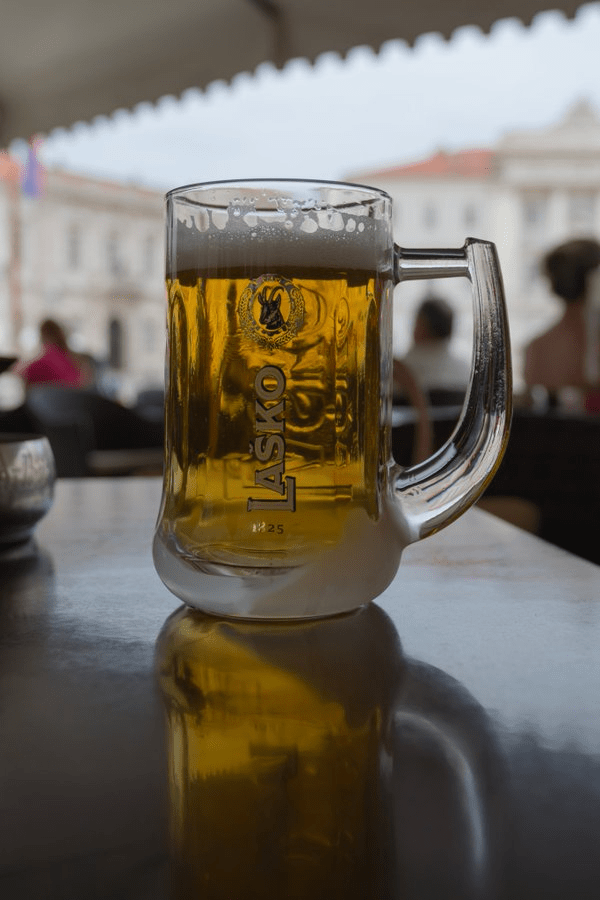
And one more – ever gone to the pub in Slovenia and drunk a Laško or ten? Well, those are brewed in the spa town of Laško, formerly Laško selo, or ‘Vlach village’.

 What's in a Prague street name
Leave a comment