Originally published on X on 1 October 2023.


This part of Malá Strana used to be a separate settlement called Obora (meaning ‘enclosure’ or ‘forest’). It was first mentioned in 1278, but a sanctuary had already been founded here the century before that.
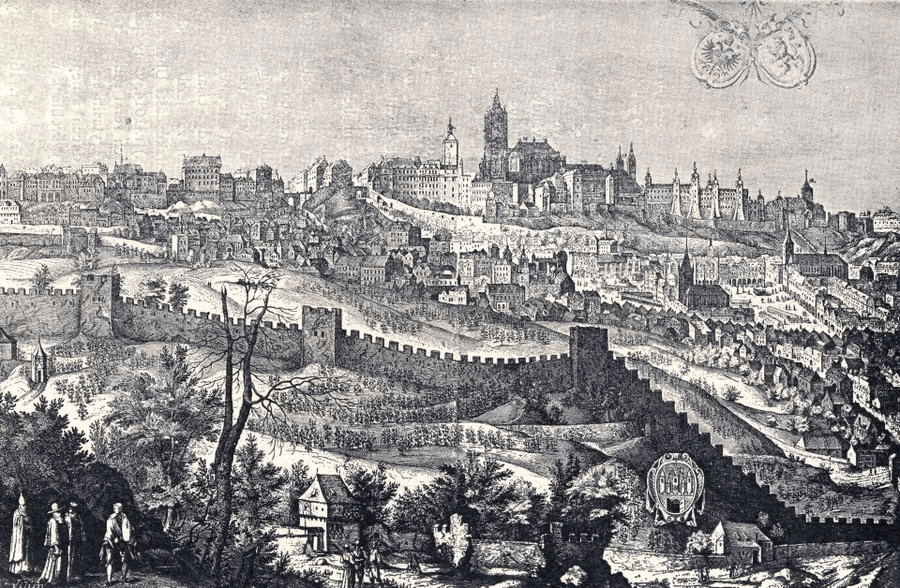
That first mention in 1278 occurred because, at the time, Bohemia was hit by a devastating famine which would last until 1282, and the church grounds were the scene of mass graves for the victims.
The name of the church was Kostel svatého Jana Křtitele v Oboře – The Church of John the Baptist in Obora.
First mentioned as a parish church in 1363, the church became deserted around 1400, and it wouldn’t be until 1546 that the Utraquists (https://whatsinapraguestreetname.com/2022/11/28/prague-3-day-100-kalisnicka/) purchased it.
This is Middle Ages Prague, of course, so it won’t be surprising to learn that Obora was burned down twice – once in 1354, and again by the Hussites in 1419.
Proper renovation would start in 1626, but the parish would cease to exist by the end of the Thirty Years’ War in 1648, the year in which Obora officially became part of Malá Strana.
Joseph II’s reforms led to the church being closed down in 1784, and sold off two years later, soon being converted into a residential building.
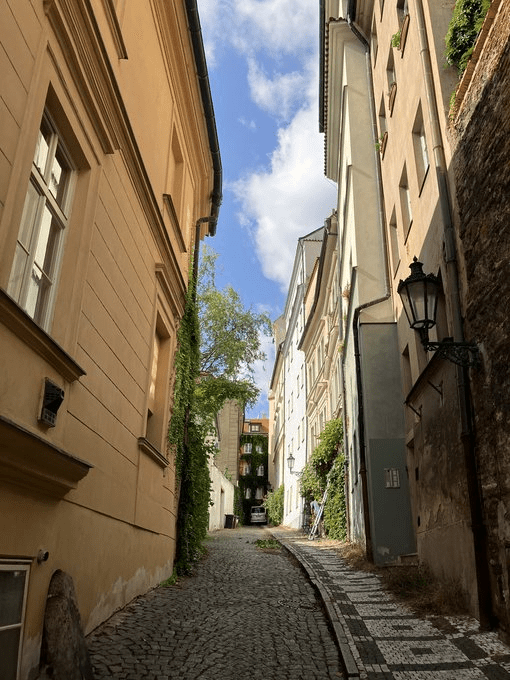
Jánská contains the back ends of buildings whose façades we’ll get to when we reach Nerudova. Even without the house fronts (or perhaps because they’re elsewhere), views are quite beautiful.
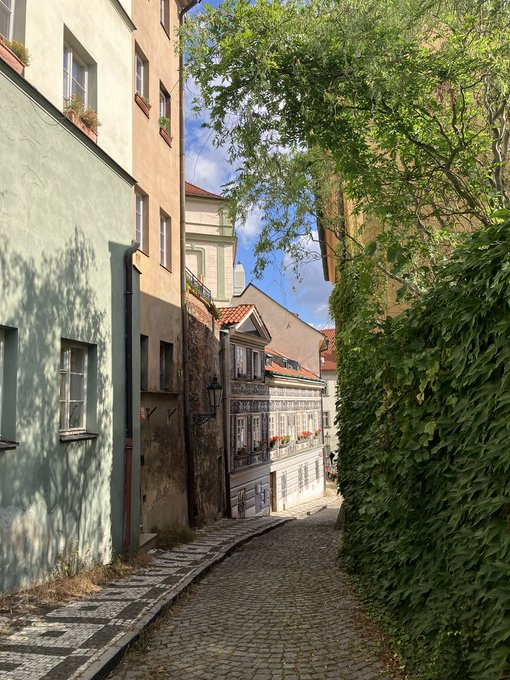

With a special mention for this one, which is quite something.


 What's in a Prague street name
Leave a comment