Originally published on X on 27 October 2023.
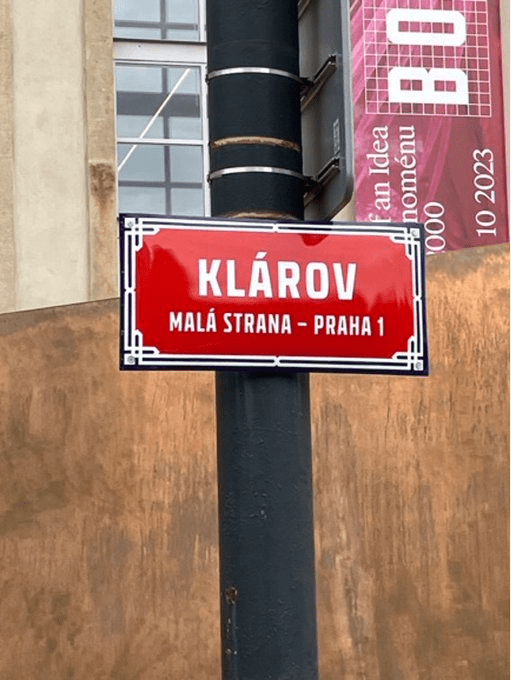
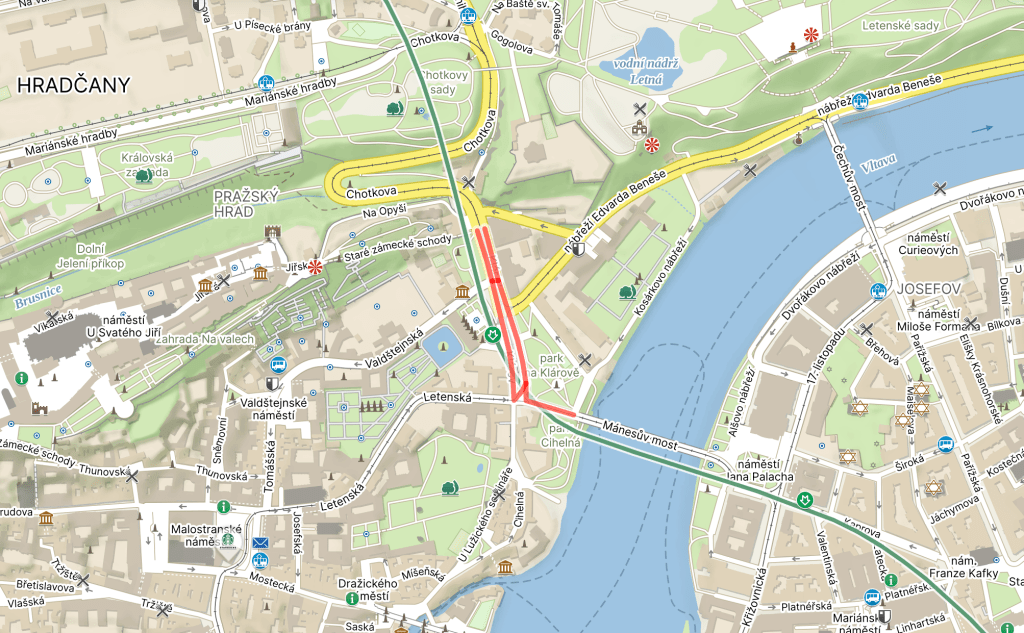
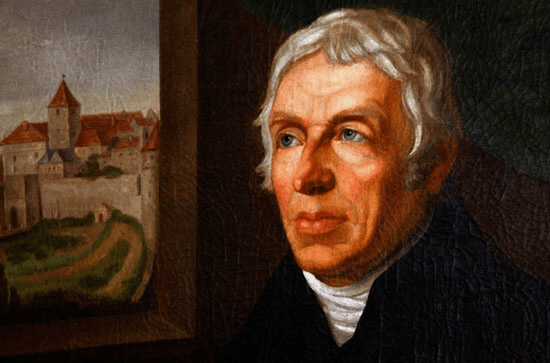
Alois Klar (no á) was born in Úštěk in 1763. He went to school in Litoměřice, and then went to Prague to study languages, graduating in 1782.
Four years after that, he became a professor back in Litoměřice, before returning to Prague University after being appointed professor of Greek and classical literature there.
One student whom he strongly supported was Karel Hynek Mácha (https://whatsinapraguestreetname.com/2024/07/07/prague-2-day-62-machova/), who would even dedicate one of his poems to him.
Klar also established a scholarship scheme for talented visual artists.
In 1807, Klar also set up an educational institute for blind children in Hradčany. He would then be motivated to establish an institute for the care and employment of blind adults.
In the spring of 1832, he received a financial donation from Maria Anna of Savoy, Empress of Austria, and pushed hard for others to make a monetary contribution. Emperor Francis I also donated a plot of land, where Klárov is today.
The location was apparently chosen because the nearby stream, the Brusnice (https://whatsinapraguestreetname.com/2024/09/07/prague-1-day-12-u-brusnice/), was reputed to have healing powers.
Sadly, Klar would not live to experience the buildings of the institute for the blind (Klarův ústav slepců) being constructed, as he died shortly afterwards, in 1833.
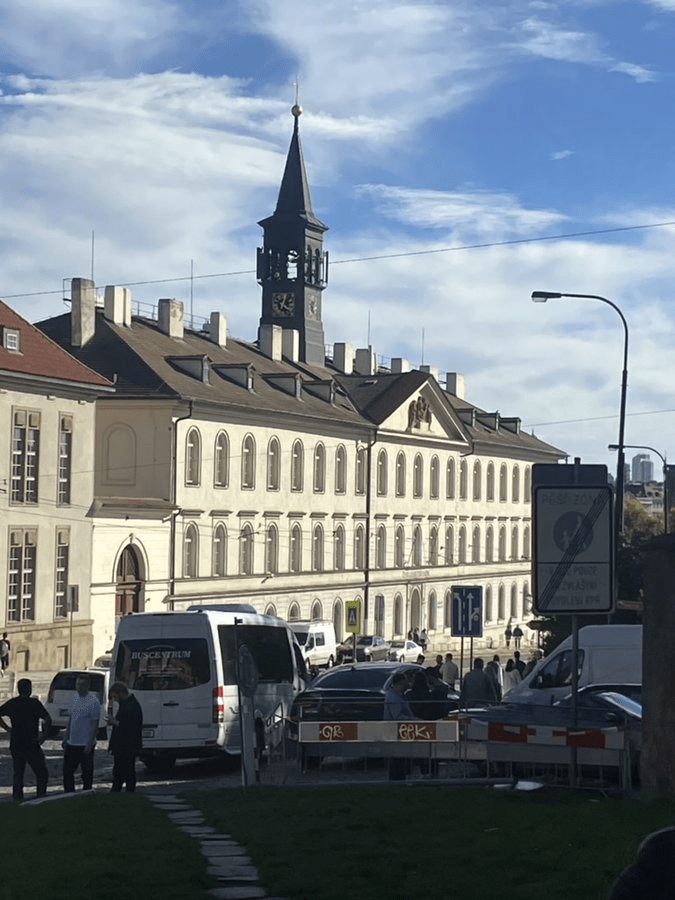
Fulfilling its original purpose until the mid-20th century, the building is now the home of the Czech Geological Survey.
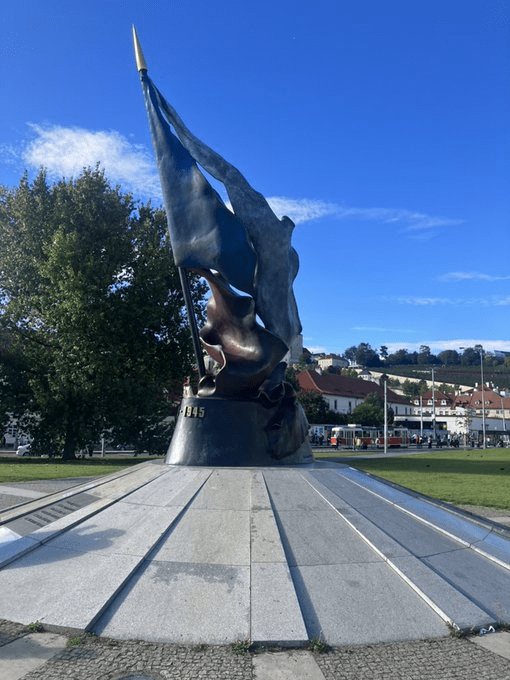
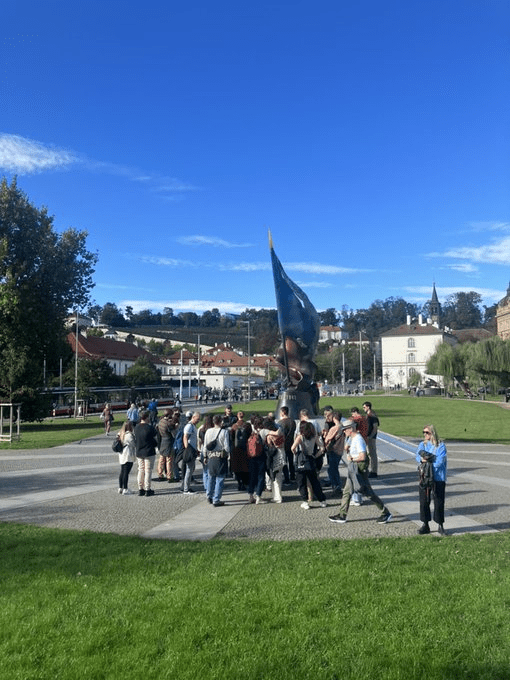
Klárov also includes this seven-metre memorial to the Czech anti-Nazi resistance in WW2, created by sculptor Vladimír Preclík and unveiled in 2008.
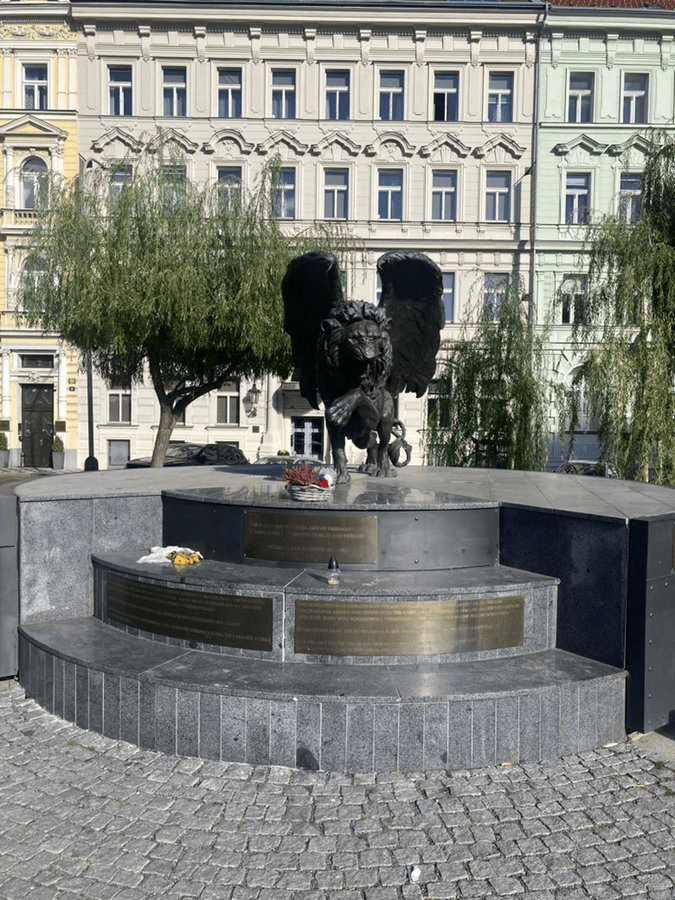
There’s also the Winged Lion Memorial (Památník Okřídleného lva), created by British sculptor Colin Spofforth and unveiled in 2014 by Nicholas Soames, grandson of Winston Churchill, dedicated to those Czechs and Slovaks who served in Britain’s Royal Air Force during the War.
At one point between those two unveilings – namely 2012 – Klárov became the setting for Prague’s version of Occupy Wall Street: https://ct24.ceskatelevize.cz/clanek/domaci/na-klarove-stoji-uz-14-dni-stanove-mestecko-po-vzoru-occupy-272784
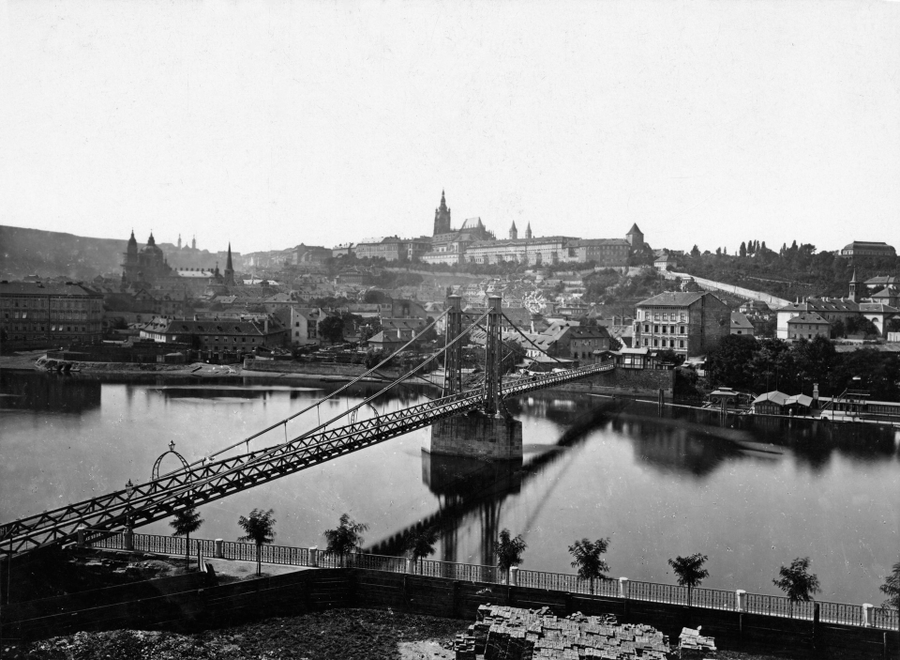
Finally, in the ‘not here anymore’ category, Rudolph’s Footbridge / Rudolfova lávka was here from 1868 to 1914, and was, at the time, the fourth bridge across the Vltava in Prague.
Here it is in 1881; more about it in a few days.

 What's in a Prague street name
Leave a comment