Originally published on X on 1 December 2023.
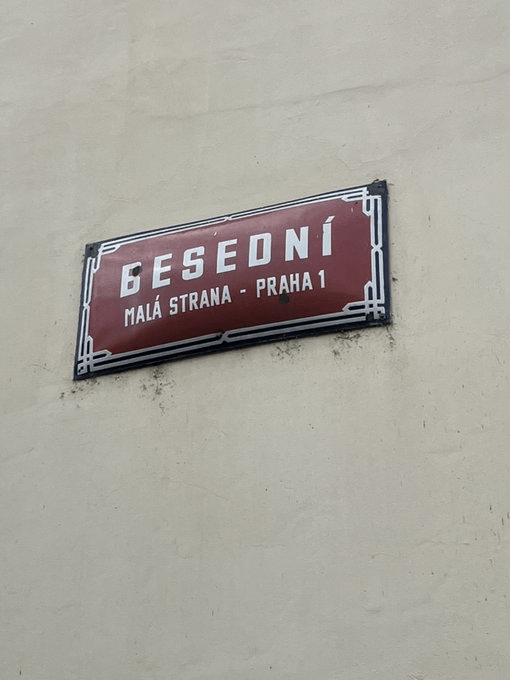
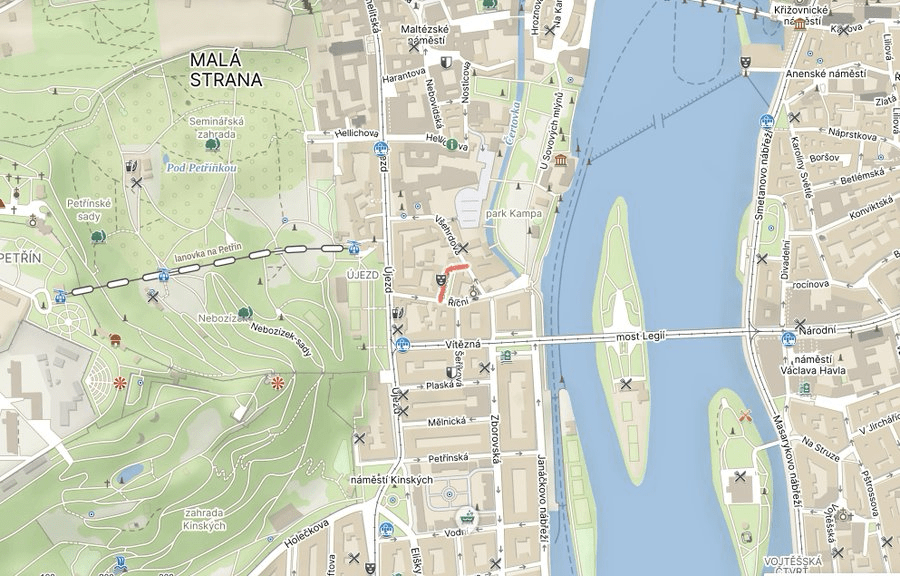
In 1863, a group of artistically-minded Czechs set up their own association, Umelecká beseda, or Artistic Forum.
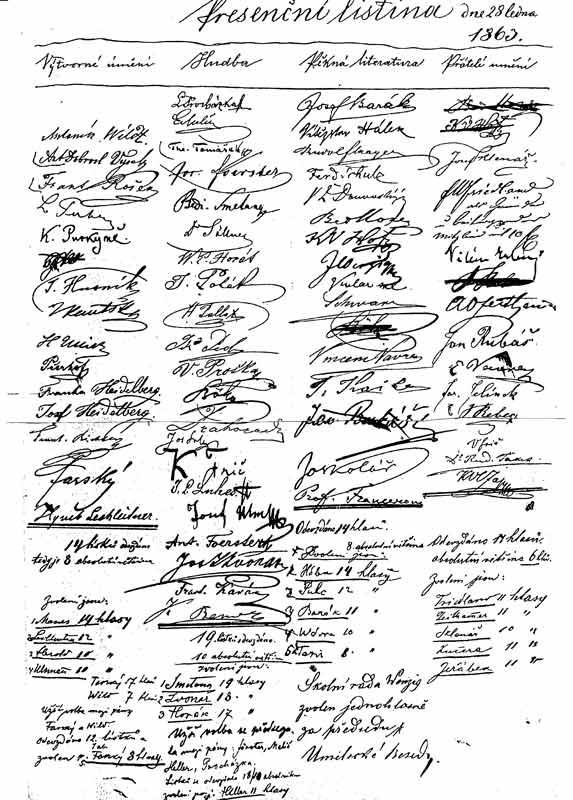
(Note that, if I don’t mention these people by name in this thread, it’s because they’re almost certain to come up in a thread of their own one day)
A beseda would translate as a ‘talk’ or ‘discussion’; see also the Hungarian beszéd (speech) and Slovenian beseda (w0rd).
The Beseda had three divisions, for literary, musical and visual arts respectively. The first president of the musical division was Bedřich Smetana; the first president of the musical section was Josef Mánes (https://whatsinapraguestreetname.com/2024/01/18/prague-2-day-11-manesova/).
In its first few decades, the Association was really a who’s who of Czech culture; take a look, for example, at Karel Sladkovský (https://whatsinapraguestreetname.com/2023/01/13/prague-3-day-132-sladkovskeho-namesti/) or Zdeněk Fibich (https://whatsinapraguestreetname.com/2023/01/14/prague-3-day-143-fibichova/).
Or Josef Václav Myslbek (https://whatsinapraguestreetname.com/2024/08/22/prague-2-day-91-lumirova/). Or Jan Neruda (https://whatsinapraguestreetname.com/2024/09/08/prague-1-day-37-nerudova/). Or Antonín Dvořák.
(Yes, some sort of balanced gender representation would have been nice too)
In the 1920s, the Association asked for permission to create a building of its own. This was granted, and, in 1925, the building was opened and the street it’s still on – Besední – was founded.
The building housed an exhibition hall and two concert halls.
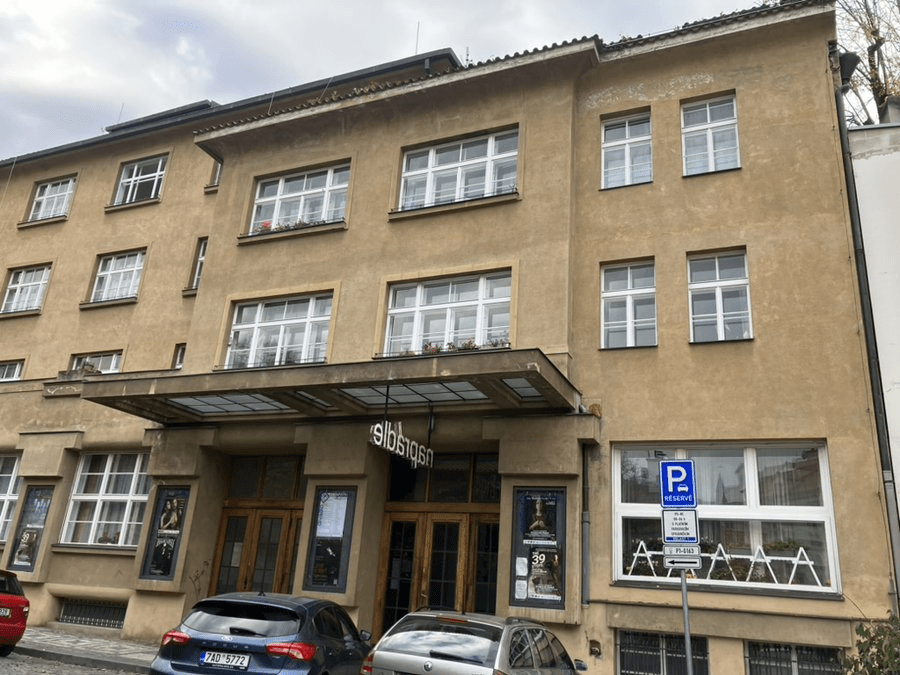
The theatre was where a young Jaroslav Ježek performed in 1927 (https://whatsinapraguestreetname.com/2023/01/14/prague-3-day-136-jezkova/), and also saw the first performances of the legendary Osvobozené divadlo (Voskovec and Werich).
The building was also the headquarters of Hudební matice, Czechoslovakia’s most renowned music publishing house, as well as for the cultural magazine Život (edited, among others, by Josef Čapek: https://whatsinapraguestreetname.com/2024/01/30/prague-2-day-24-sady-bratri-capku/).
Obviously, the Communists didn’t really like an artistic association that they hadn’t created themselves, and, in the 1950s, limited its activities, before closing it down in 1972 (it reopened in 1990).
Since 2001, the building has hosted Divadlo Na Prádle. It looks to be worth a visit, and frequently does English-language productions: http://www.napradle.cz/nic.php?choose=program2
The Beseda’s Slovak branch, meanwhile, played a key role in the events of the Velvet Revolution there (https://whatsinapraguestreetname.com/2024/02/15/prague-2-day-29-slovenska/).

 What's in a Prague street name
Leave a comment