Originally published on X on 21 December 2023.
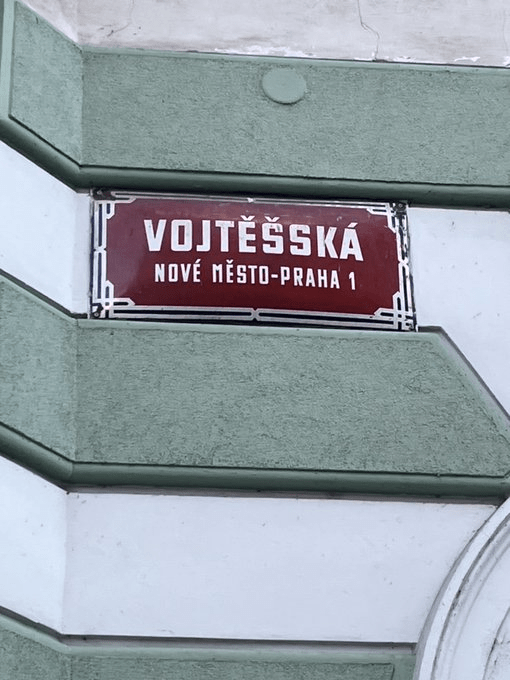
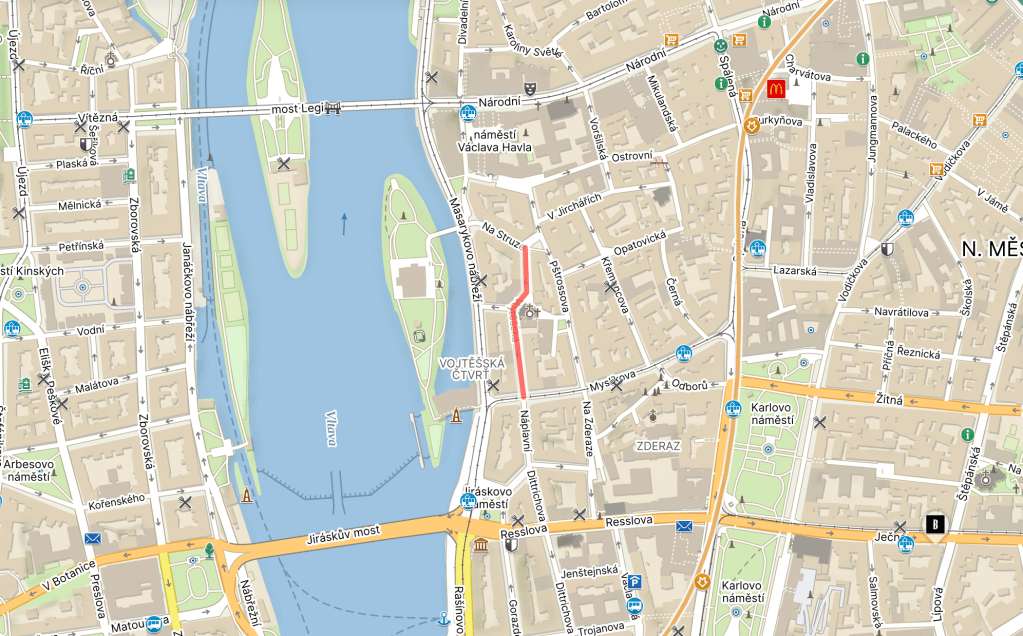
Vojtěch was born around 956 in Libice nad Cidlinou, near Nymburk, into the powerful Slavník dynasty (the other powerful family of the time being the Přemyslids).
Studying in Magdeburg for about ten years, he took the name ‘Adalbert’ upon his confirmation and was ordained as the second Bishop of Prague in 982, at a time when Christianity wasn’t gaining as much of a hold in Bohemia as those in power would have wanted.
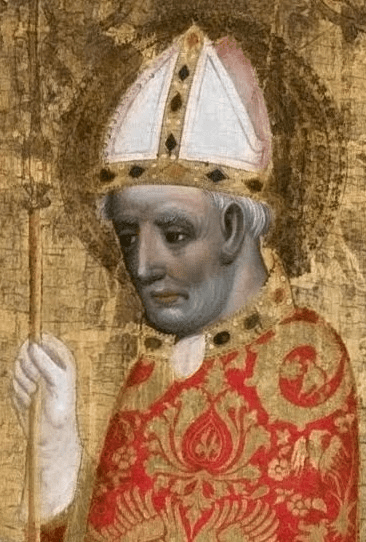
Forced into exile when the Slavníks refused to finance a war being waged by Duke Boleslav, he headed to Rome in 988, returning five years later. In the year of his return, he also founded Břevnov Monastery.
The rivalry between the Slavníks and the Přemyslids would result in the storming of Libice in 995; several of Adalbert’s brothers were also killed. Adalbert excommunicated the murderers, but he was no longer safe either; he fled to Hungary, and then to Poland.
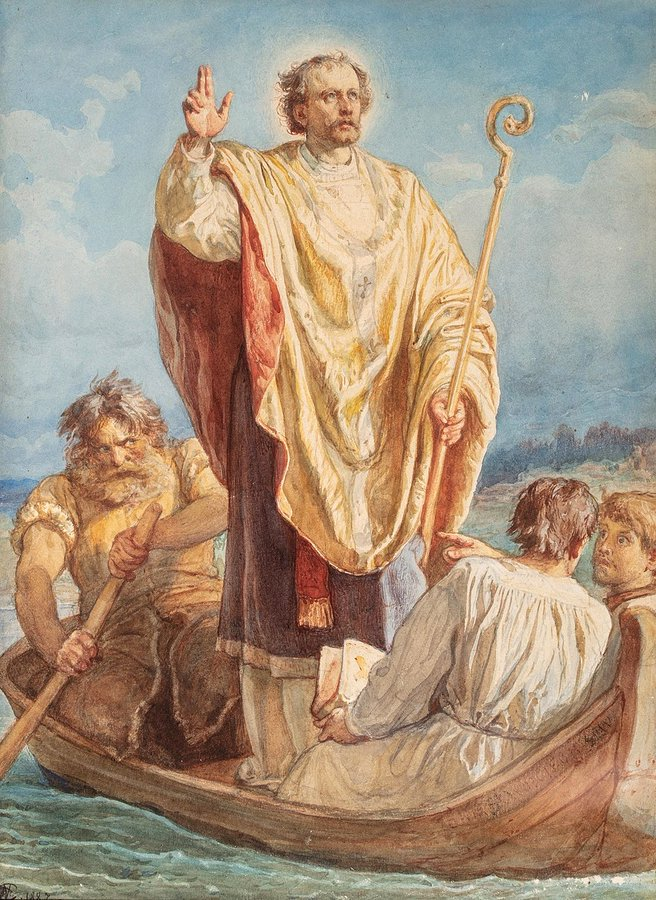
While acting as a missionary in Prussia, Adalbert was murdered by a pagan mob on 23 April 997.
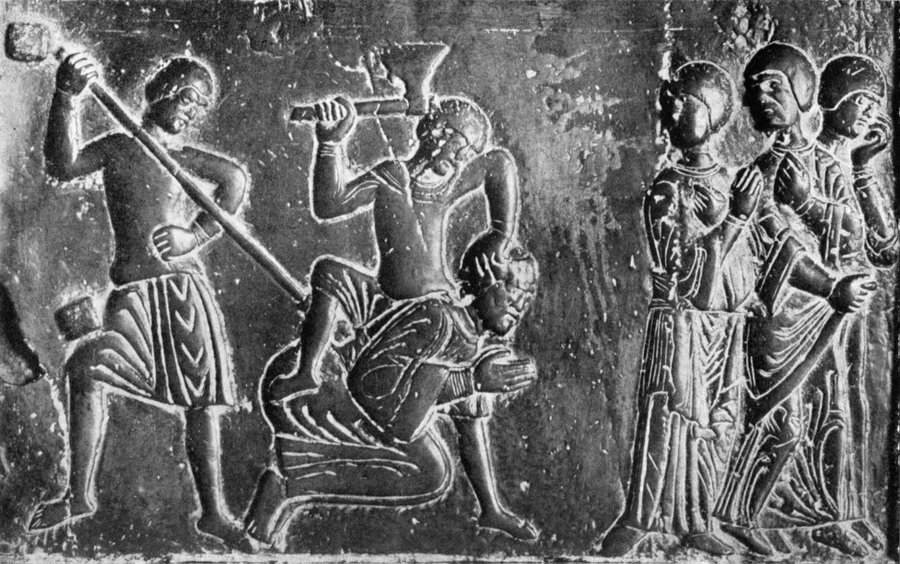
A few years later, he was canonised as Saint Adalbert of Prague, but his remains were kept in Gniezno, near Poznań.
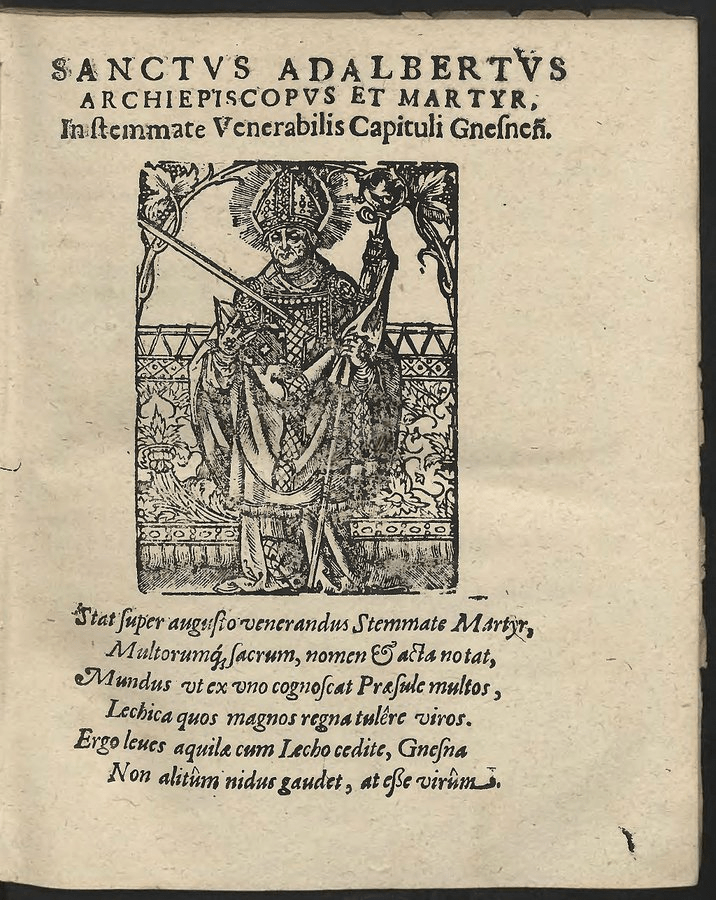
In 1039, Břetislav I (https://x.com/ed__ley/status/ed__ley/status/1711254548243730943…) would steal the remains and bring them back to Prague – except Polish historians claim that the remains belonged to someone else.
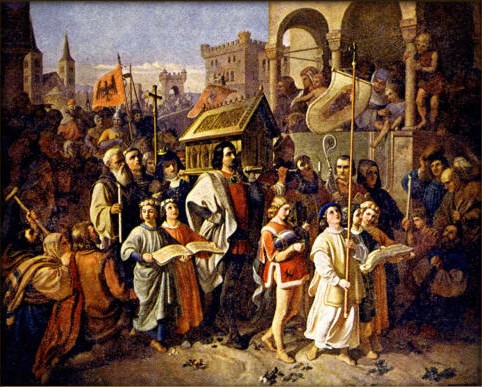
Therefore, there are shrines to Vojtěch both at Prague Cathedral (whose full title has included his name since 1997) and in Gniezno, and also two skulls purported to be his, although the one in Gniezno was stolen in 1923. And he’s a patron saint of both countries.
The Church of St. Vojtěch stands in this street, and was first mentioned in writing in 1318.
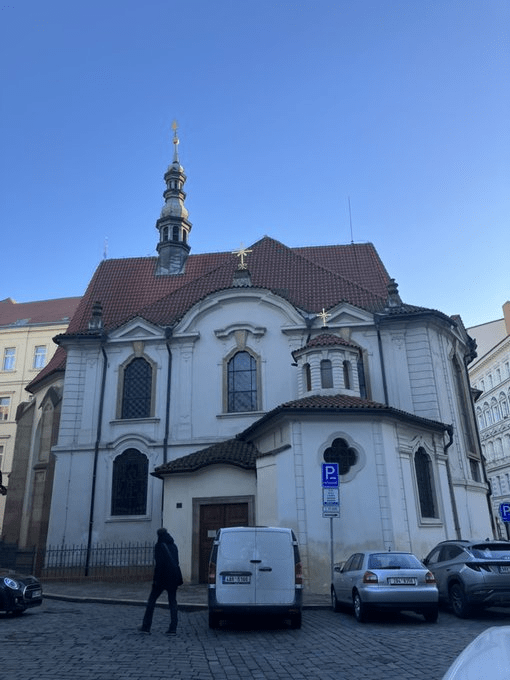
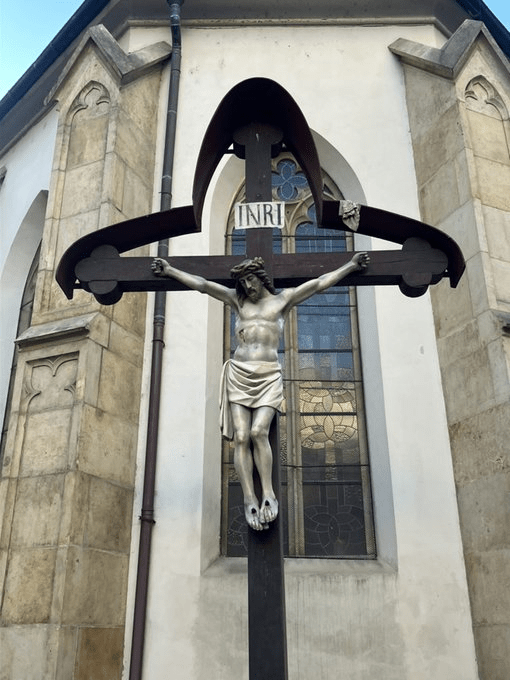
Its biggest claim to fame is probably the fact that, from 1874 to 1877, an up-and-coming composer worked here (for very little money, apparently) as the church’s organist. His name was Antonín Dvořák.
Also on the street is one of the locations of the Brána jazyků (Gate of Languages) Elementary School, a reminder that schools buildings really are quite different here to those in my country of origin, and quite possibly yours too.
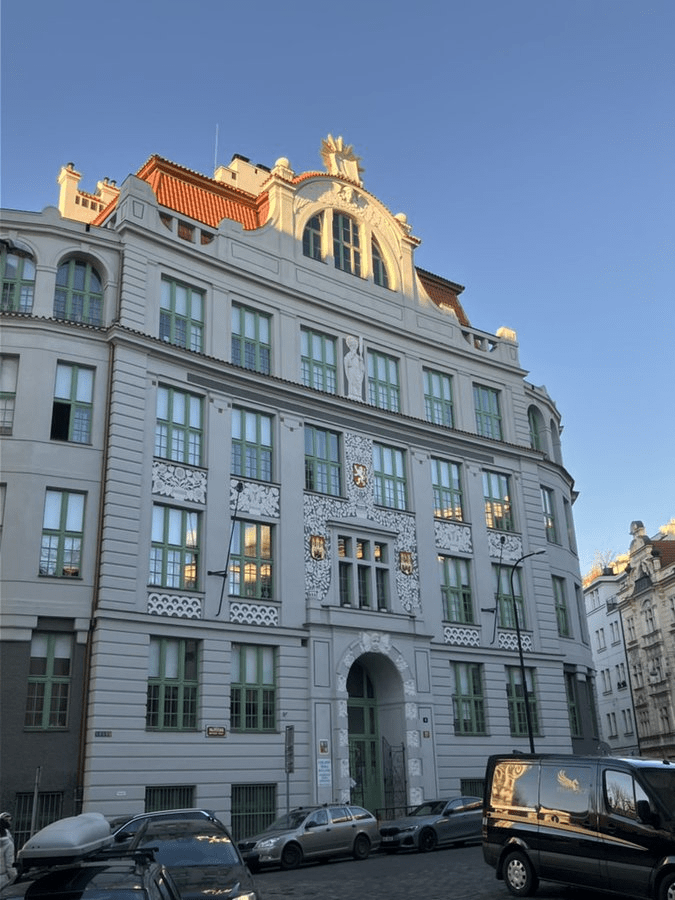
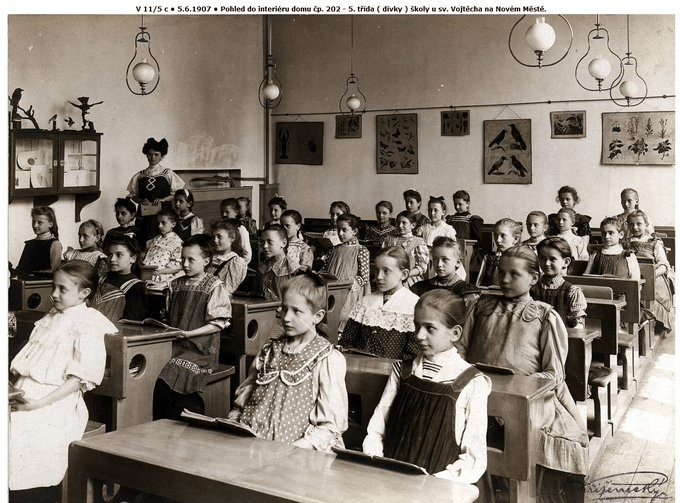
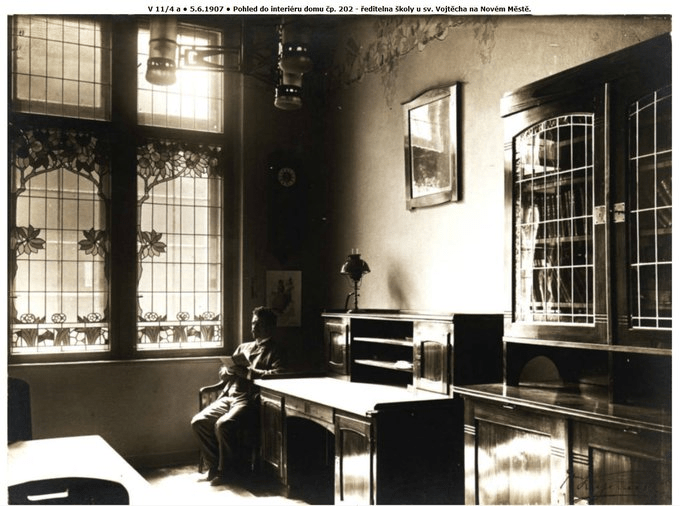
Named after a textbook by Comenius, the school was opened in 1906, originally as a girls’ school. Its list of former students is basically a who’s who of the Czech entertainment industry. Great pics from 1907 here.
Vojtěšská also includes Spolkový dům Hlahol, belonging to the Prague singing society Hlahol and build around the same time as the school (1904-5). Hlahol was mentioned briefly on https://whatsinapraguestreetname.com/2023/02/26/prague-3-day-146-zvonarova/.

 What's in a Prague street name
Leave a comment