Originally published on X on 23 December 2023.
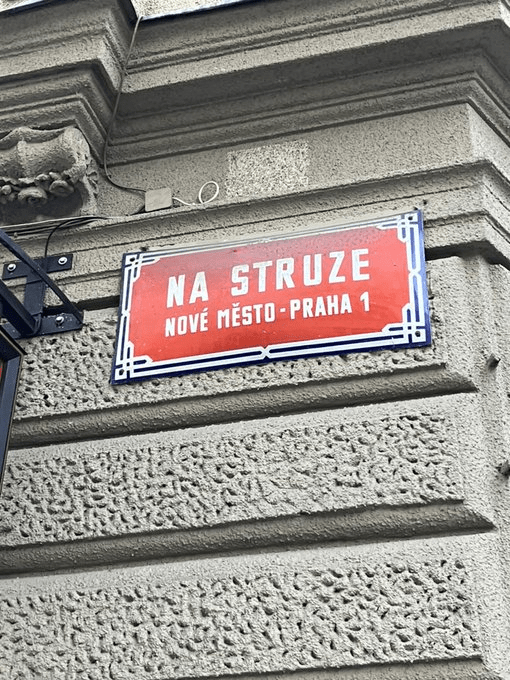

A strouha is a gutter or a drain – and, in the 14th century, the term was also attributed to the bay of the Vltava located here.
It was also in the 14th century that we have the first written mention of a church here – St Peter’s Church Na strouze, allegedly built by Saint Wenceslas himself. It was destroyed by the Hussites in the 1420s, and unlike so many other churches, not replaced or renovated.
At number 1, Na Struze includes this memorable tenement house built between 1906 and 1907 by Gustav Papež (1863-1945).
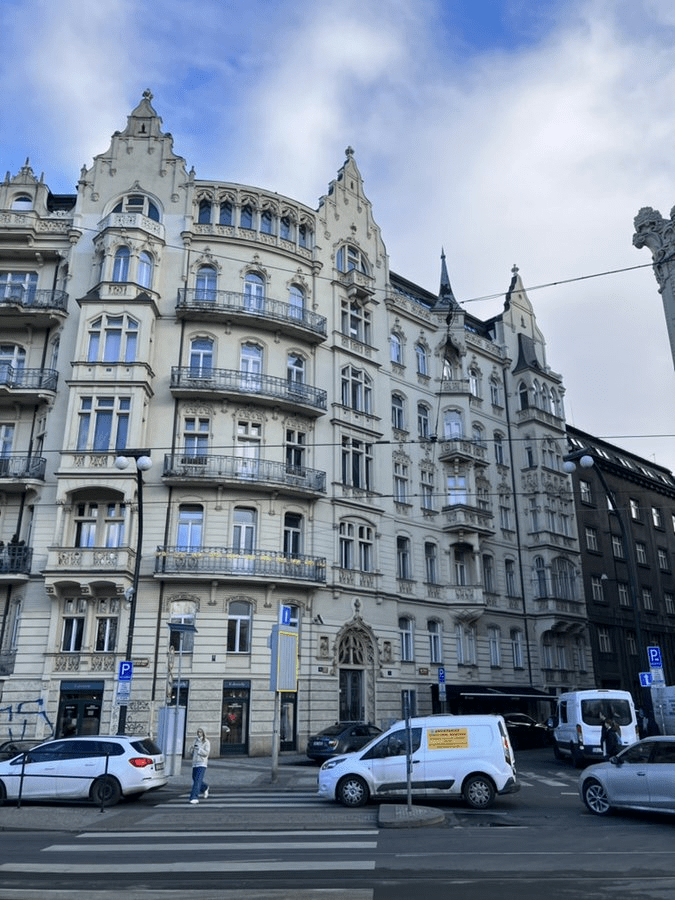
While opposite (admittedly with its address on Masarykovo nábřeží) is the Goethe-Institut, which has operated here since 1991. It was the East German Embassy from 1949 to 1990 (having also been the Bulgarian Embassy from 1945 to 1948).


(Inevitably goes down rabbit hole of wondering if there are other cities in the region where the Goethe-Institut took over the East German Embassy’s premises)
Warsaw: no, although it set up shop in Poland earlier than it did in Czechoslovakia (1990 vs 1991), and its first address had previously been the East German Cultural and Information Centre: https://www.goethe.de/ins/pl/pl/sta/war.html?wt_sc=warszawa
Budapest: no, because there was once a time when Hungary was the one that was ahead of the curve, meaning that the local Goethe-Institut was opened before communism ended (1988 vs 1989): https://www.goethe.de/ins/hu/hu/index.html
Bucharest / Sofia: not sure.
Bratislava: not the capital of an independent country until 1993, so wouldn’t have had an East German embassy anyway.
East Berlin: now we’re just being stupid.
I’m now thinking ‘What happened to East German embassies’ would be a great little series if I weren’t already slightly occupied with this one, although, now I think about it, most of them probably just got subsumed into the West German ones.
Anyway, the Goethe dot CZ building was built in 1905, replacing a spa and a building with the excellent name of U tří divých mužů (The three wild men).
The reconstruction of the banks of the Vltava – ‘asanace’ in Czech – is dealt with briefly in one of the Prague 2 posts: https://whatsinapraguestreetname.com/2024/08/26/prague-2-day-122-podskalska/

 What's in a Prague street name
Leave a comment