Originally published on X on 6 January 2024.
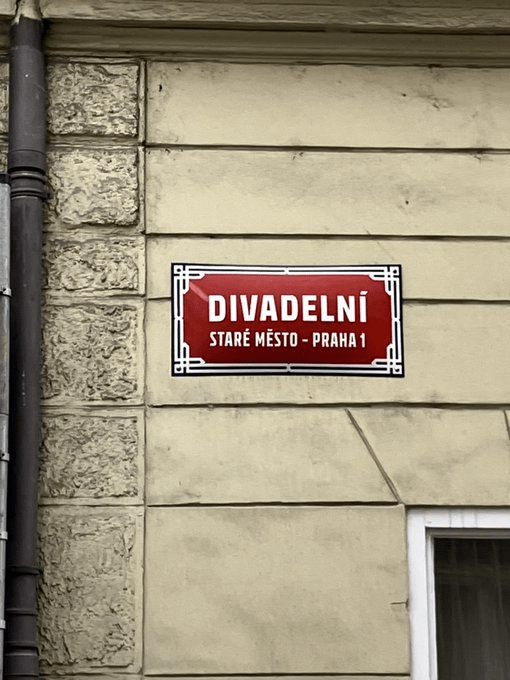
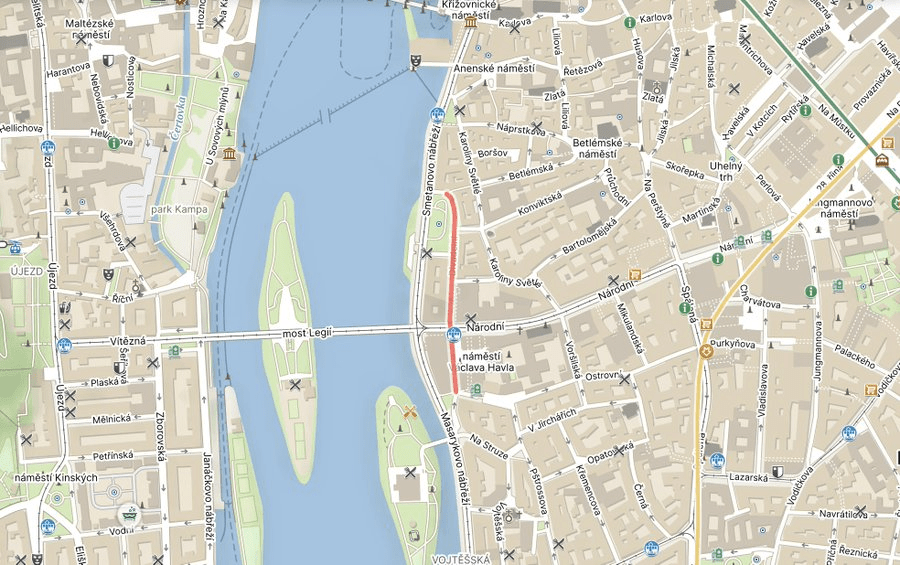
In 1845, František Palacký (https://whatsinapraguestreetname.com/2024/08/31/prague-2-day-145-palackeho-namesti/) submitted a request to the Bohemian Diet (i.e. the Czech Parliament) for the construction and management of an independent Czech theatre.
This was granted in the same year, but it wasn’t until 1851 that a board was set up for the project, and started gathering donations (this is something like wanting to set up a Gofundme page and then having to wait six years to actually do so).
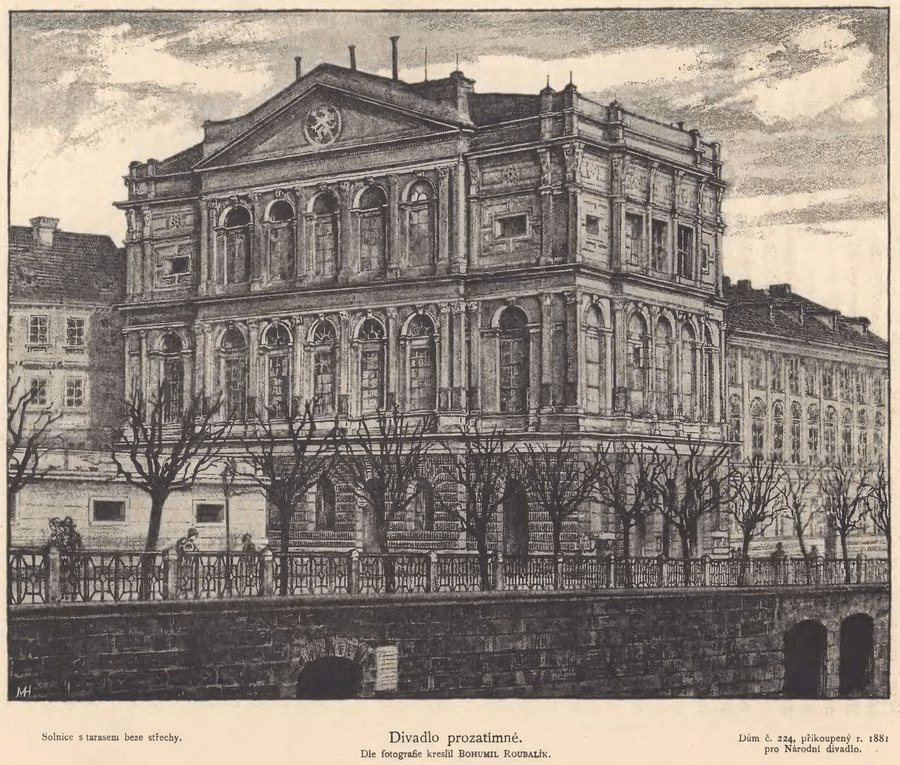
The plot of land where the theatre is located was purchased in 1852; ten years later, construction began on the Provisional Theater (Prozatímní divadlo), which was completed within six months.
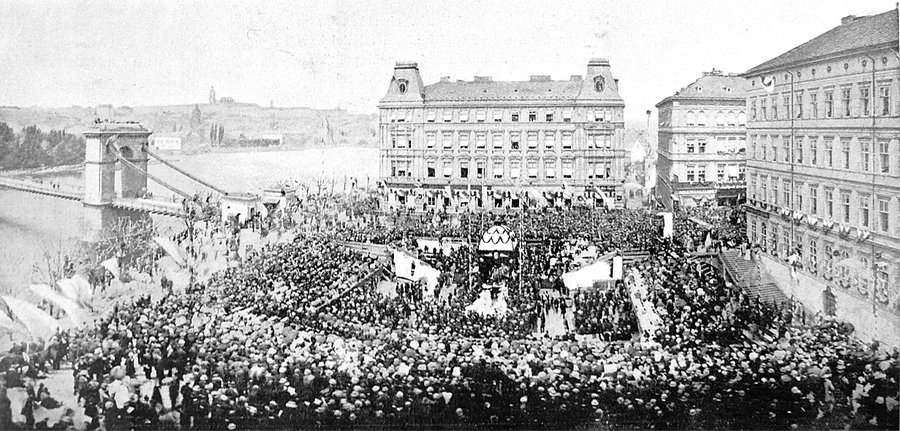
The foundation stone of the National Theatre, meanwhile, was laid in 1868. In case you fancy dipping back into the Prague 3 series, the first two stones to be delivered came from places we’ve discussed on https://whatsinapraguestreetname.com/2023/02/26/prague-3-day-149-radhostska/ and https://whatsinapraguestreetname.com/2023/12/23/prague-3-day-184-ripska/.
The ceremony was quite well attended, shall we say – it’s said that over 100,000 people witnessed it.
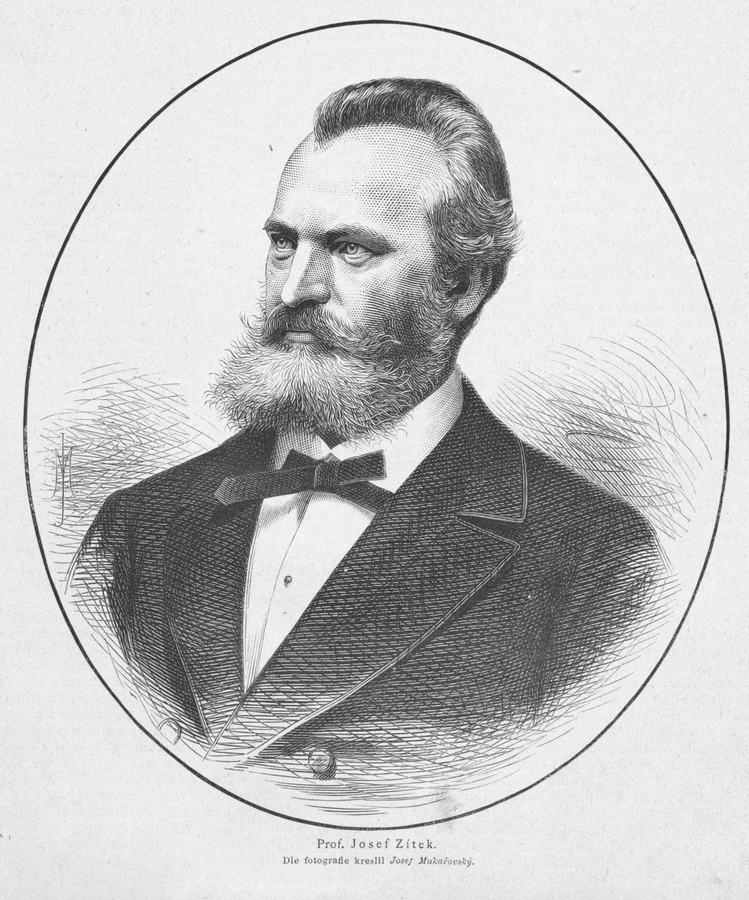
The architect whose design for the theatre was selected was Josef Zítek (pictured – he also designed the Rudolfinum), and his vision was carried out by František Havel (not related to Václav) from 1874 onwards.
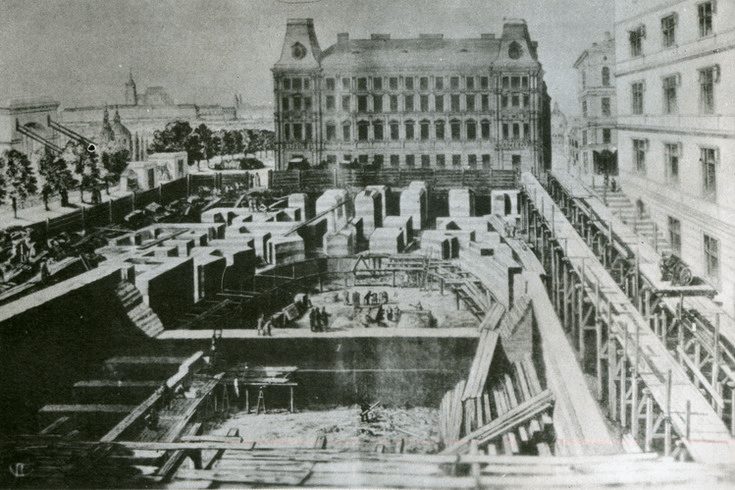
By 1868; the foundations of the theatre were prepared; in 1873, a commission was formed to decide who would get to decorate the façade of the building; by 1877, the theatre also had a roof.
Finally, the theatre was opened on 11 June 1881 with a performance of Smetana’s Libuše (https://whatsinapraguestreetname.com/2024/08/23/prague-2-day-93-libusina/). After eleven performances, it was decided to close the theatre for more works.
However, during these works, the roof, auditorium and stage were destroyed by a fire, a mere two months and one day after the theatre’s opening.
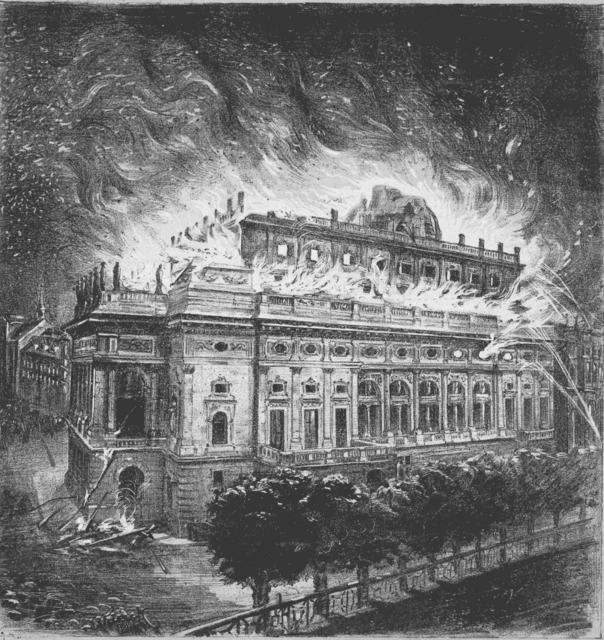
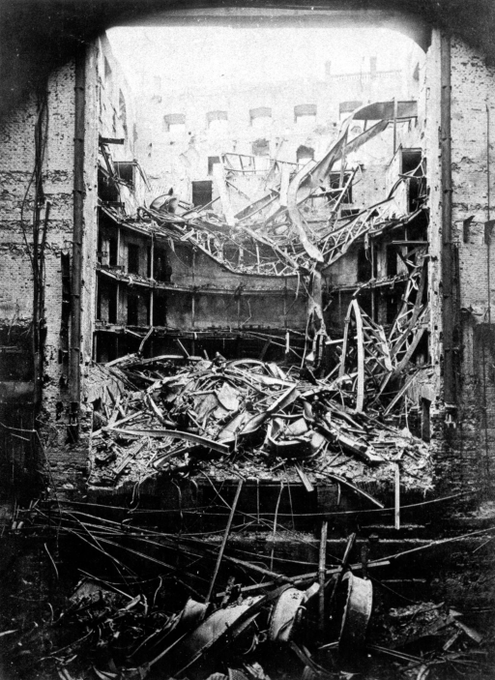
Thanks to hugely generous donations from the people of Prague, the theatre – worked on by architect Josef Schulz – reopened on 18 November 1883, again with a performance of Libuše.

The Prozatímní, meanwhile, was joined to the theatre’s southern wing.
Major reconstruction took place from 1977 to 1983 – partly at the expense of the Ursuline convent (https://whatsinapraguestreetname.com/2024/09/14/prague-1-day-103-vorsilska/) and involving the theatre’s closure – and again from 2012 to 2015, when it continued to operate.
Also from 1977 to 1983, the theatre gained a younger sibling, the Nová scéna / New Scene. It’s the home of the Laterna Magica.
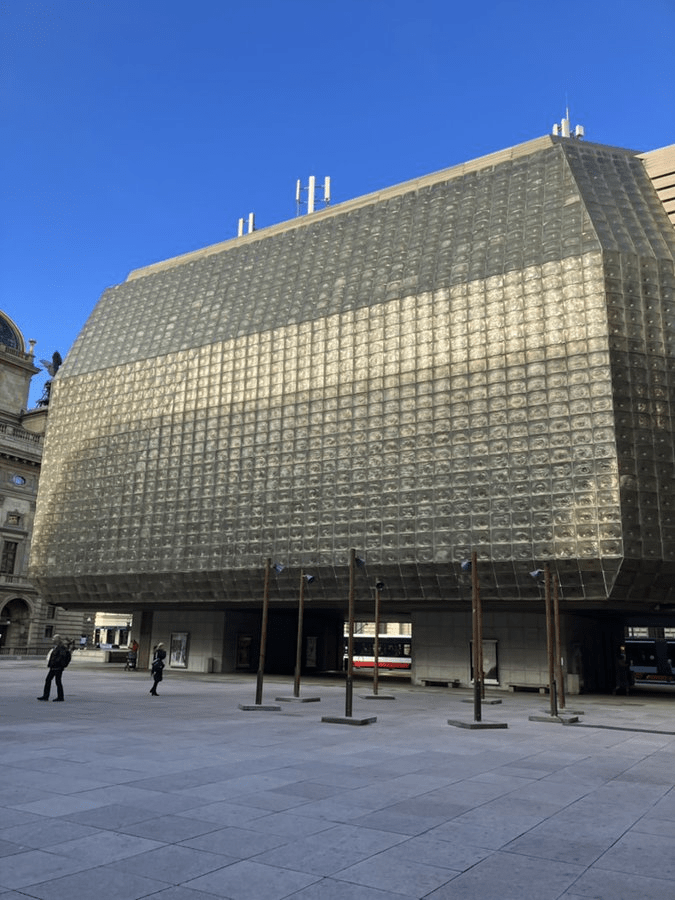
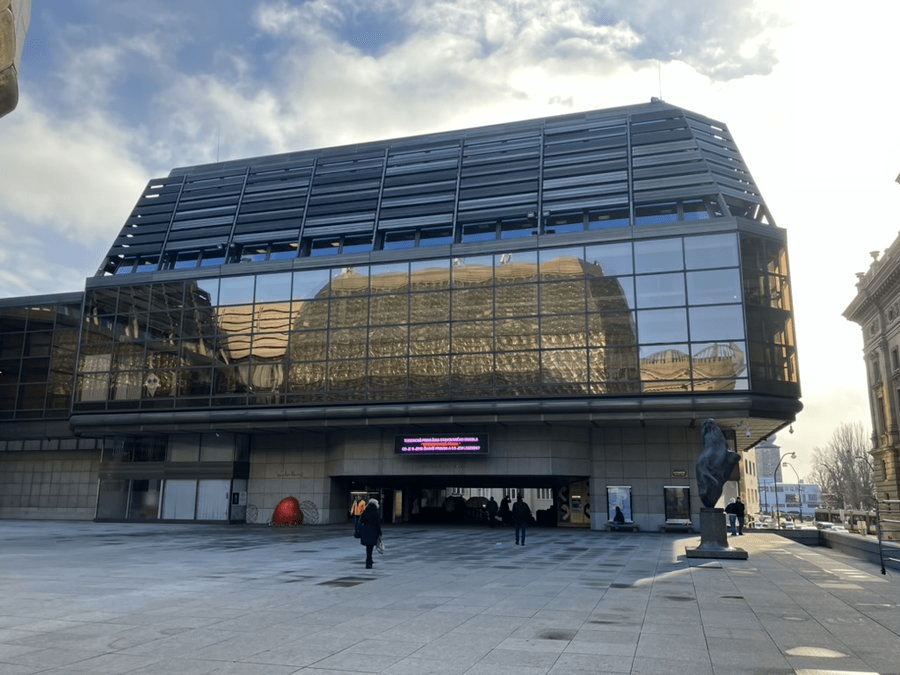
The 1980s also saw the construction of the theatre’s restaurant building and service building. The service building is, well, very 1980s, and the pink neon letters on the screen in this picture only add to that.
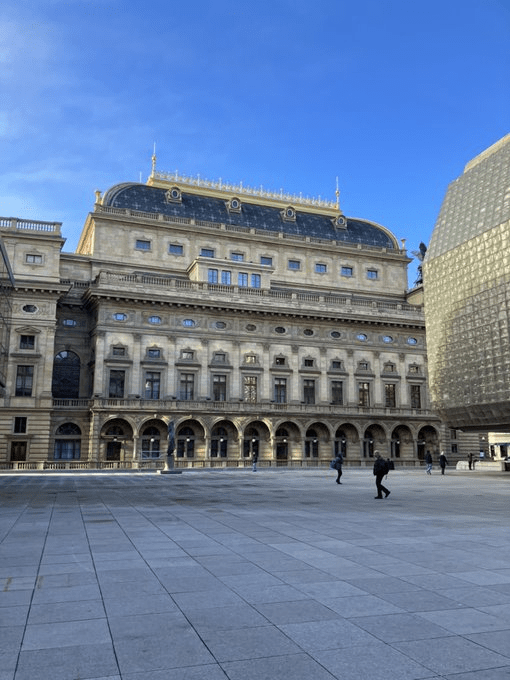
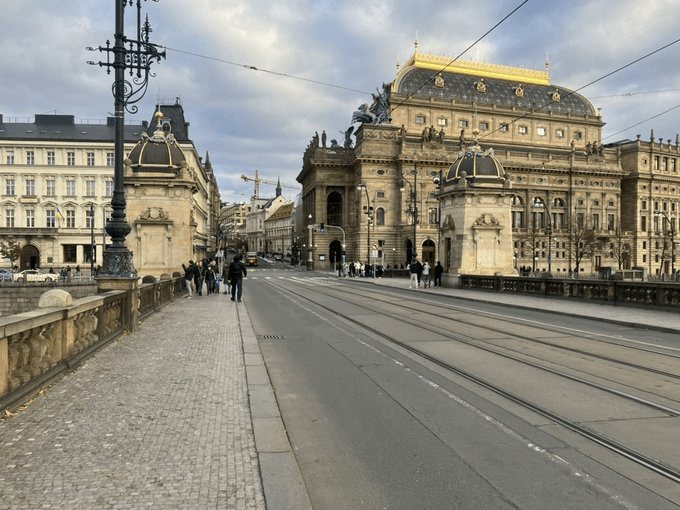
Meanwhile, the National Theatre is the sort of building you can look at from every angle without getting bored.


In April 2013, Divadelní was the location of a gas explosion caused by a natural gas leak. It could be heard from Prague Castle: https://www.bbc.co.uk/news/world-europe-22335019.
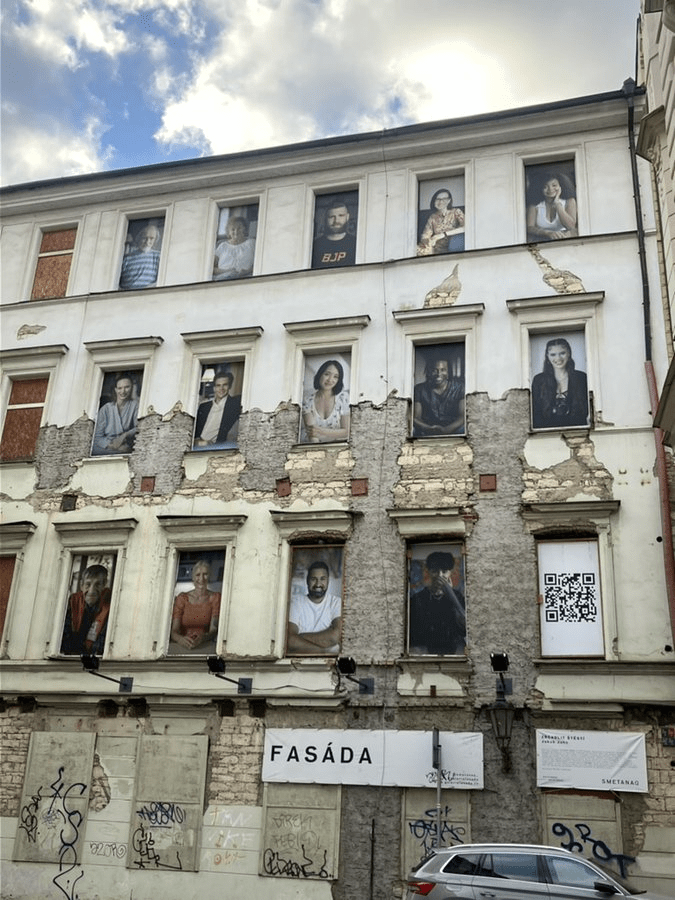
One of the buildings whose façade was significantly damaged by the explosion is now a gallery called, appropriately, Fasáda. I like what they’ve done with it very much.
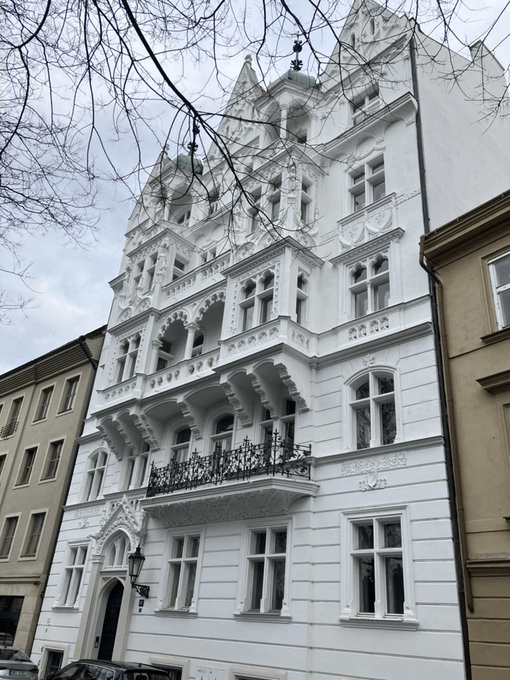
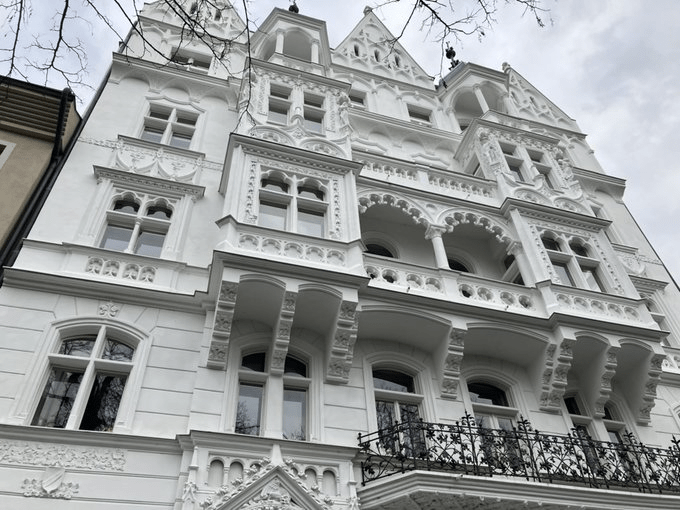
I was also quite taken by number 22 in the street when I walked past it; apparently it now hosts luxury apartments.
A further fire hit the National Theatre in November 2024; thankfully, it was contained and nobody was injured: https://www.expats.cz/czech-news/article/fire-breaks-out-at-prague-s-national-theatre.

 What's in a Prague street name
Leave a comment