Originally published on X on 23 January 2024.
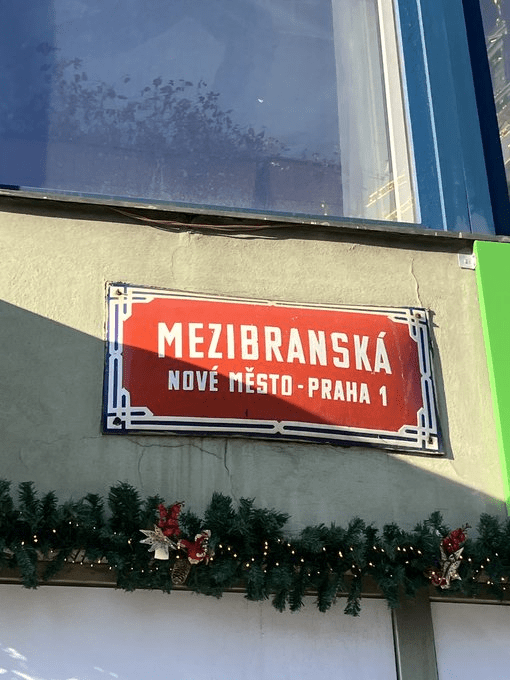
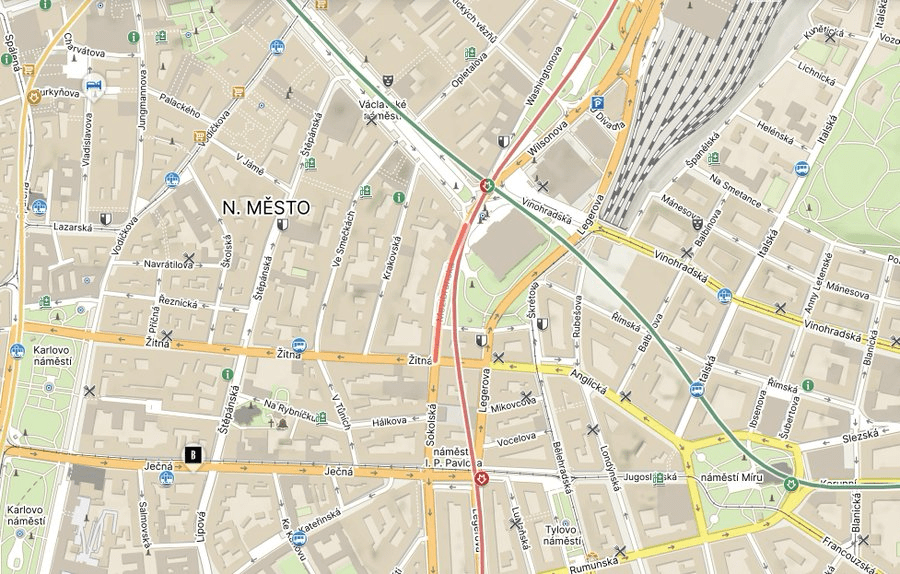
Between 1348 and 1350, Charles IV arranged for the construction of Gothic-style walls all around the (then brand) New Town.
Like pretty much every settlement in Bohemia, the New Town had an incredibly rough time of it during the Thirty Years’ War (1618-48). Therefore, new, improved fortifications were needed, and these were constructed, in Baroque style, from 1654 to 1721.
here were five gates through which one could enter / exit the New Town (in Czech, a ‘gate’ is a brána, coming from the Proto-Slavic borna, a ‘guarded entrance’ – also giving us the verb bránit, to defend or protect).
One of these was the Žitná brána / Rye Gate, as discussed on https://whatsinapraguestreetname.com/2024/02/27/prague-2-day-36-zitna/.
Another was the Koňská brána / Horse Gate, which was at the top of the Koňský trh / Horse Market, nowadays known as Václavské náměstí, and led to Říčanská silnice, now known as Vinohradská.
It got a revamp from 1831 to 1836, but was demolished in 1875/6 (as was the Rye Gate), and was replaced by a small, low-key building more widely known as the National Museum. Here it is with some idiot whose 40th birthday it was on that day standing near it.
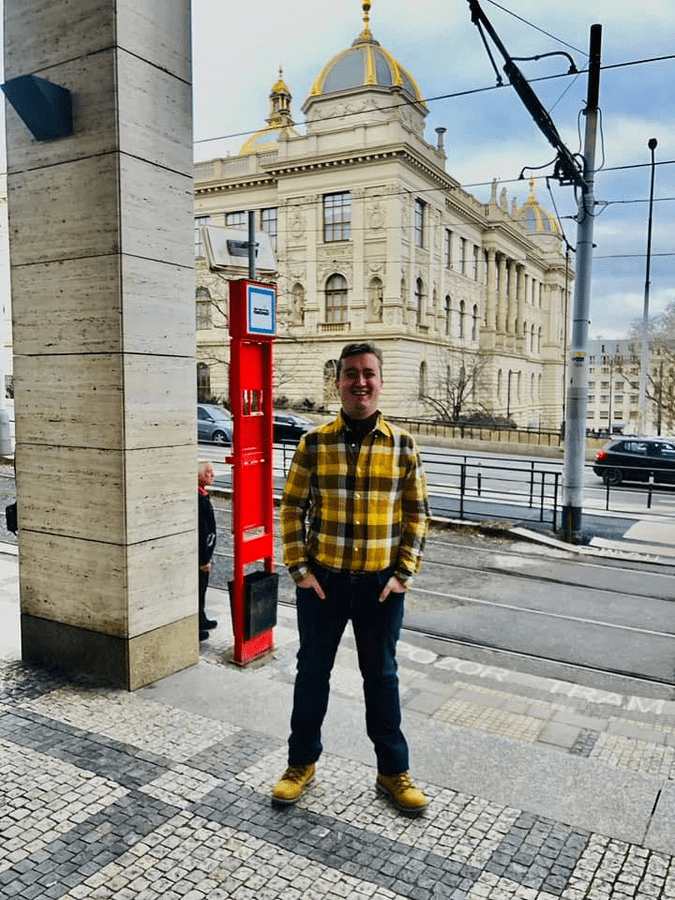
You can see the gate at the end of Václavák in this photo.
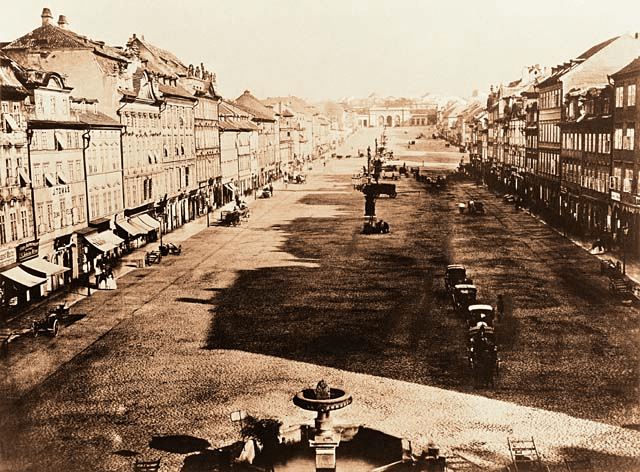
Whereas this drawing of the gate was published in 1874, shortly before there would be no gate at all.
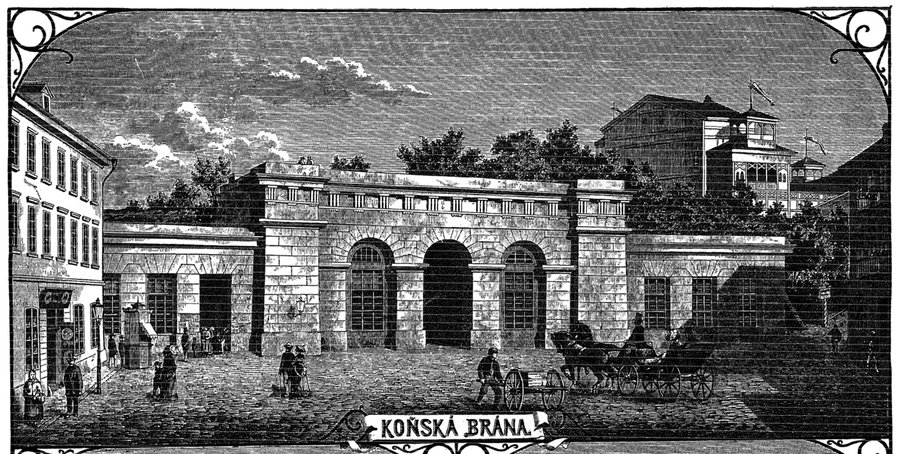
It seems the picture was pretty accurate.

And, as for the name of the street? Mezibranská means ‘between the gates’ (i.e. these two).

I’m all for openness and not hemming people in, but I’d like city gates more than I do the general motorwayness of round here (see also: https://whatsinapraguestreetname.com/2023/12/25/prague-2-day-9-wilsonova/).

 What's in a Prague street name
Leave a comment