Originally published on X on 3 February 2024.
Your regular reminder that a ‘náměstí’ is a square, but doesn’t necessarily have to be square in shape.
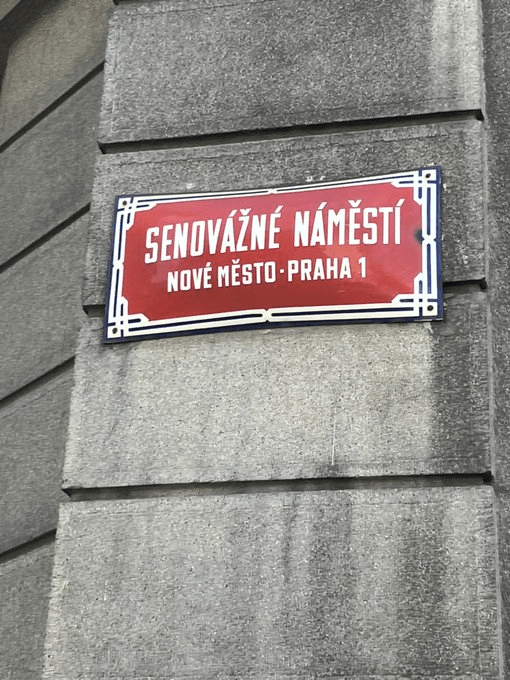

Let’s start with a language lesson: seno is ‘hay’, while váha means both ‘weight’ and ‘weighing machine’. So, a senováha is a hay scale, and this is Hay Scale Square.
In 1360, Charles IV declared that it was permitted to sell hay, fodder and oats in this location, and a weighing machine was placed there. The market was originally called ‘Senný trh’ (Hay Market), before getting its current name in the 1400s.
This meant that Prague now had a hay market to add to its horse market: https://whatsinapraguestreetname.com/2024/09/17/prague-1-day-123-vaclavske-namesti/.
And its cattle market: https://whatsinapraguestreetname.com/2024/09/01/prague-2-day-164-karlovo-namesti/.
In 1897, the square was renamed Havlíčkovo náměstí, after Karel Havlíček Borovský. More on him on https://whatsinapraguestreetname.com/2022/12/26/prague-3-day-122-havlickovo-namesti/.
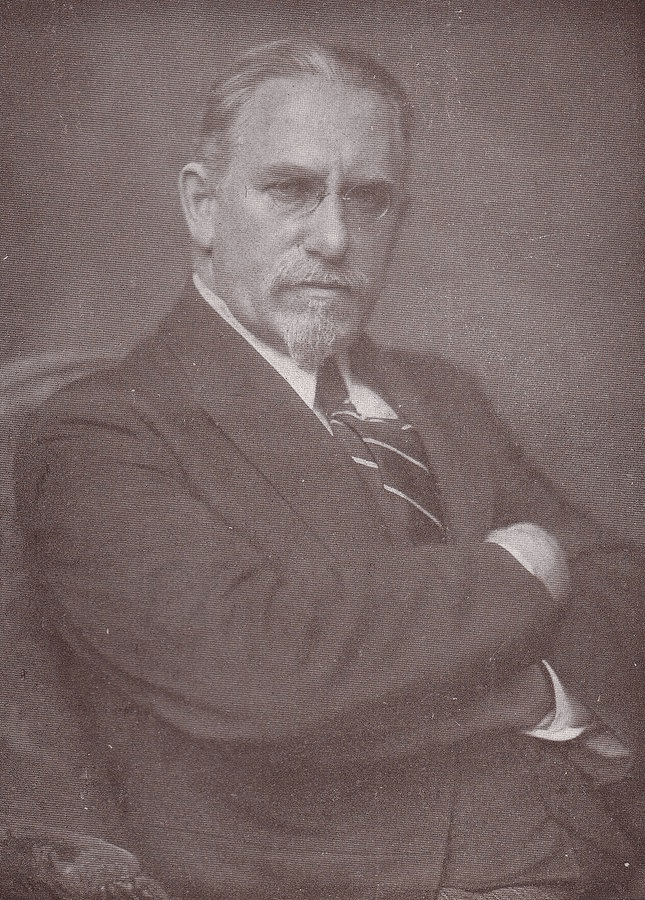
In 1927, it then became Soukupovo náměstí, after František Soukup (1871-1940), a social-democratic politician, and Czechoslovakia’s first Minister of Justice.
During the Nazi occupation, it was Senovážné náměstí again, before reverting to Soukupovo until 1951, at which point it became náměstí Maxima Gorkého, after the Russian writer and socialist.

Clearly somebody was napping in the early 90s, because there was a gap of over three years between the Velvet Revolution and the square getting its current name back in January 1993.
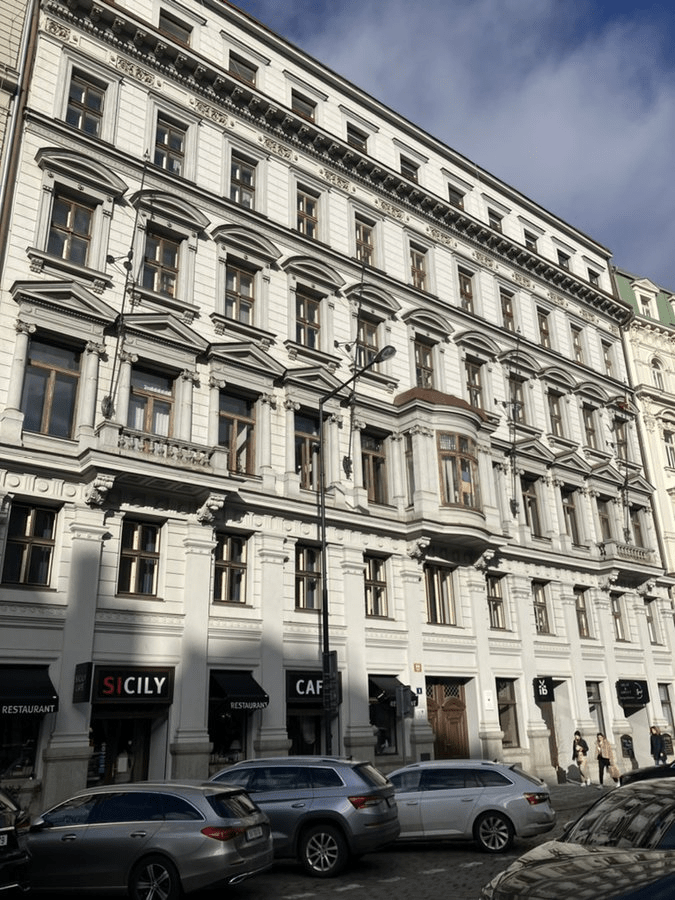
Things on Senovážné include the Crop Exchange (logically enough), used as the headquarters of Czechoslovak Television during communism, and by the Czech National Bank since 1994.

Across the road, at number 1, is the Probation and Mediation Service (PMS), which is supervised by the Ministry of Justice and, as you might have guessed from the name, performs probation and mediation in matters pending in criminal proceedings.

Next door to that is the Elbogenův palác, headquarters of Výbor dobré vůle – Nadace Olgy Havlové / Committee of Good Will – the Olga Havel Foundation (see https://whatsinapraguestreetname.com/2022/11/20/prague-3-day-64-olgy-havlove/). It aims to take care of those in society who are in need.
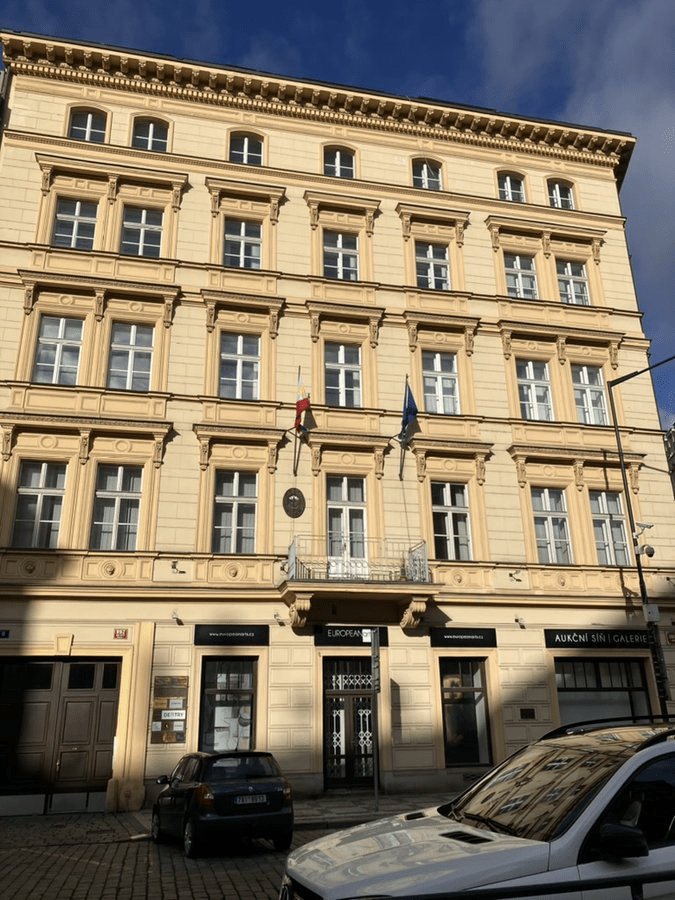
A bit further down, number 8 is the Embassy of the Philippines.
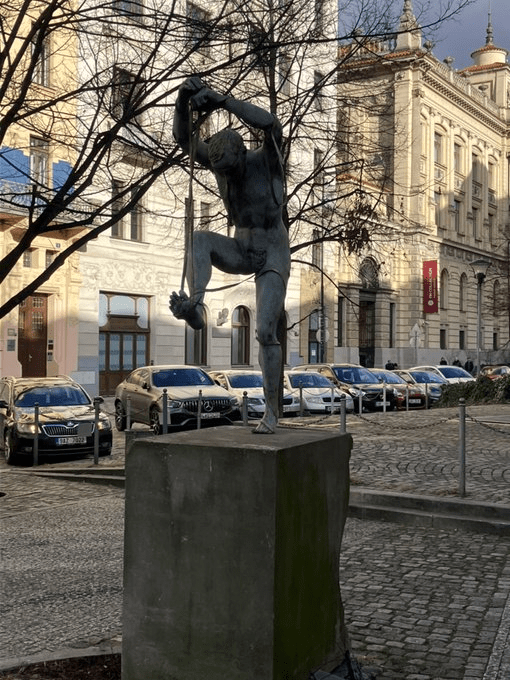
The statues/fountain in the centre of the square date from 2002, and are known as the Czech Musicians (Čeští muzikanti), designed by Anna Chromy (1940-1921) and Jan Wagner (1941-2005).

The fountain depicts musicians as rivers: the mandolin-player is the Ganges, the flautist is the Amazon, the violinist is the Danube, and the horn-player is the Mississippi.

A fifth sculpture, at a distance from the others, represents the Nile.
The Mortgage Bank of the Kingdom of Bohemia moved into number 13 in 1890. It’s now the Carlo IV hotel, and, if you want a room there tonight, it’ll cost you about €120, i.e. that the person who once told me it’s the most expensive hotel in Prague might have been lying.


Finally, if you dream about a senováha tonight, this is apparently a sign that you should follow your goal strictly, says someone on the internet: https://babiccinsnar.s1.pexow.com/senovaha.html

 What's in a Prague street name
Leave a comment