Originally published on X on 10 February 2024.
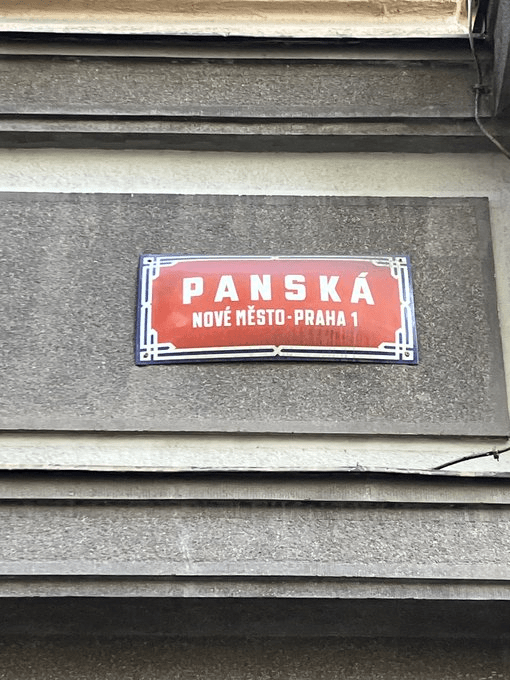
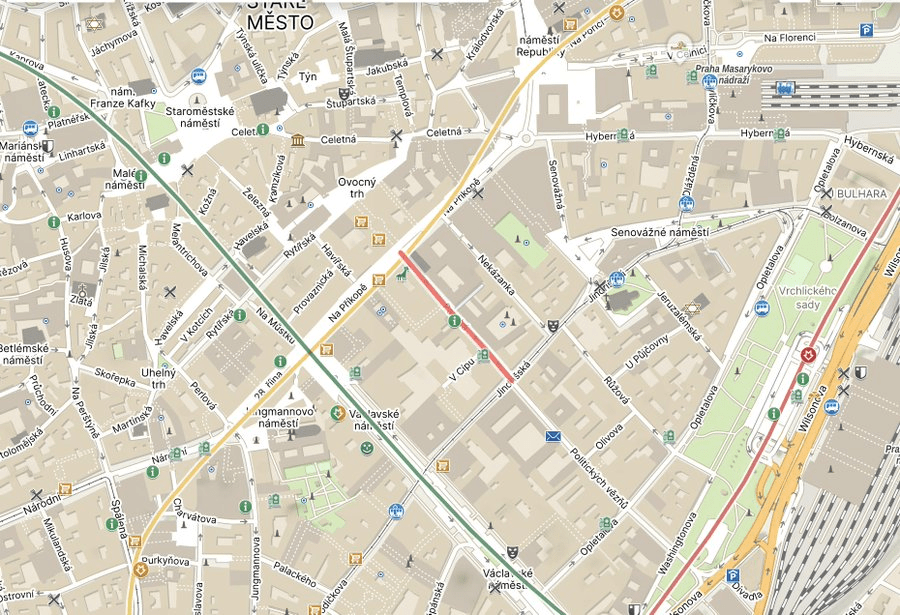
The oldest documented name for this street, around 1380, is Nová (New) – because, sometimes, these street names just aren’t that creative.
On the corner with Na Příkopě, there was once land and gardens belonging to – great word alert – a maltman called Kříž or Křížalova, which led to the street being renamed Křížalova in 1680.
After Bílá Hora (1620), this street became a popular place for the nobility to buy up properties which had presumably been confiscated from non-Catholics – hence the street being known as Panská from the 1700s onwards (a pán is a sir, master, lord, gentleman, etc.).
However, until about 1800, this competed with two other names: one was Velká (Big) Panská (because there was a Malá (Little) Panská too – see https://whatsinapraguestreetname.com/2024/09/14/prague-1-day-102-mikulandska/, where I somehow didn’t mention that name).
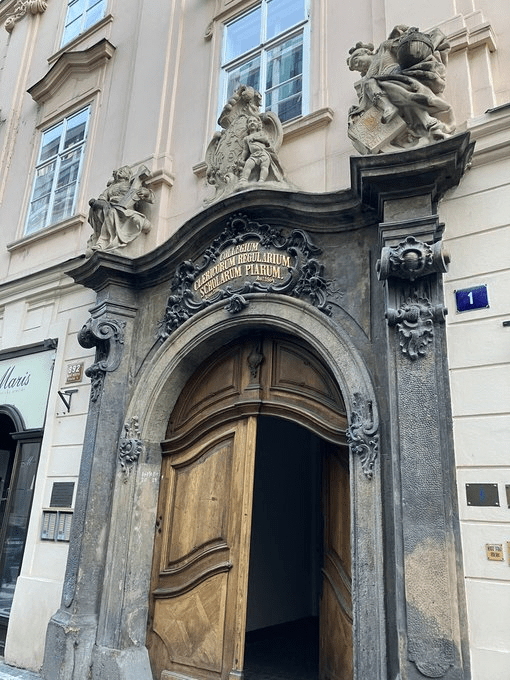
The third name was Piaristická. The Piarists are a religious order who are All About The Education; they arrived in Prague during the reign of Maria Theresa, and set up a school here in 1766. It’s about 17 paragraphs into this thread: https://whatsinapraguestreetname.com/2024/09/22/prague-1-day-137-na-prikope/.
From Panská itself, its entrance (at number one) looks like this, while, nowadays, number 3 is the Secondary Technical School of Communication Technology.
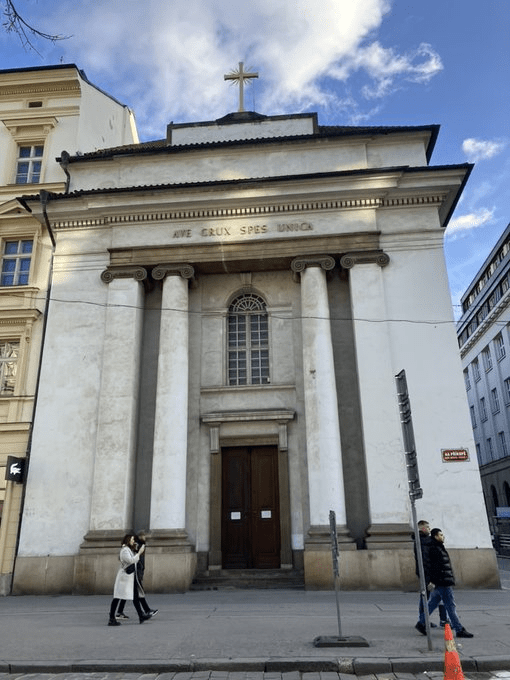
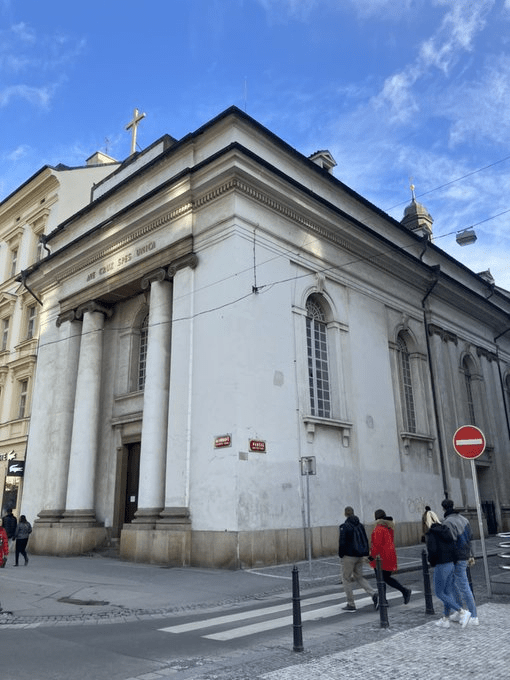
The Piarists also made a financial contribution for a church to be built across the road – the Church of the Holy Cross was completed in 1824.
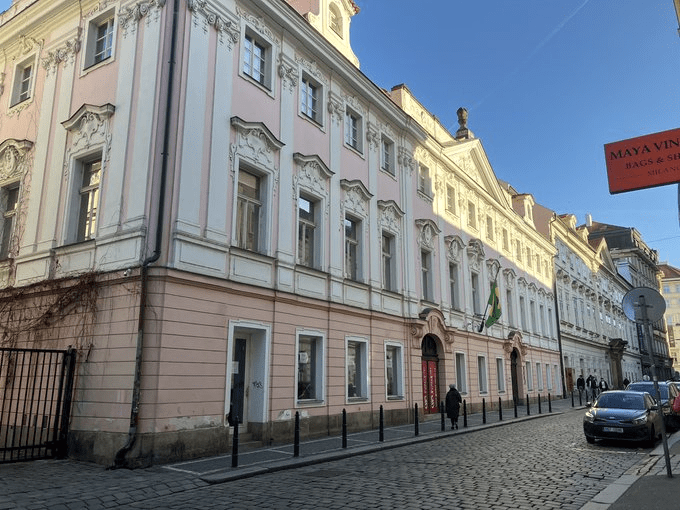
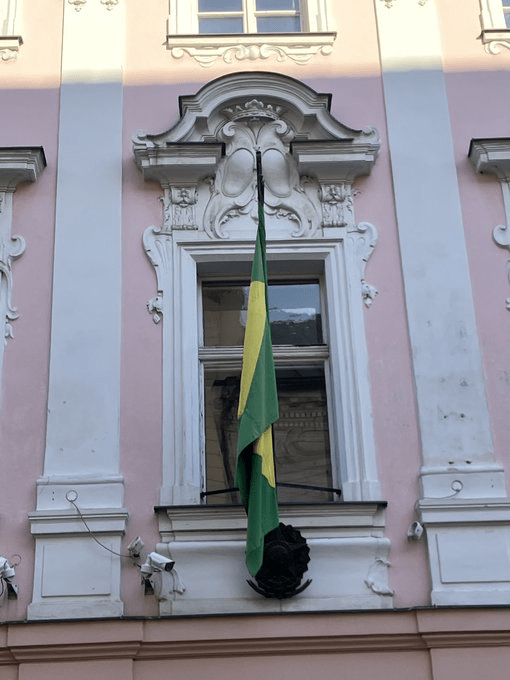
Panská also has embassies for two countries which, between them, cover almost two thirds of their continent’s landmass: Neubergovský palác, at number 5, is Brazil’s, while Palác Riesů ze Stallburgu, at number 6, is Argentina’s.
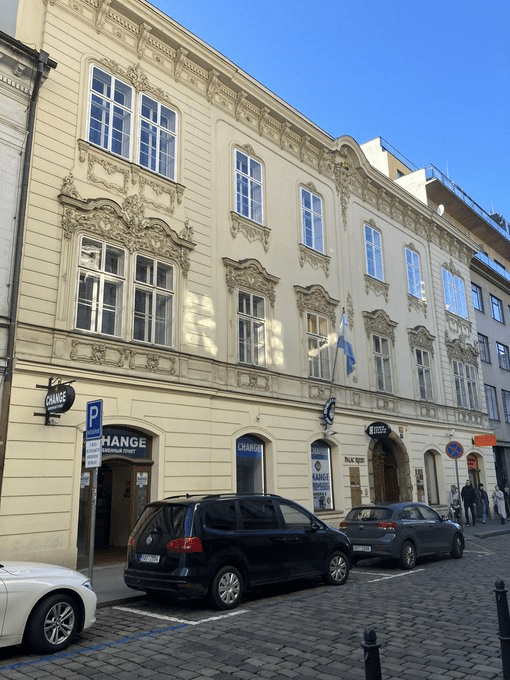
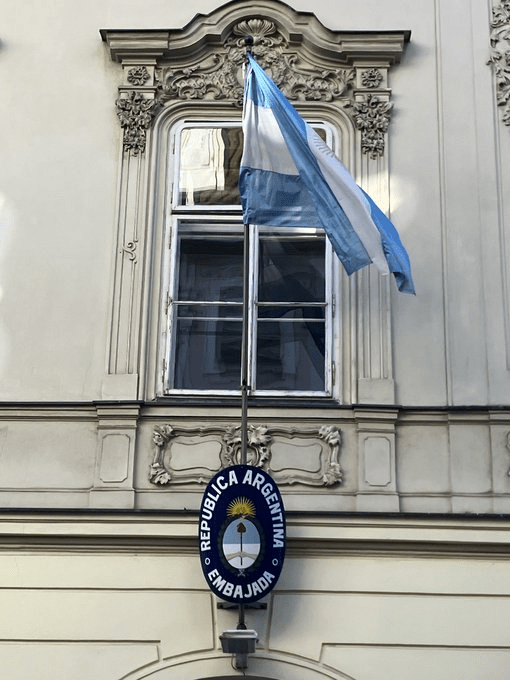
Whereas Kounický palác, at number 7, contains the Alfons Mucha Museum, and, in 1946, was the first Prague home of the British Council.
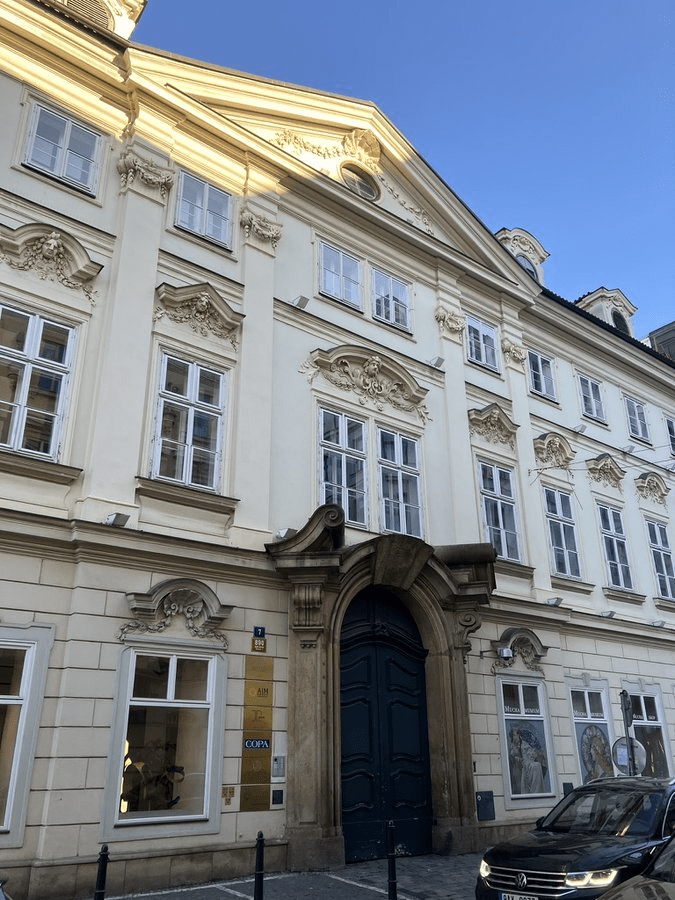
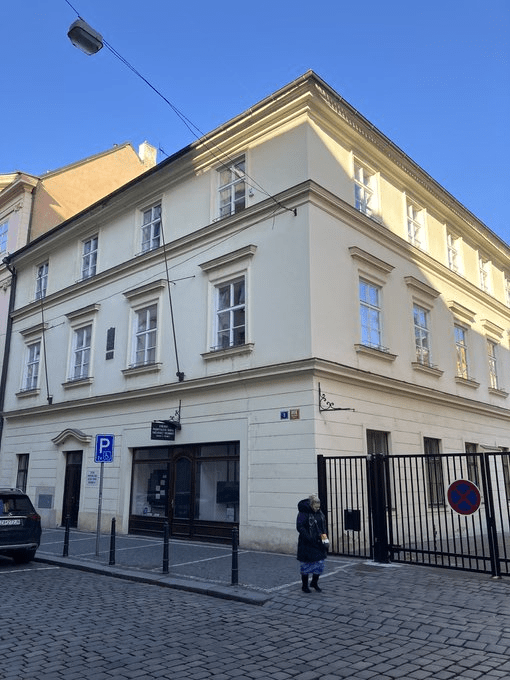
Millesimovský palác, at number 8, used to be an office for the Prager Tagblatt, a liberal-democratic newspaper which, despite being in German, was forced to close when the Nazis occupied Bohemia and Moravia in 1939.
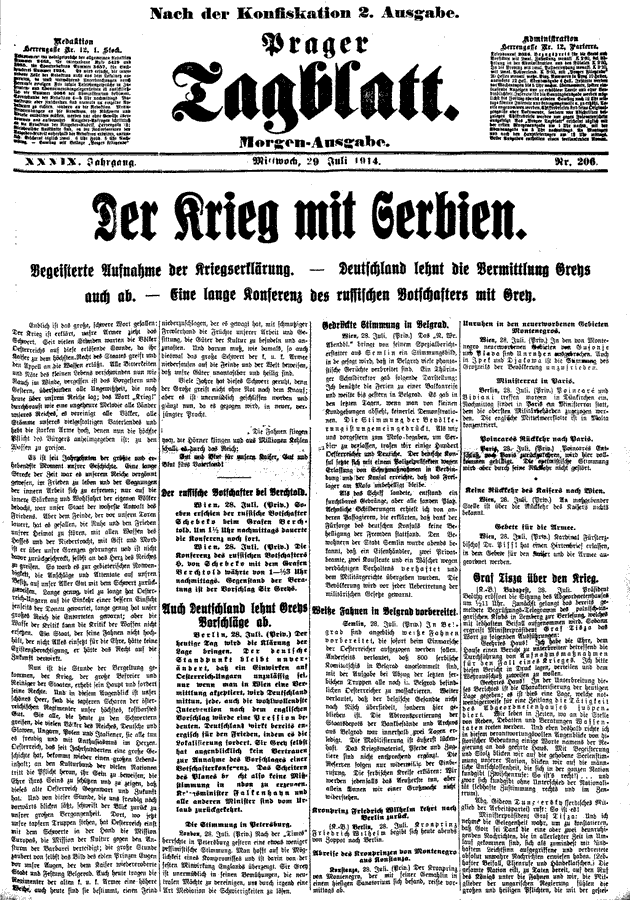
Look between the first two lower windows, and you’ll see a plaque dedicated to the famous journalist Egon Kisch. You feel this building should be put to a good use, but apparently it’s due to be destroyed instead. So much for cultural monument status.
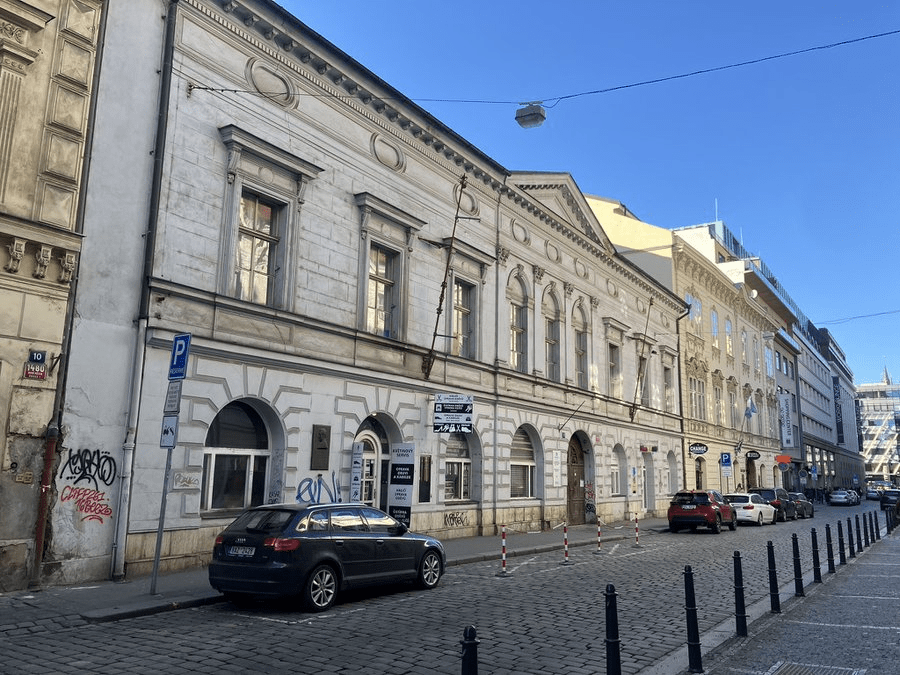
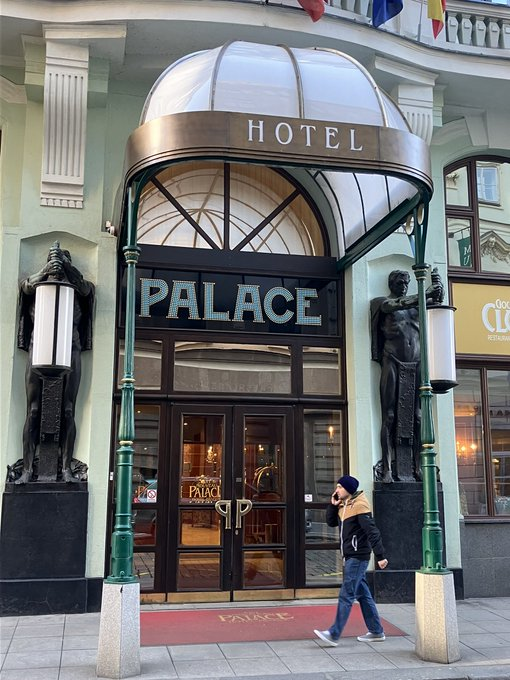
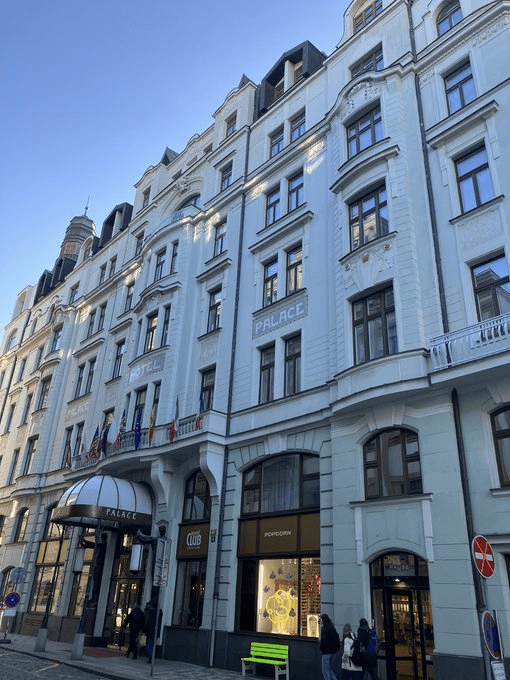
Because, if you look across the road*, you can see the Art Nouveau Palace Hotel, which has been beautifully done up (with hints of kitsch, but I quite like hints of kitsch). So maybe there’s hope for Millesimovský.
* And ignore what I’ll be writing about on day 140

 What's in a Prague street name
Leave a comment