Originally published on X on 15 February 2024. That street sign needs a clean.

On 28 October 1918, a delegation of the Czechoslovak National Committee was in Geneva, as was Edvard Beneš, not a member, but the most prominent member of the anti-Austrian resistance.
They agreed that a Czechoslovak Republic should be created, with Tomáš Garrigue Masaryk (still in the USA) as President, and Karel Kramář – founder of the Committee – as Prime Minister.
Back in Prague, two members of the Committee, Antonín Švehla (later a three-time Prime Minister) and František Soukup (soon to be Czechoslovakia’s first Minister of Justice), went to Václavské náměstí, specifically to where Lucerna is now (https://whatsinapraguestreetname.com/2024/09/15/prague-1-day-114-vodickova/).
The reason? This was the location of the Prague branch of the War Grain Institute, and Švehla and Soukup wanted to stop grain from being transported to the front (they also made the staff working there swear allegiance to the soon-to-be-formed state).
On the same day, Austria-Hungary said it was going to recognise the autonomy of the peoples living in the Empire; people took this to mean that the Empire was acknowledging Czechoslovakia’s independence, and took to the streets (not just in Prague, of course) to celebrate.

And to tear down / paint over / burn stuff that reminded them of that Empire.

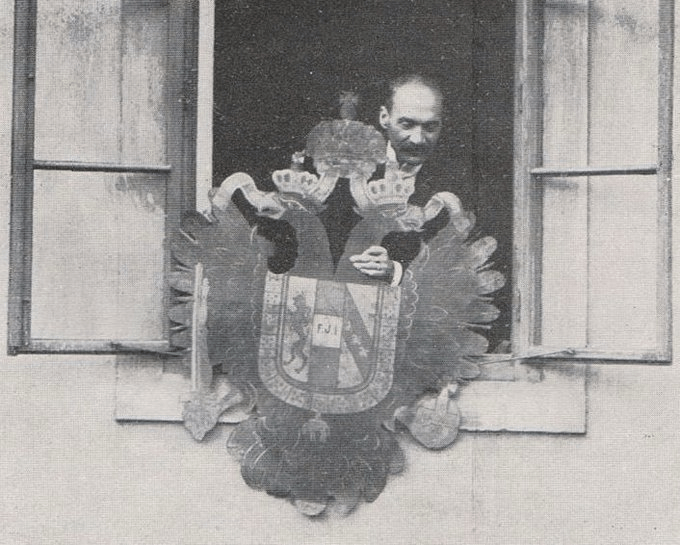
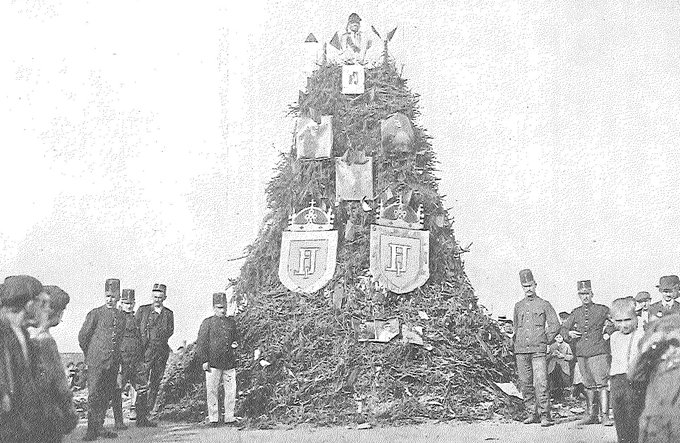

Meanwhile, Isidor Zahradník, a priest, gave a speech by the statue of Svatý Václav Plus Horse and declared that Czechoslovakia was now a reality.

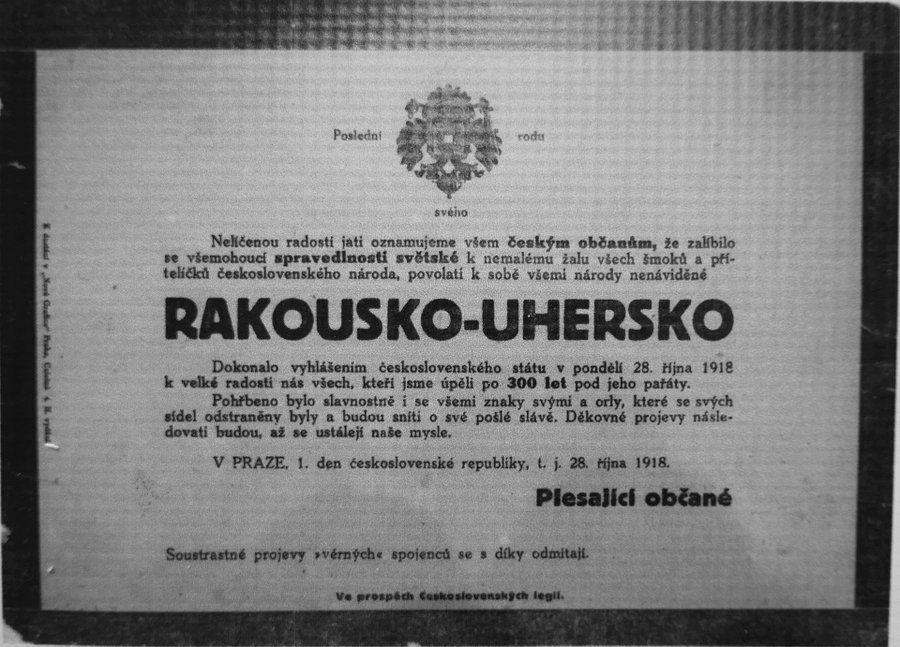
In the evening, the National Committee issued the Act on the Establishment of an Independent Czechoslovak State.
Its signatories – Antonín Švehla, Alois Rašín (whose writing this is), Jiří Stříbrný, Vavro Šrobár and František Soukup – would come to be known as the Muži 28. října / Men of October 28.

Quite a day.
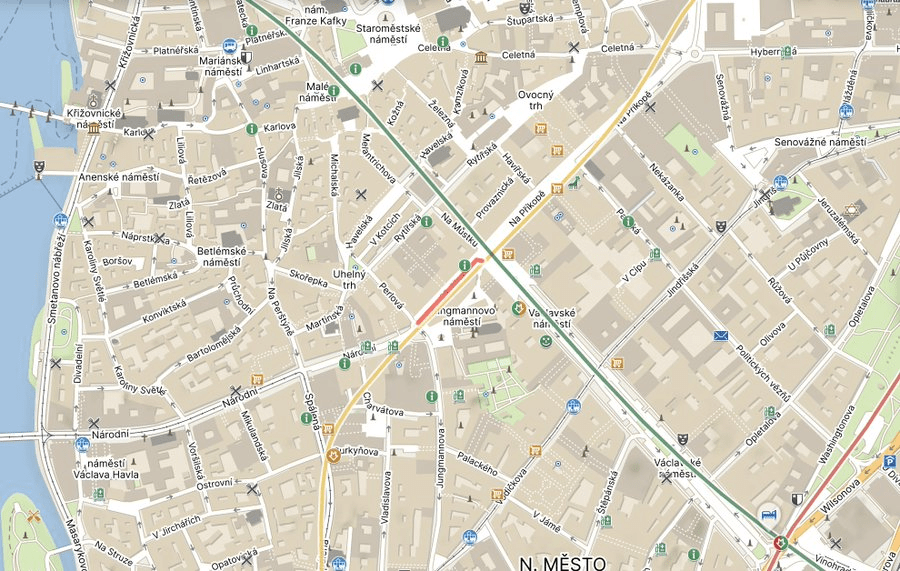
Just a reminder that you can walk in a straight line from 28. října (which, incidentally, was originally called Ovocná – Fruit Street) to here: https://whatsinapraguestreetname.com/2024/09/14/prague-1-day-106-narodni-national/
…across here: https://whatsinapraguestreetname.com/2024/09/12/prague-1-day-90-most-legii-legion-bridge/
to here: https://whatsinapraguestreetname.com/2024/09/12/prague-1-day-87-vitezna/
This patriotic walk would start a bit further east if Na příkopě had been given a nice new Czechoslovak name too, though.
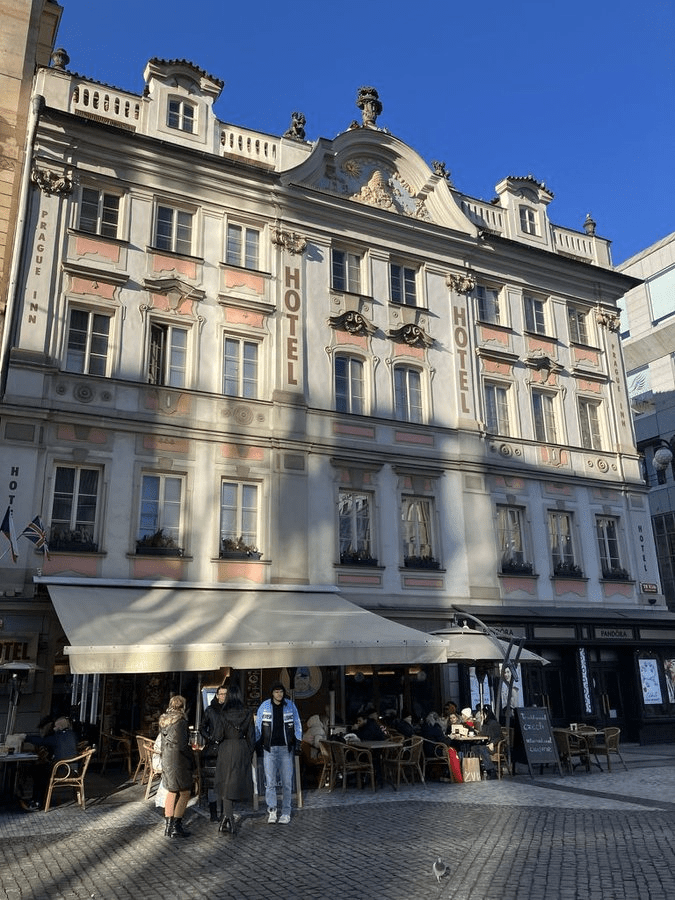
It’s fair to say that 28. října is the least scenic of all these streets, but it does include the corner of U Zlatého úlu (The Golden Beehive), probably the oldest building on Václavák (reconstruction from 1789).
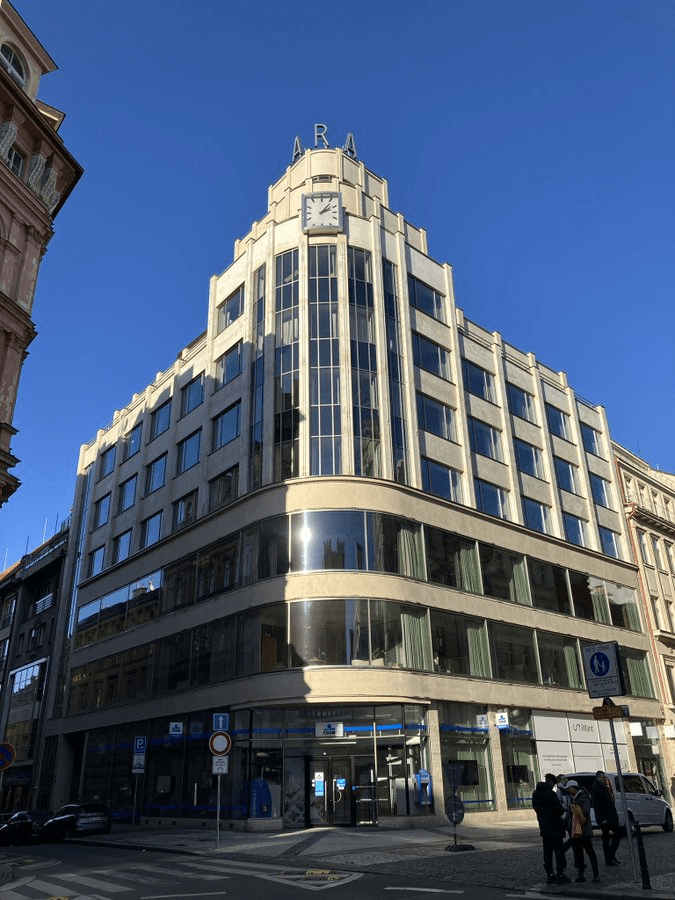
Whereas the functionalist Palác ARA (1930-1; done up in 2018-9) used to be a shopping centre, known as OD Perla during communism and, at times, giving (the earlier) Kotva and Bílá labuť a run for their money.

 What's in a Prague street name
Leave a comment