Originally published on X on 17 February 2024.
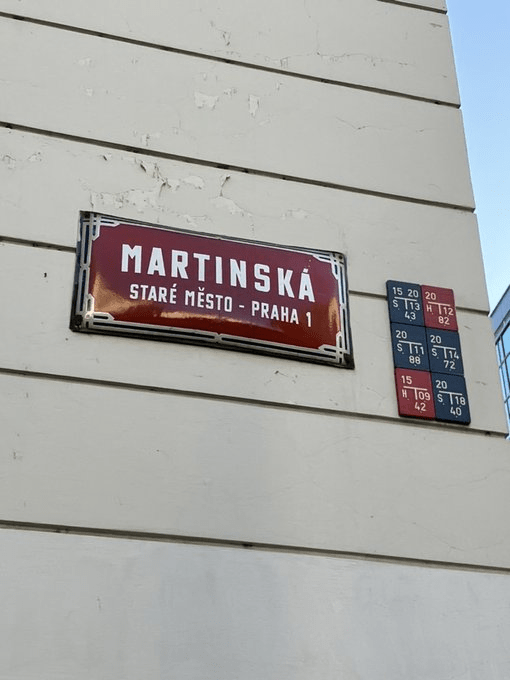

Way back in the 1100s, there was a settlement here called Újezd, meaning the same as but not to be confused with https://whatsinapraguestreetname.com/2024/09/11/prague-1-day-81-ujezd/.
Between 1178 and 1187, the Church of St Martin was built, and, after that, the name of the settlement was updated to Újezd u Svatého Martina.
St Martin is Martin of Tours, actually from Pannonia (modern-day Hungary), but also the third Bishop of Tours, and later the patron saint of the French Third Republic.
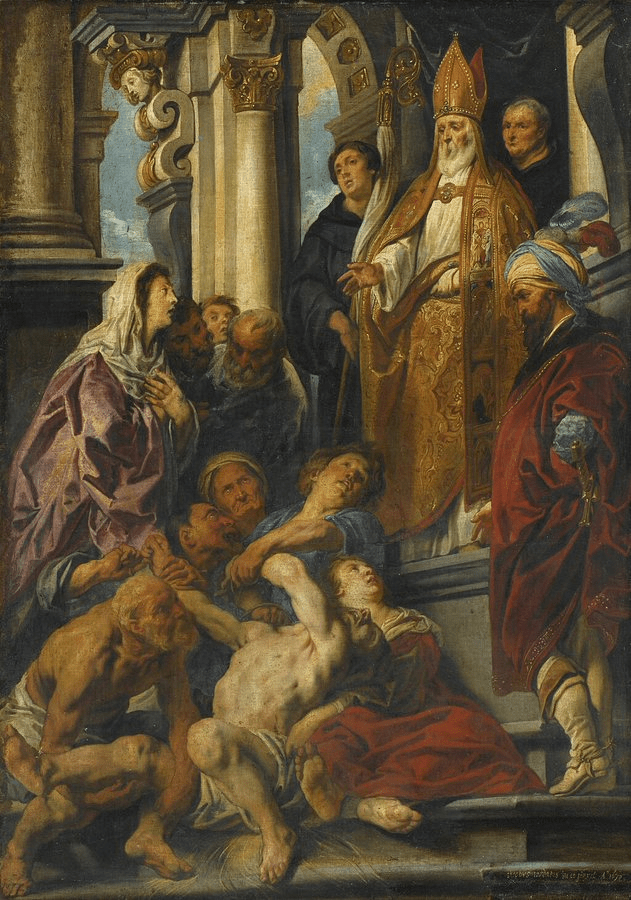
In the 1230s, Václav I had city walls built. One result was that the southern side of the church was built into these; another was that the church became known as Kostel svatého Martina ve zdi (Church of St Martin in the Wall).
This also resulted in most of Újezd being placed outside the walls of the Old Town (the church being the obvious exception).
St Martin also got a gate named after him (yes, yes, it’s a shame nobody gives guided Tours of these, etc., etc.).
The church got a Gothic makeover in the 1350s; as it was used by Hussites in the 1400s, it was one of the few churches that was spared from destruction in the Hussite Wars.

It wasn’t so lucky in 1784, when it was abolished by Joseph II; subsequently, it was converted into residential space (photo from 1890 by Jindřich Eckert).

Reconstruction took place in 1905, going back to the Gothic style; archaeological finds from the original church were transferred to the City Museum.
Nowadays, the church serves the Evangelical Church of the Czech Brethren (https://whatsinapraguestreetname.com/2022/11/26/prague-3-day-83-ceskobratrska/). It offers an Evangelical service in German every Sunday at 10:30.


Building works in 2009 revealed remains of the pre-New Town settlement which had belonged to the church: https://www.idnes.cz/zpravy/zahranicni/archeologove-objevili-v-centru-prahy-stredoveke-osidleni-i-nahrobni-kameny.A090827_124409_vedatech_taj
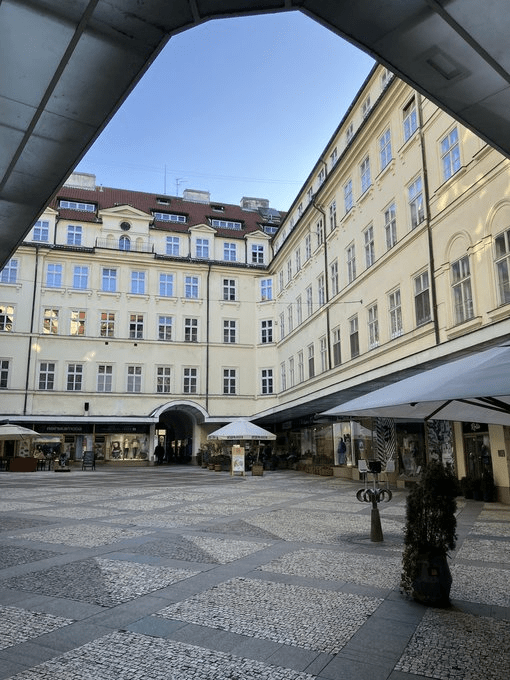
Martinská also features one of the entrances to the courtyard of Palác Platýz. I know I mentioned this on the Národní post, but it’s worth highlighting again as it’s been nicely reconstructed.



 What's in a Prague street name
Leave a comment