Originally published on X on 18 February 2024.
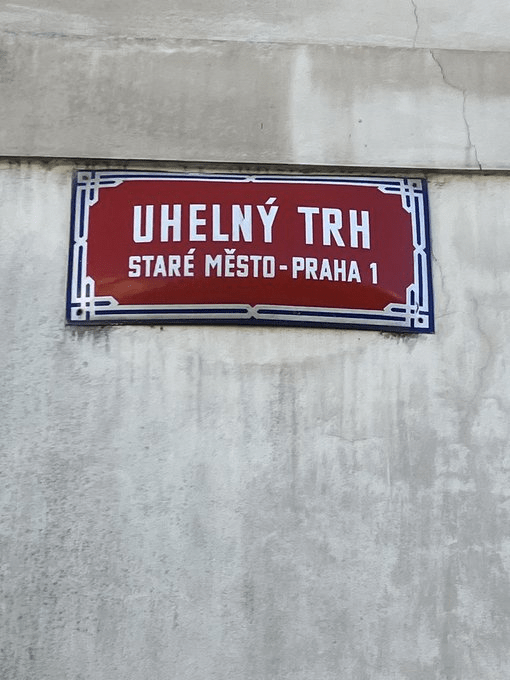

Uhlí is coal; a trh is a market. Coal made from wood is charcoal, and, in Czech, that’s dřevěné uhlí (literally ‘wooden coal’).
Sales of charcoal took place until the 1800s, when hard coal became more popular.
Uhelný trh became a place you’d go to to buy soup and other hot meals, as well as flowers. Meanwhile, the smelter that was in the centre of the square until 1807 was disposed of.

Which was twenty years after a young composer from Austria had stayed at number one on the square. His name was Wolfgang Amadeus Mozart.


In the 1830s, a fountain was placed where the smelter had been; it was removed in 1894, and what you see now is the Wimmer Fountain, which was added in 1951.
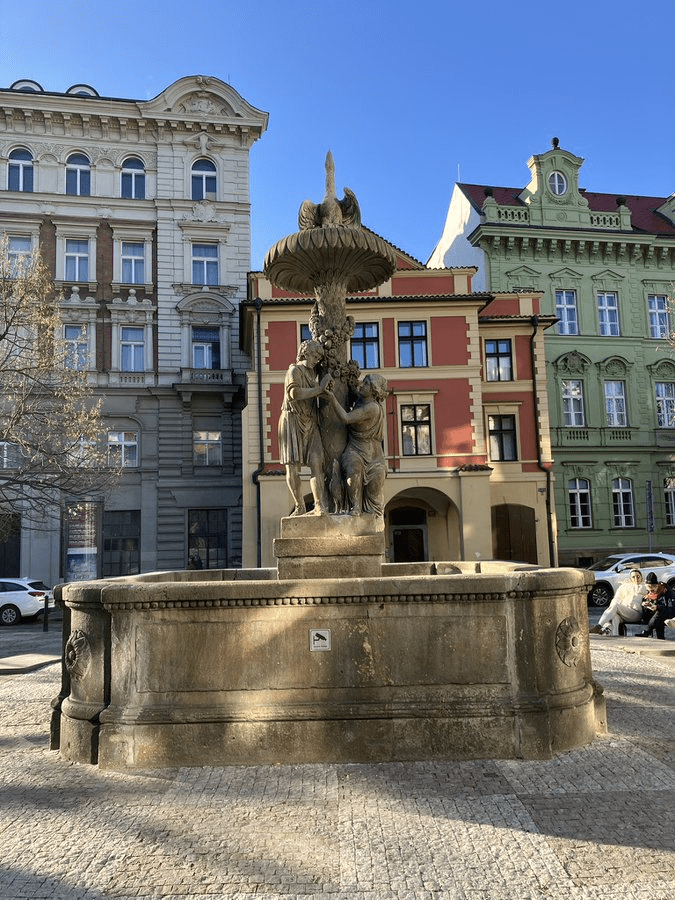
The house behind the fountain is the only ancient building on the square that still exists; it’s called U tří stupňů (The Three Degrees) and used to be a cafe, mainly frequented by those who worked at the market.

(Sorry, couldn’t not)
It’s been vandalised a few times, and if ever there was an advertisement against trying to damaging monuments, it’s this one: https://www.lidovky.cz/ceska-pozice/former-prague-mayor-s-son-loses-arm.A110407_150350_pozice_11031.
Meanwhile, you can see the original fountain – somewhat less grand – in this photo.

The school building on the square was the scene of an incident we’d rather forget.
It happened on 15 March 1939, also the day that President Emil Hácha signed away Czechoslovakia’s independence to Nazi Germany.
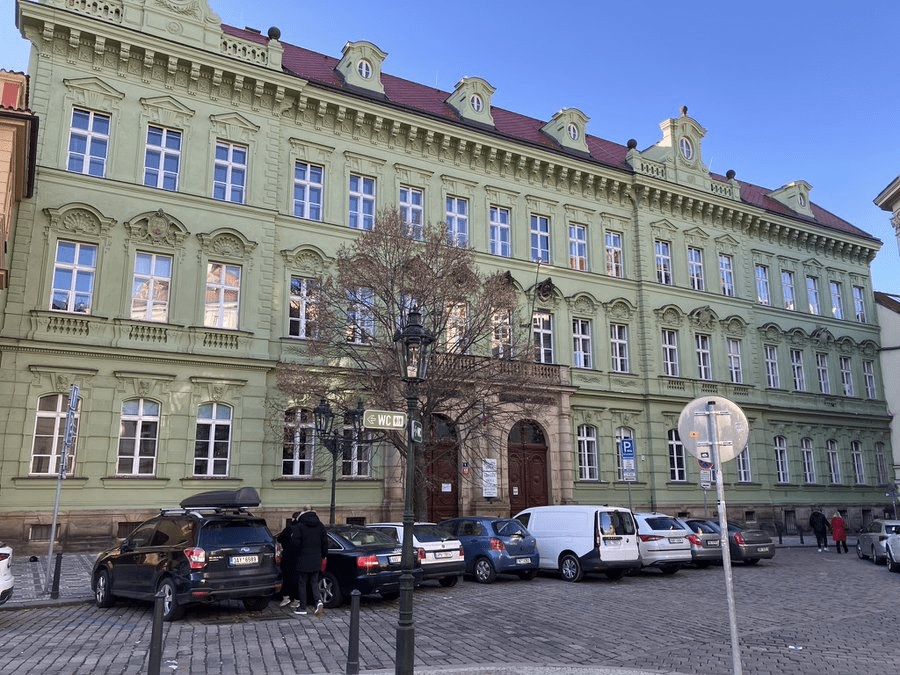
The Mussolini-inspired National Fascist Community (NOF) – which had never won more than 2% of the vote – occupied the building, and asked its supporters to occupy others in Prague. This was meant to be in support of the German occupiers, not against them.
However, NOF was vehemently anti-Germany, whoever was in power there, and the occupiers (of Bohemia and Moravia) managed to get the occupiers (of the school) out within three days. The NOF had ceased to exist by the end of 1939.
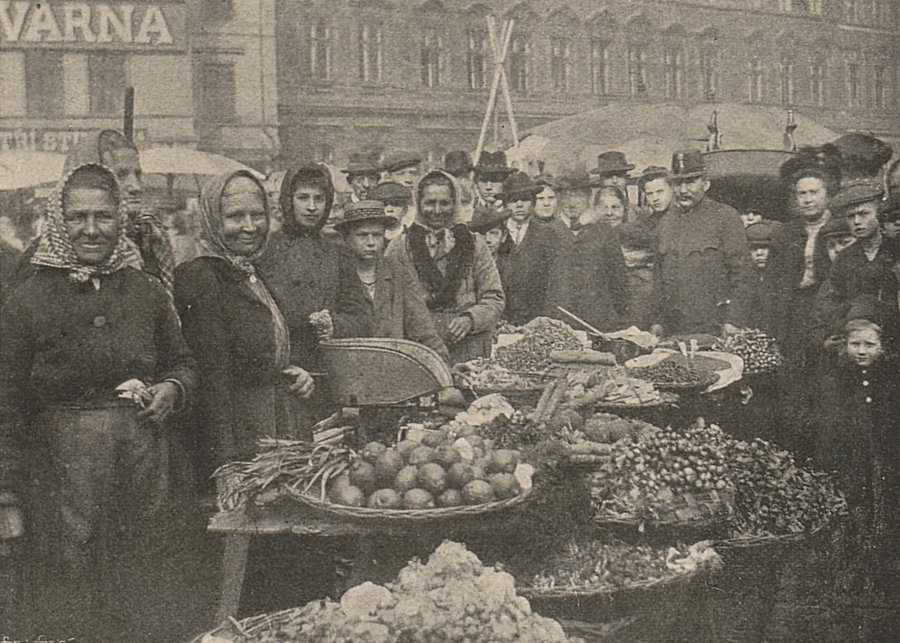
In order to end this post on a more positive note, here’s a great people of people going to / working at the market in 1906.

 What's in a Prague street name
Leave a comment