Originally published on X on 21 February 2024.


In the 1200s, this area was a poor neighbourhood; one of its most well-known buildings was called ‘Benátky’ (Venice), and so the street’s first name was Benátská.
In 1372, Jan Milíč from Kroměříž (Hussite Prague 3 flashback on https://whatsinapraguestreetname.com/2022/12/26/prague-3-day-121-milicova/) founded a preacher’s school and refuge for ‘repentant women’, and called it Nový Jeruzalém.
The street then became known as V Jeruzalémě or Jeruzalémská.
Accommodatino for them was provided in the chapel, named after Mary Magdalene.
In 1660, the Jesuits turned this into a boarding school, and the street’s named was changed to Horní Konviktská (more on that tomorrow).
In the 1720s, the Jesuits decided to build a new, Baroque church – the Church of St. Bartholomew, hence Bartolomějská.
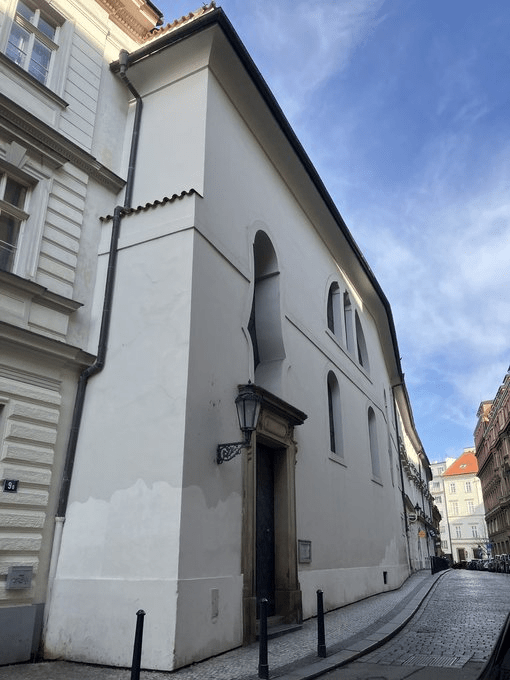
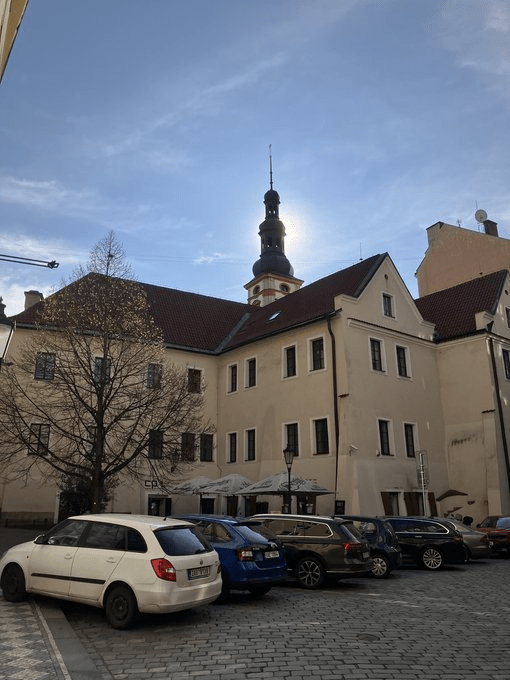
My photos show very, very little of the church, so maybe enjoy this painting by Václav Jansa instead.

When the Jesuit order dissolved in 1773, the church became state property. It was used by the Grey Nuns of the Third Order of St. Francis from 1835 to 1949 – and again since 1995.
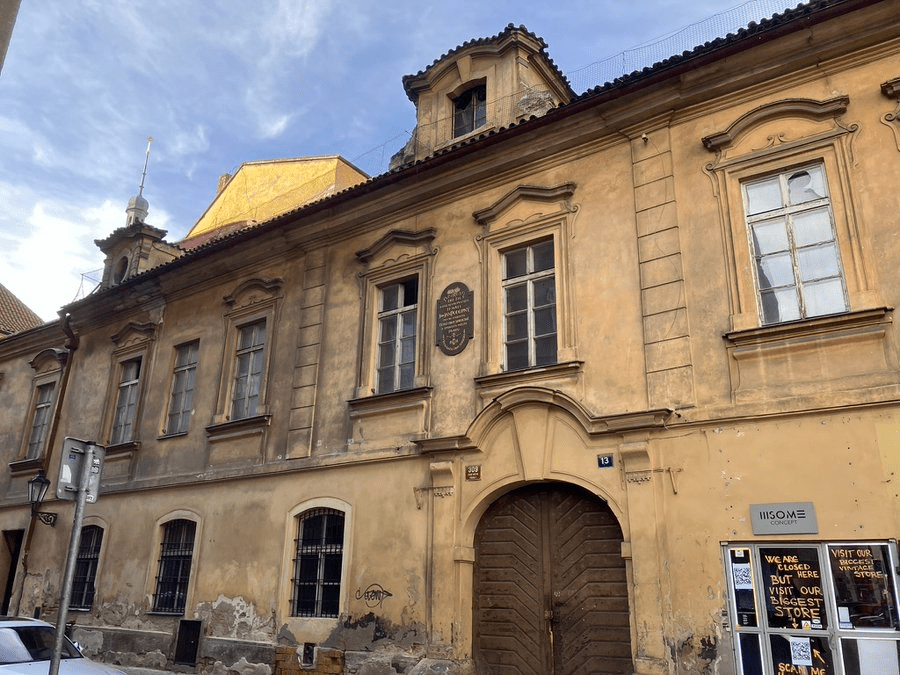
Number 13 in the street – one of those houses that you feel needs a clean, but which you’d miss in its current state if it got one – was lived in (and died in) by Jan Podlipný (1848-1914), once mayor of Prague but also of the Sokol organisation (https://whatsinapraguestreetname.com/2024/08/26/prague-2-day-114-sokolska/).
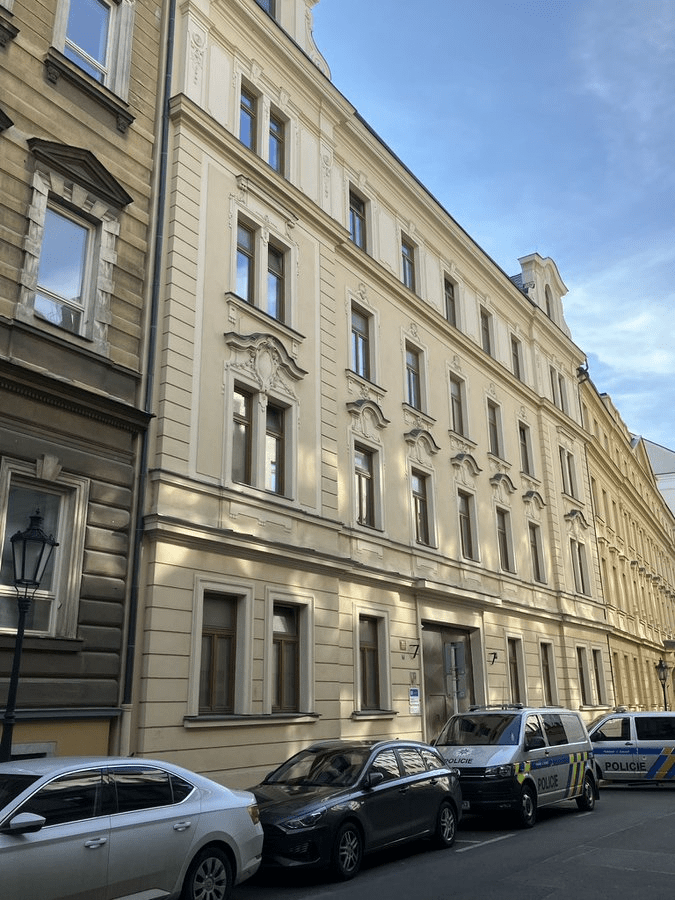
Meanwhile, number 14 is as stern as it looks – it’s the district directorate of the Prague 1 police, and, until 1990, was the headquarters of the StB, communist Czechoslovakia’s secret police force.

And number 12 is the headquarters of the Criminalistics Institute of the Czech Republic.

And number 6 is the Criminal Police and Investigation Service.
A fun, light-hearted street, this one.

 What's in a Prague street name
Leave a comment