Originally published on X on 24 February 2024.
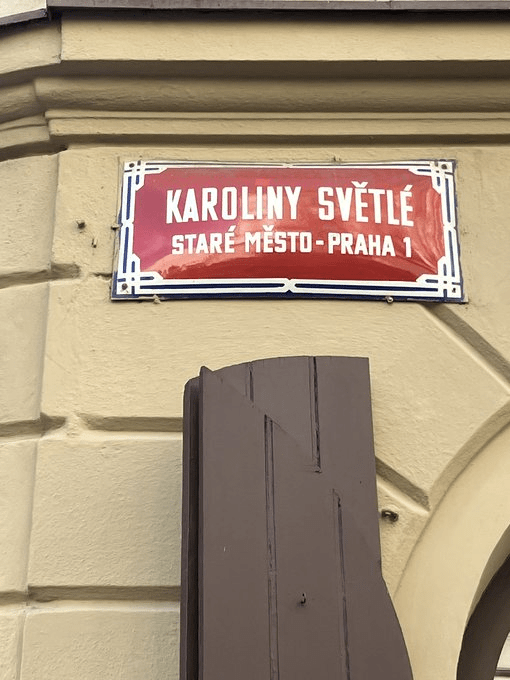
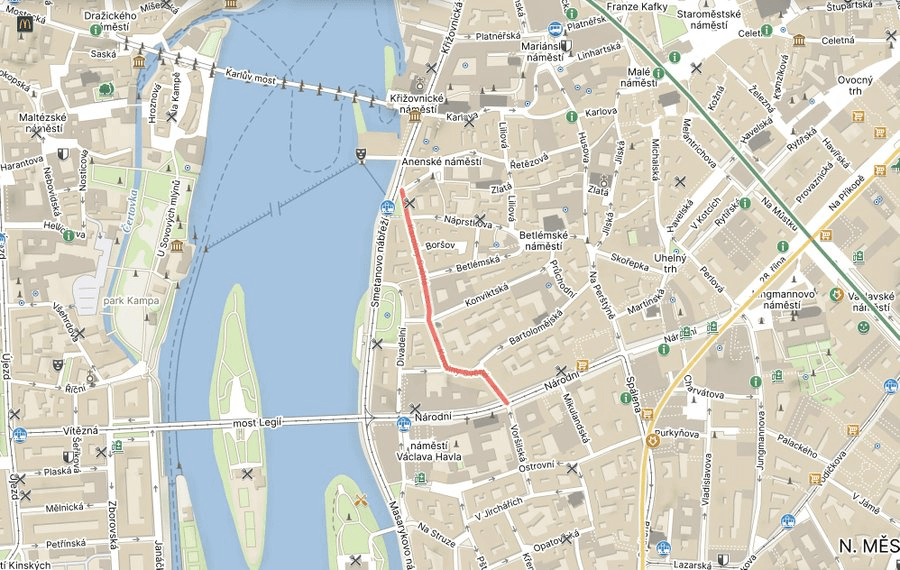
The southern part of the street was originally called Svatoštěpánská, later being known (from 1780) as Štěpánské náměstí, both after a nearby church which is no longer there.
The northern part, meanwhile, was known as Za svatým křížem menším – a reference to the rotunda mentioned on: https://whatsinapraguestreetname.com/2024/09/28/prague-1-day-151-konviktska/ – or as Za svatým Ondřejem (again, we presume this was a church, this time dedicated to St Andrew).
The northern part became known as Poštovská, because it was on the regular mail route between Malá Strana and Vienna (and there was a post office here).
This name was attributed to the whole street from 1870 onwards.
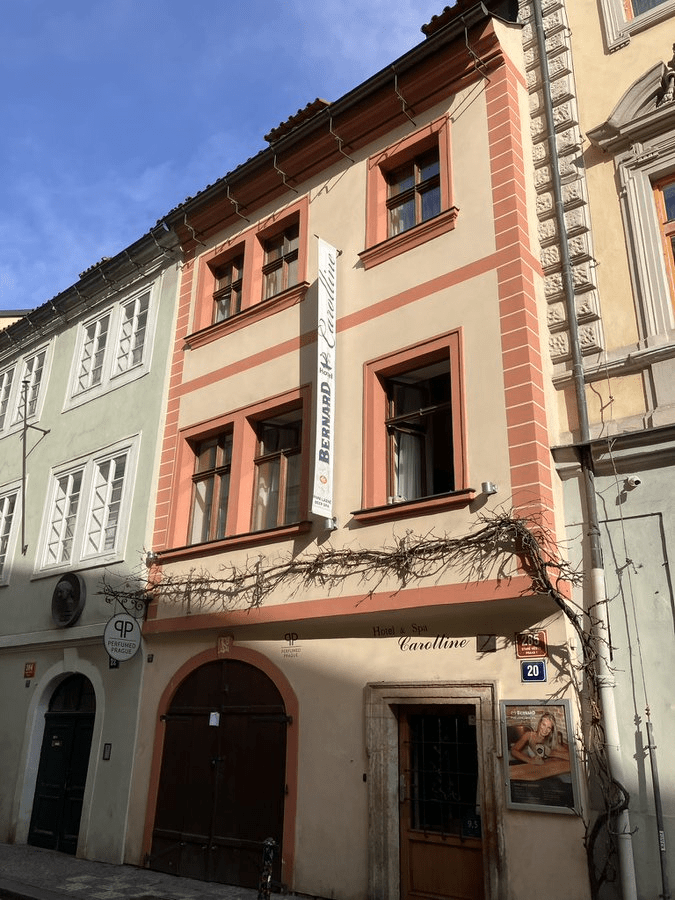
Johanna Nepomucena Rottová was born into a wealthy family on the street – at number 20 – in 1830.
Her education allowed her to learn French as well as Czech and German.
In 1852, she married her piano teacher, Petr Mužák. Their only child, Boženka, was born later that year, but only lived for three months.
Partially as a way to deal with her grief, Johanna started writing.
Her husband was from Světlá pod Ještědem (near Liberec), where she would spend her summers, and which inspired her pseudonym, Karolina Světlá.
Her husband allowed her to meet various key cultural figures and form friendships with, among others, Jan Neruda and Božena Němcová (https://whatsinapraguestreetname.com/2024/08/25/prague-2-day-110-bozeny-nemcove/), the latter of whom would also be a significant literary influence.
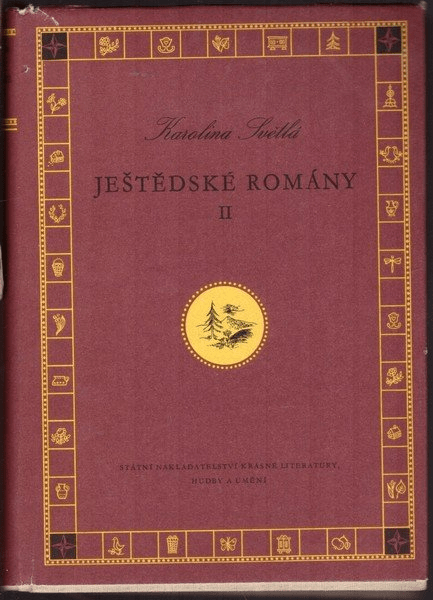
While many of Světlá’s works were about the Prague bourgeoisie, it was her rural prose – notably five novels which came to be known, collectively, as the Ještěd novels – that had the most enduring popularity.
Along with Vojta Náprstek (coming up soon), Světlá founded the American Ladies’ Club, the first Czech women’s association, in 1865; in 1871, she founded the Czech Women’s Manufacturing Association, which aimed to help girls from poor families get an education and find work.
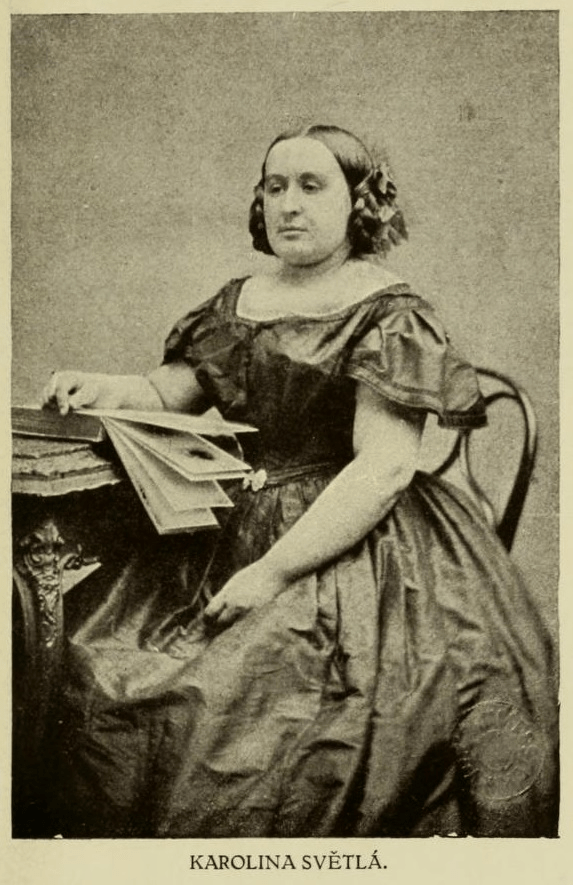
From the late 1870s onwards, Světlá had to dictate her works to her niece, Anežka Čermáková-Sluková, due to an eye condition.
Světlá died in 1899 and is buried in Olšany Cemetery. The street had been named after her a year earlier.

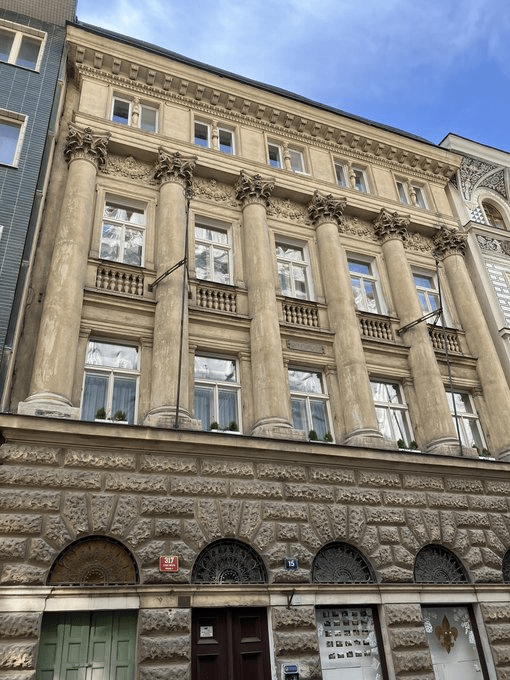
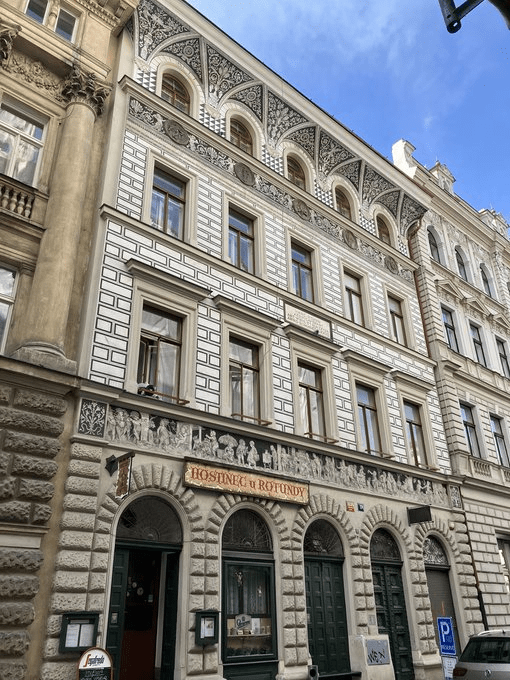
The street is also known for its Neo-Renaissance buildings designed by Antonín Wiehl and Jan Zeyer in the 1870s (specifically numbers 15 and 17 – see below).

 What's in a Prague street name
Leave a comment