Originally published on X on 27 February 2024.
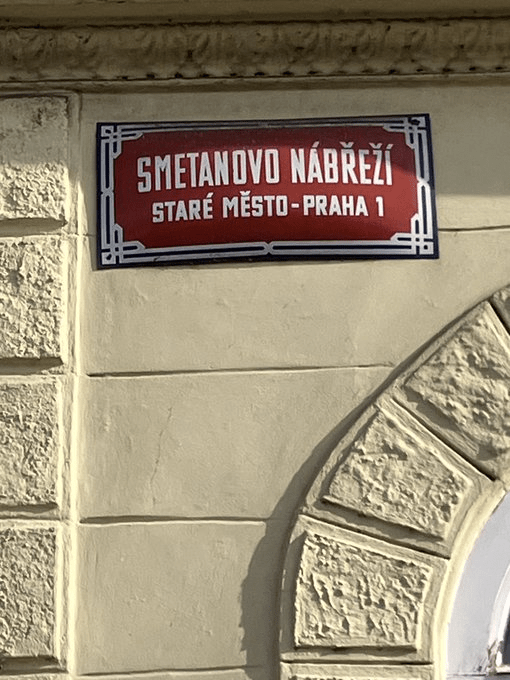
Bedřich Smetana (baptised as Fridrich) was born in Litomyšl in 1824. His father František was a prolific brewer (and played violin in a quartet) while his mother Barbora was a relative of the Baroque composer Jiří Ignác Linek (and was a dancer).
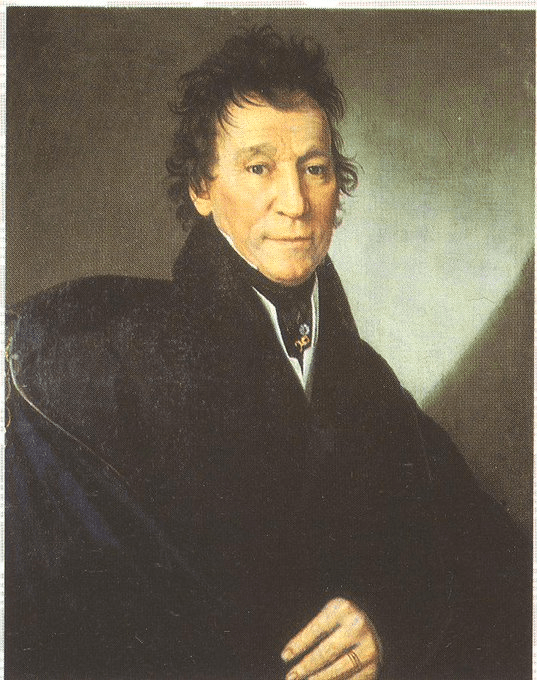
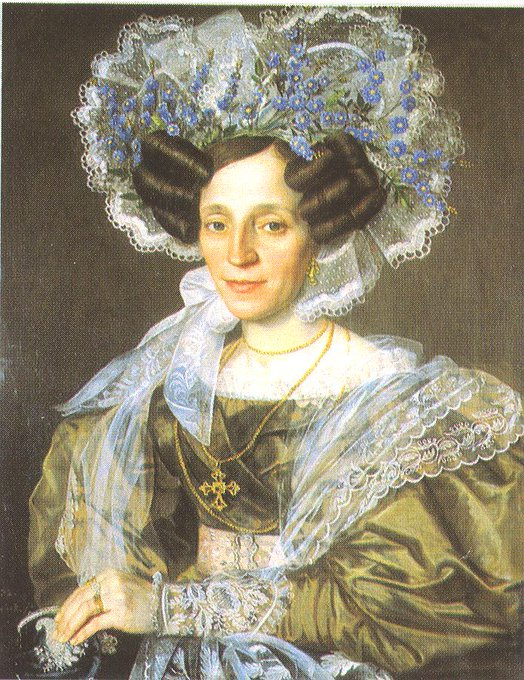
Bedřich, meanwhile, started violin and piano lessons, giving his first public performance on the latter in 1830, when he was six.
A year later, the family moved to Jindřichův Hradec when his father became head of the castle brewery; they stayed there until 1835, when František bought the estate at Růžkova Lhotice.
After an unhappy stint at the gymnasium in Jihlava, Bedřich transferred to the Premonstratensian school in Německý Brod. One of his acquaintances there was Karel Havlíček Borovský (who is also why the town is now called Havlíčkův Brod; see https://whatsinapraguestreetname.com/2022/12/26/prague-3-day-122-havlickovo-namesti/).
Smetana transferred again in 1840, this time to the academic gymnasium in Prague, where music soon took up much more time than his studies did. He announced he was dropping out, and his father promptly had him transferred to Plzeň.
He matriculated (just) in 1843.
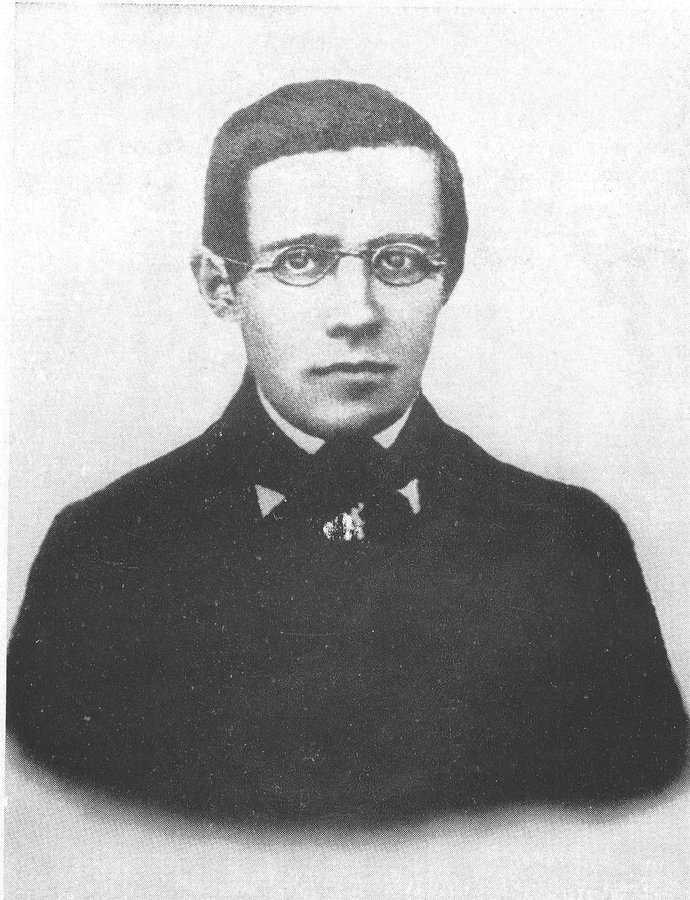
Having composed several pieces in Plzeň – of which the polkas became particularly popular – Smetana returned to Prague as soon as he could, eventually finding work as a tutor to a noble family in 1844.
He continued to compose and tried to make it as a concert pianist.
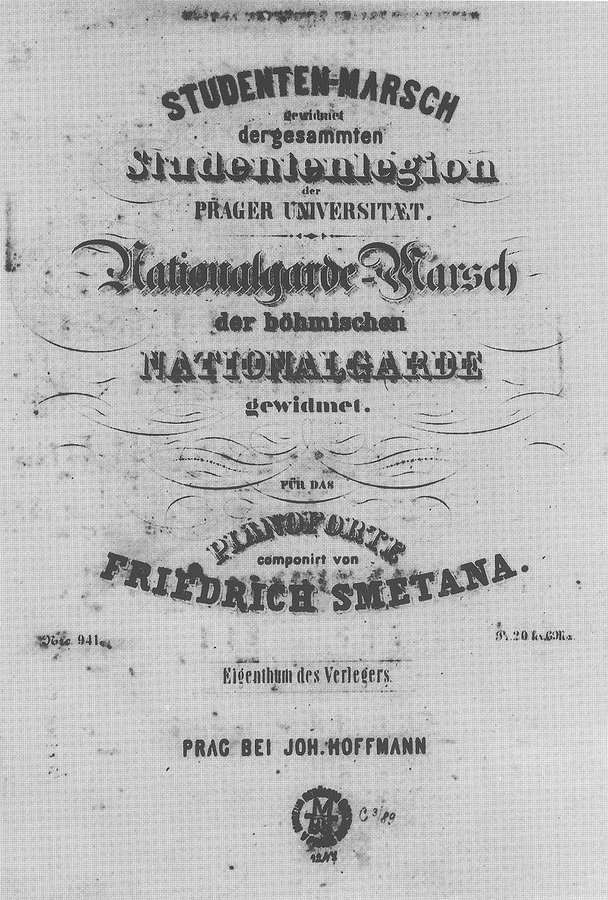
In June 1848, Smetana was on the barricades during the failed Prague Uprising; two marches he wrote during this time became his first published works.
Thanks to financial support from his parents, he was able to open a piano school on Old Town Square in 1849; he married his long-term sweetheart, Kateřina Kolářová, in the same year.

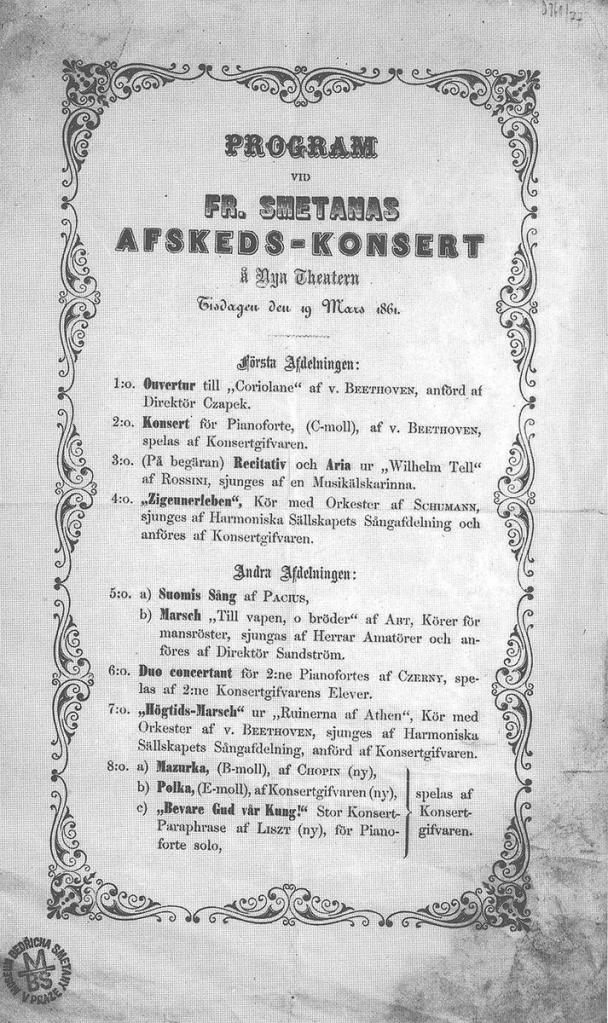
After a series of personal setbacks (three of his four daughters died within two years) and professional difficulties (some of his concerts were poorly received and led to a financial loss), Smetana moved to Göteborg and opened a successful music school, staying until 1861.
Kateřina would also die in 1859; Smetana then spent time with a friend, Ferenc Liszt, in Weimar.
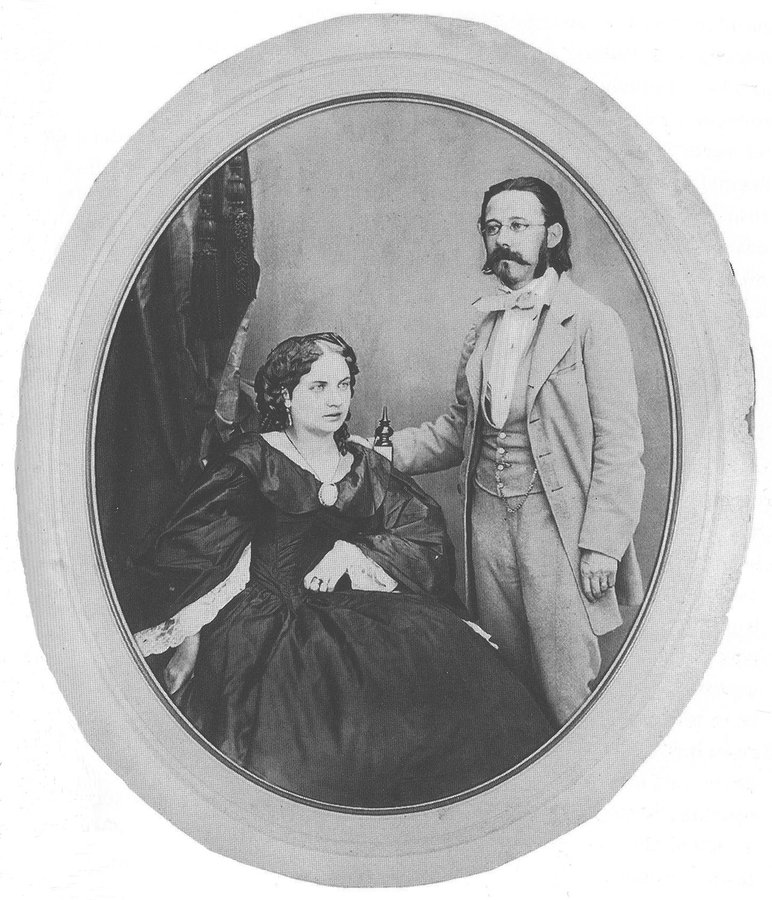
It was around this time that he met his second wife, Bettina, whom he married in 1860, although the marriage would ultimately become somewhat miserable.
By 1862, he had decided to try his luck in Prague again; he started to compose operas, assisted by his friend from his revolutionary days, Karel Sabina (https://whatsinapraguestreetname.com/2022/11/24/prague-3-day-79-sabinova/).
It was only around this time that Smetana really mastered Czech, but this served him well – he became choirmaster of Hlahol (https://whatsinapraguestreetname.com/2024/09/12/prague-1-day-92-vojtesska/) and president of Umělecká Beseda (https://whatsinapraguestreetname.com/2024/09/12/prague-1-day-84-besedni/).
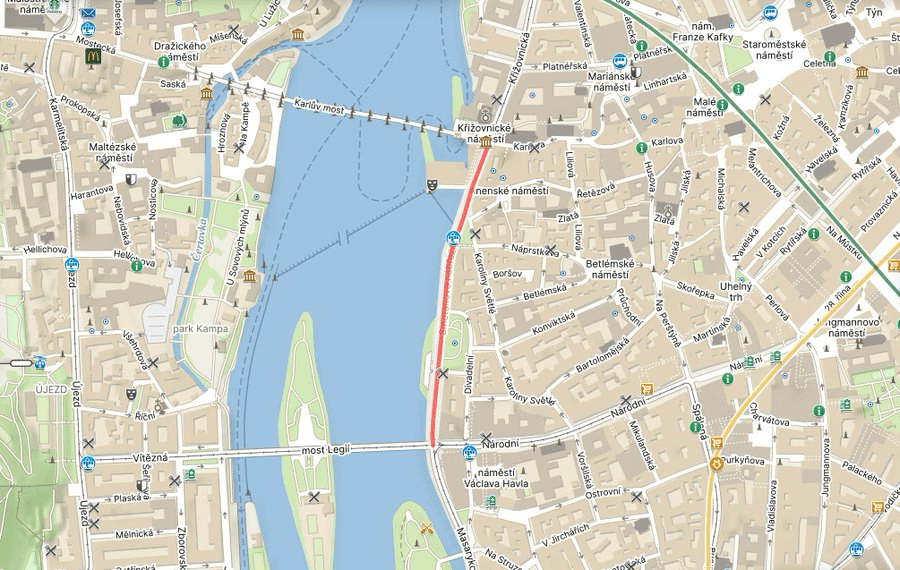
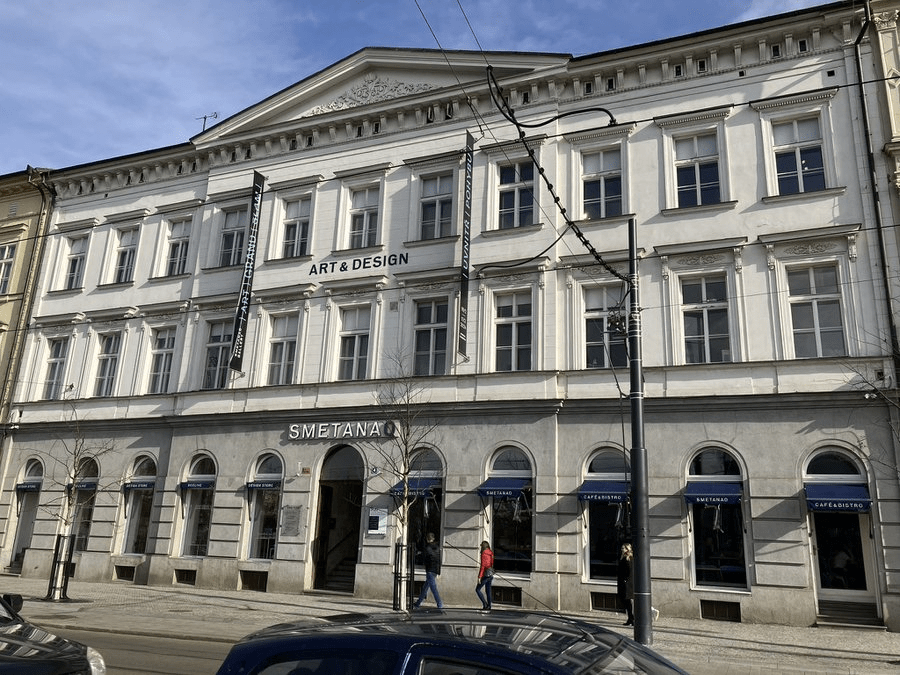
Smetana’s living quarters in the first part of the decade were at Palác Lažanských, which is on the embankment which now bears his name, and which you may know better as the home of Café Slavia.
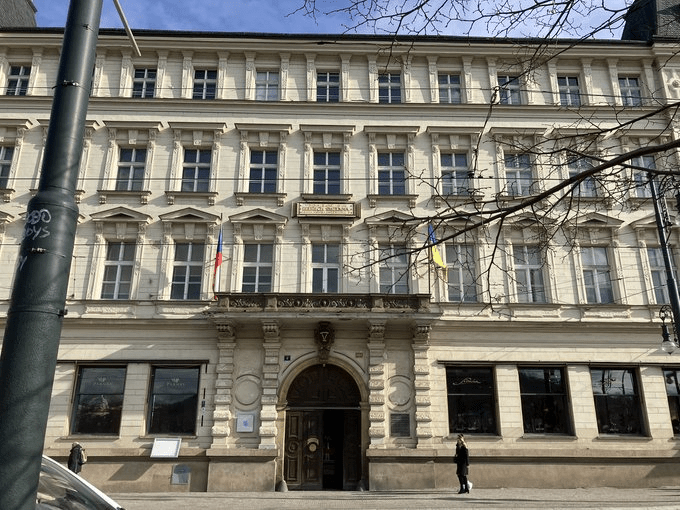
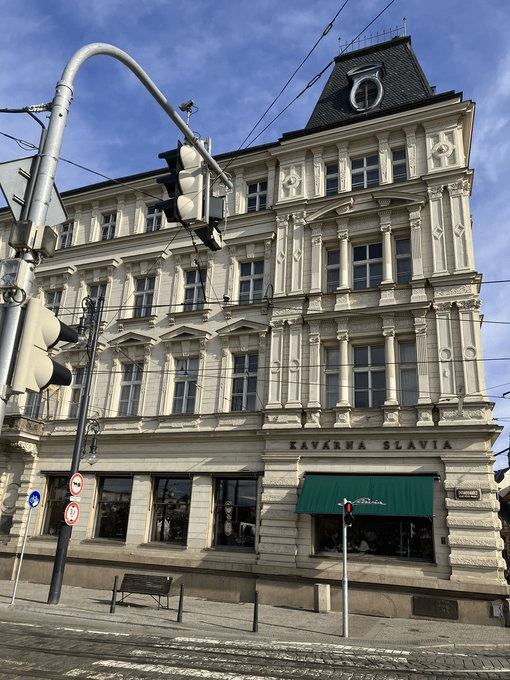
By the end of the decade, Smetana’s career as a national opera maestro had taken off; however, he saved his fourth opera, Libuše, for the moment when the National Theatre would finally be open (https://whatsinapraguestreetname.com/2024/09/14/prague-1-day-105-divadelni/).
From 1873, Smetana’s health worsened – by 1874, he had become totally deaf – but still managed to compose Má vlast, a collection of six symphonic poems, and finally saw Libuše premiered at the National Theatre in 1881.
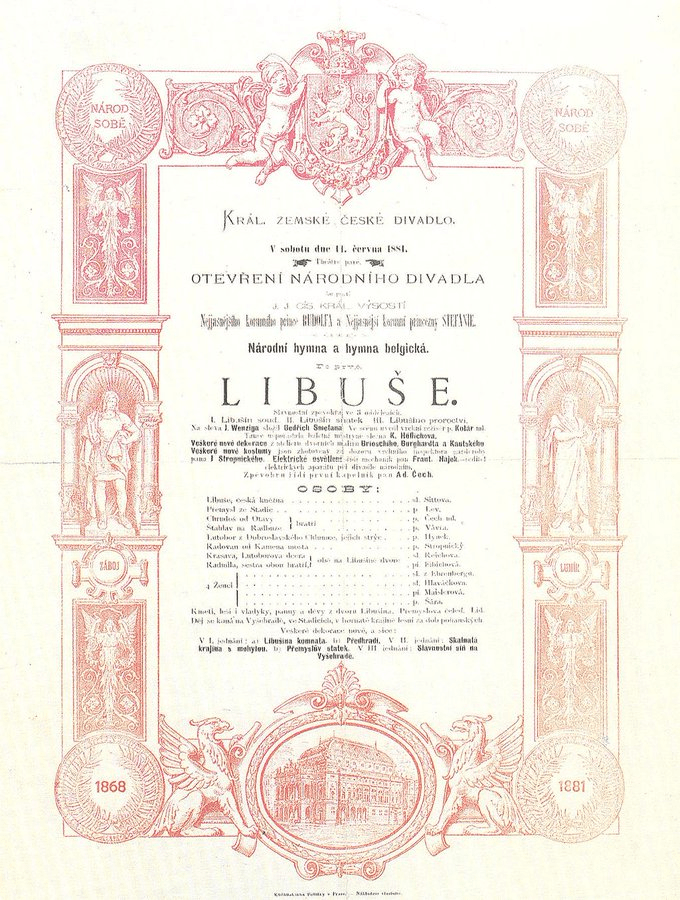
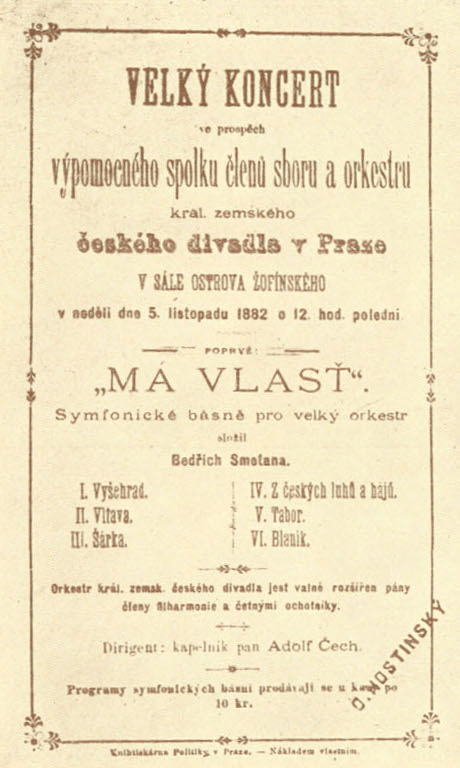
Má vlast, meanwhile, was premiered at Žofín (https://whatsinapraguestreetname.com/2024/09/13/prague-1-day-95-slovansky-ostrov-slavonic-island/) in 1882.
By 1883, Smetana had started to experience hallucinations, and, at times, became aggressive; his family sent him to the Kateřinky asylum (https://whatsinapraguestreetname.com/2024/08/28/prague-2-day-128-katerinska/), where he died in 1884. He’s buried at Vyšehrad Cemetery.
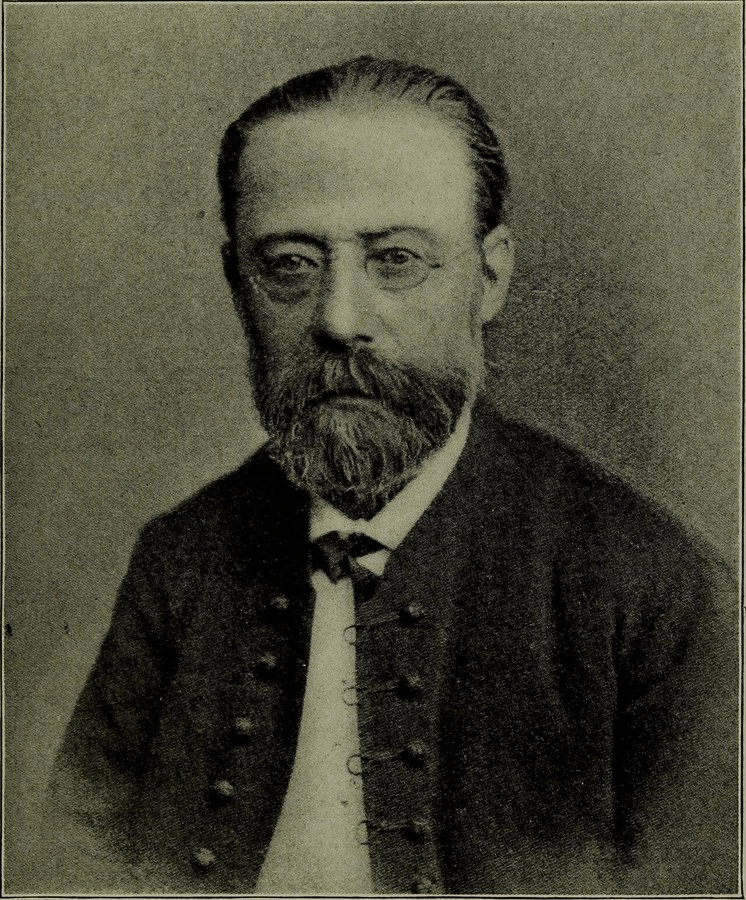
In the Czech Republic, Smetana is regarded as the father of Czech music. The annual Prague Spring International Music Festival is always opened with a performance of Má vlast.
Internationally, however, his most famous work is probably The Bartered Bride / Prodaná nevěsta, a three-act comic opera which was premiered at the Provisional Theatre in 1866.
As well as Palác Lažanských at number 2, Smetana’s name adorns the cultural centre next door at number 4.
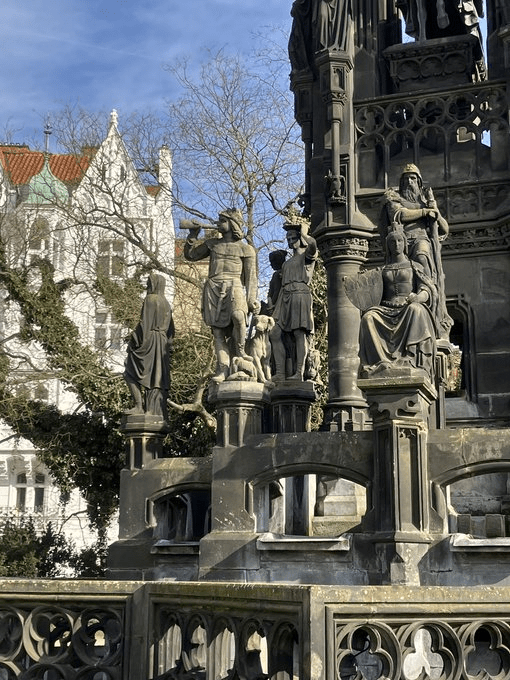
While the embankment is also noticeable for the Park of National Awakening / Park Národního probuzení, created in the 1840s and dominated by Krannerova kašna, a Neo-Gothic monument to Francis I, first Emperor of Austria (from 1804 to 1835).


Finally, back in the 1980s, you’d have seen Smetana’s face more often than you do now.

There’ll be a little bit more Smetana coverage tomorrow.

 What's in a Prague street name
Leave a comment