Originally published on X on 28 February 2024.
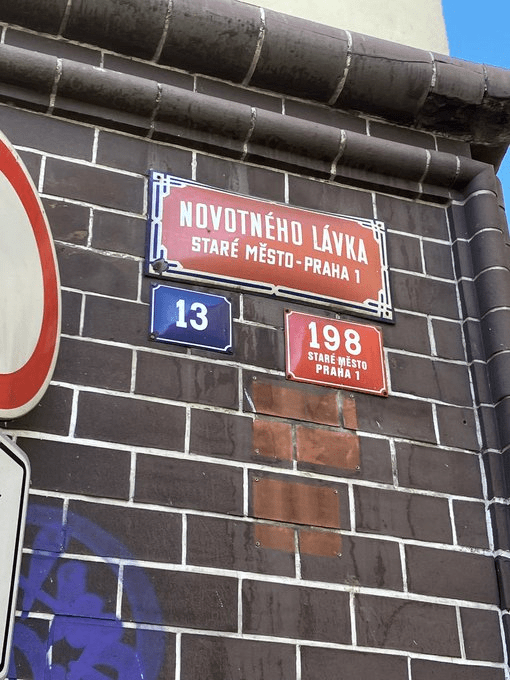
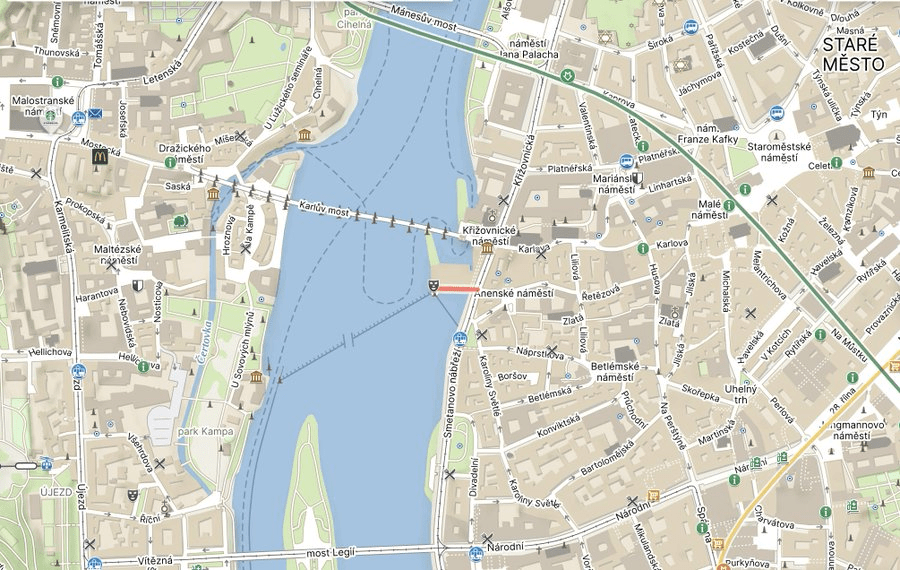
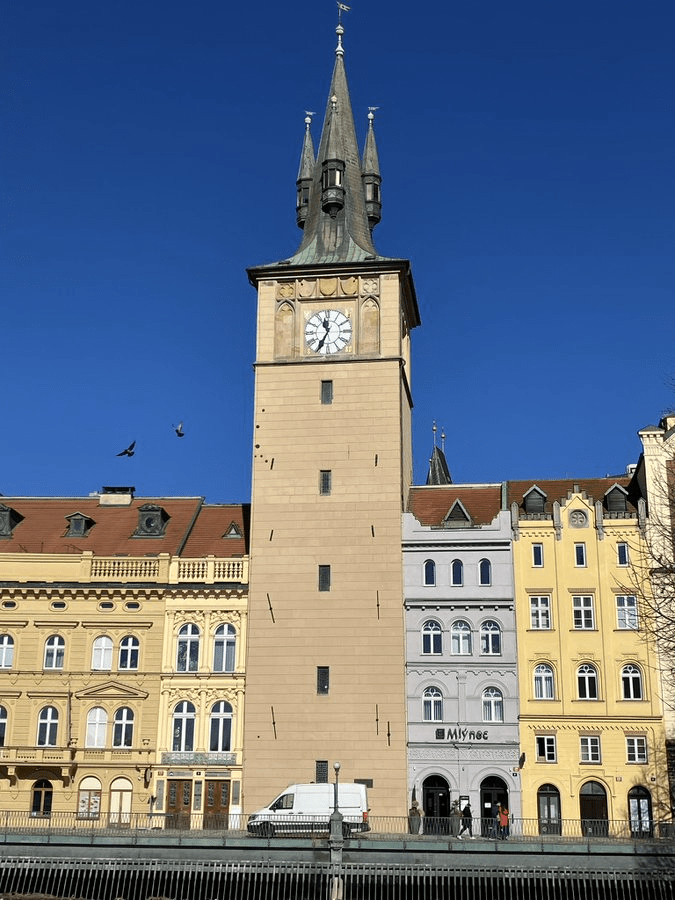
A text from 1396 mentions ten mills in this location; no later than 1489, they had been joined by a wooden water tower, which was used to provide water from the Vltava to the Old Town.
As with nearly every wooden structure that’s come up in these posts, it was destroyed by fire; it was replaced by a stone version in 1577 (although the Neo-Gothic version you see nowadays is the result of a makeover from 1878 to 1888).
The lávka – i.e. footbridge – changed names over time, depending on who its owner was.
In 1887, it was renamed Novotného lávka in honour of Karel Novotný (1827-1900), a miller who had arranged for an iron footbridge on the southern side of the ‘street’.
Number 1 – formerly the waterworks building – was modified in Neo-Renaissance style in 1887. Since 1936, it’s been the home of the Bedřich Smetana Museum (see https://whatsinapraguestreetname.com/2024/09/30/prague-1-day-156-smetanovo-nabrezi-smetana-embankment/ for a primer).
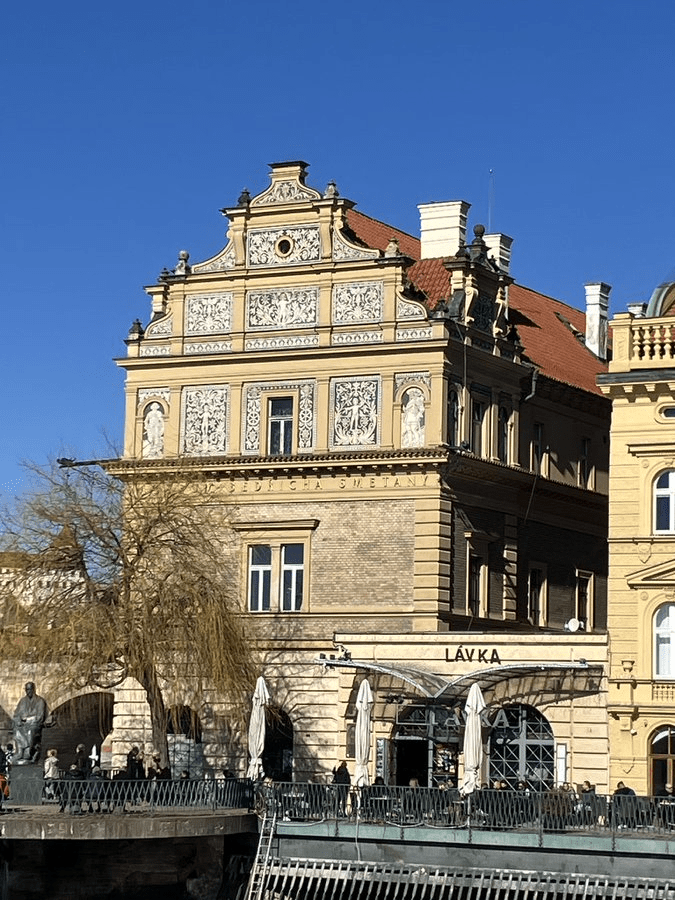
If you’re passing by and you’re not sure who this museum relates to, a statue outside offers you an unsubtle reminder (also: what a view).

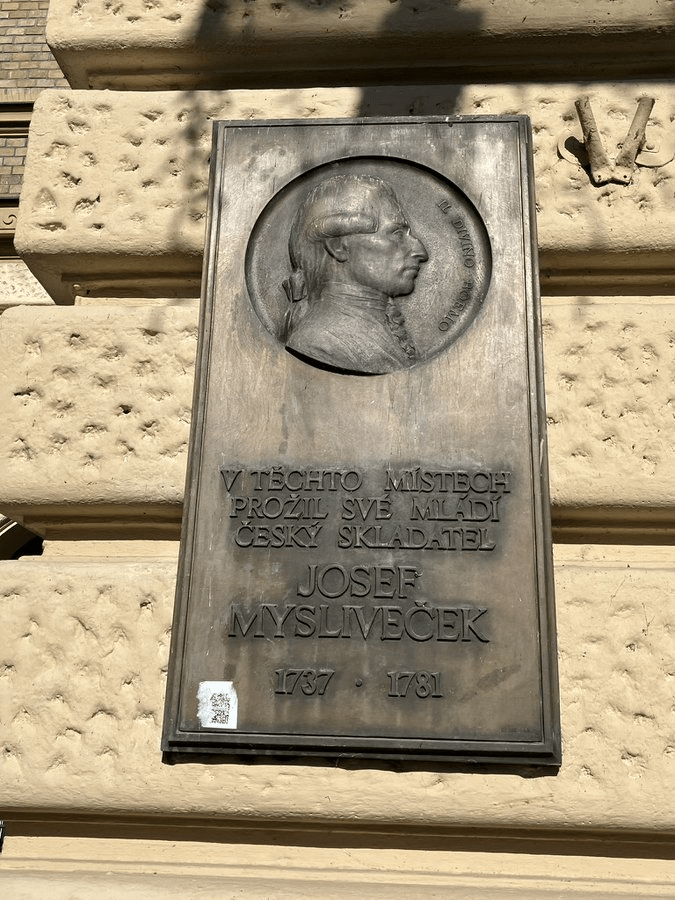
Appropriately, the footbridge had once been lived on by another composer, Josef Mysliveček (1737-1781), whose father had owned one of the mills.
At the other end, Karlovy lázně used to be a spa, and also a cafe, as well as being the location for Karel Havlíček Borovský’s apartment and publishing house.

Since 1999, it’s been a nightclub, and, while I’m glad they *finally* stopped advertising themselves as ‘the biggest club in middle Europe’, I’ve never been inside and sense that doing so would make me feel much older than I actually am.

No, I didn’t pick the music for this video:
A good-looking collection of buildings, this (would look better if those scooters weren’t there, but we can’t have it all).


 What's in a Prague street name
Leave a comment