Originally published on X on 12 March 2024.


Jan Hus was born around 1370, most likely in Husinec (https://whatsinapraguestreetname.com/2022/12/22/prague-3-day-115-husinecka/), and probably studied at the monastery in Prachatice until he was sixteen, when he moved to Prague.
He later studied at Charles University, graduating in 1393, although he was much more interested in being a teacher and preacher than a student.
A particular influence on his thinking in this period was the influential English theologian John Wycliffe, who questioned the privileges and power of the clergy (https://whatsinapraguestreetname.com/2022/11/19/prague-3-day-26-viklefova/).
By 1398, Hus was teaching at the University, and also started studying at the Theological Faculty in the same year. In 1401, he was elected dean of the Faculty of Arts for a semester.
In the meantime (in 1400), Hus had been ordained as a priest, and started preaching at St Michael’s Church (coming up in four days).
His popularity then led him to preach at the Bethlehem Chapel (https://whatsinapraguestreetname.com/2024/10/01/prague-1-day-160-betlemske-namesti/), of which he was also the administrator.
Advocating reform of the clergy, which he saw as immoral, sacrilegious, and rich when it was supposed to be poor, Hus initially had the support of the Archbishop of Prague, Zbyněk Zajíc z Hazmburka.

Since its inception, Charles University assigned all students to one of four ‘student nations’: Bohemian, Bavarian, Saxon and Polish.
Each ‘nation’ had one vote on the University Council. Unsurprisingly, the Bohemian nation was pro-Wycliffe, and the others were not.
In 1407, Pope Gregory XII ordered Archbishop Zajíc to declare Wycliffe’s teachings as heretical. In 1408, Hus tried to compromise – he publicly rejected Wycliffe’s writings, but also said they were not entirely heretical. This didn’t go down well with the Archbishop.
In January 1409, King Václav IV issued the Decree of Kutná Hora, which declared that, from now on, the Bohemian nation would have three votes at Charles University; the remaining three nations would have to make do with a single vote between them.
In October 1409, Hus was appointed rector of the University; by this time, many of the German staff had left to found a new university in Leipzig. Charles University became a very Czech affair – but lost a lot of its international prestige as a result.
In December of the same year, a papal bull declared that all Wycliffe’s writings circulating in Prague were to be surrendered. Hus and his followers would soon be excommunicated, though this was never properly enforced.
After Archbishop Zajíc’s death in 1411, Hus would start to come into conflict with Václav IV, who had authorised papal envoys to sell indulgences in order to finance a crusade against the King of Naples.
On 24 June 1412, a group of Hus followers burned the papal bull. Three men who were trying to stop a priest from preaching the purchase of indulgences were executed. Hus fled to Kozí Hrádek in southern Bohemia.
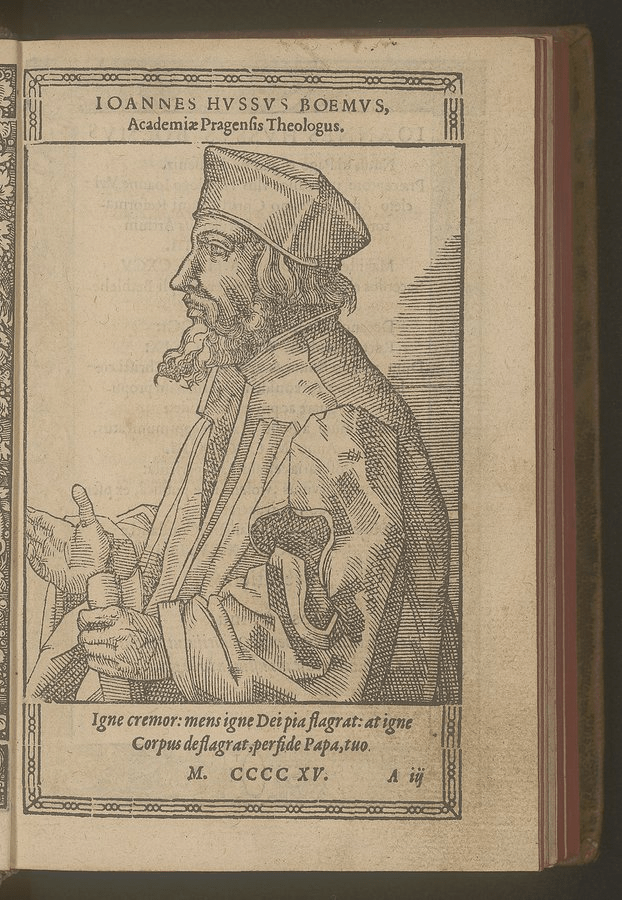
In November 1414, Antipope John XXIII called the Council of Constance; Hus was invited to present his views before the Council. He arrived in the same month, but was imprisoned in December and, in 1415, would undergo a trial.
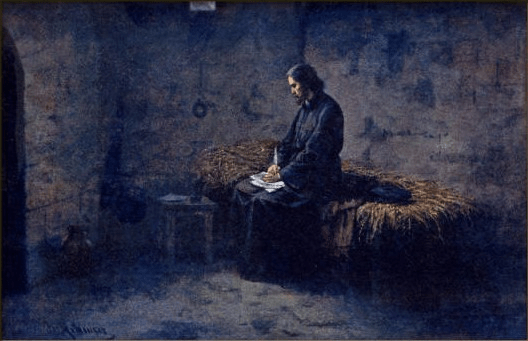
On 27 June 1415, the Council declared that his writing were heretical. The Council asked Hus to disavow parts of his writings; he refused despite knowing this was the difference between imprisonment and a death sentence.
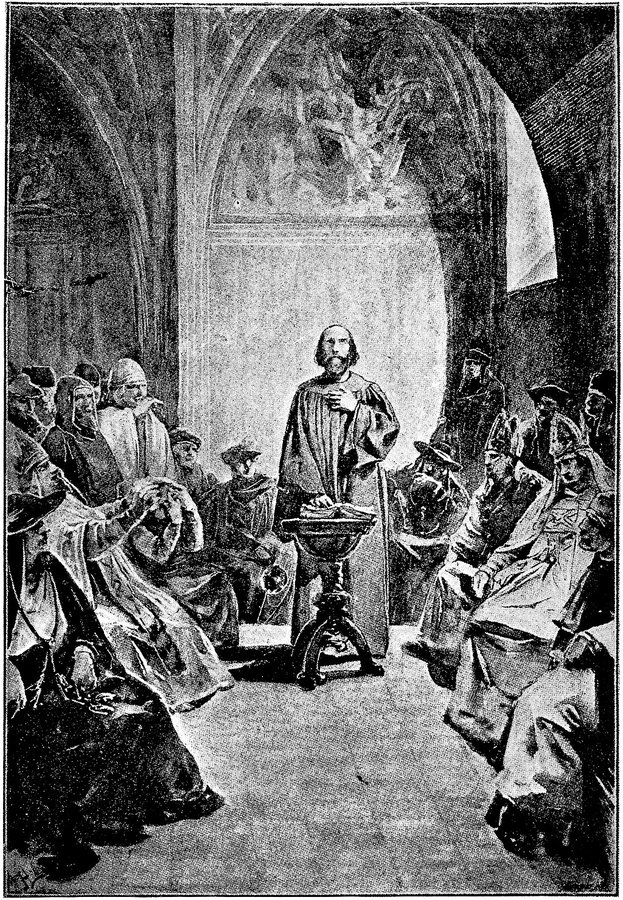
Therefore, on 6 July 1415, Jan Hus was burned at the stake; 6 July is now a national holiday known as Jan Hus Day, and the Catholic Church has never rehabilitated him.

A consequence of his execution would be the Hussite Wars, which ran from 1419 to about 1434. A consequence of *those* could be what seems like every other street in Prague 3 (https://whatsinapraguestreetname.com/category/hussites/).
Bohemia would remain largely Hussite until the 1620s, when Habsburg domination would also involve intensive and forced conversion to Catholicism. Distrust of religious institutions remains a noticeable feature of the Czech population to this day.
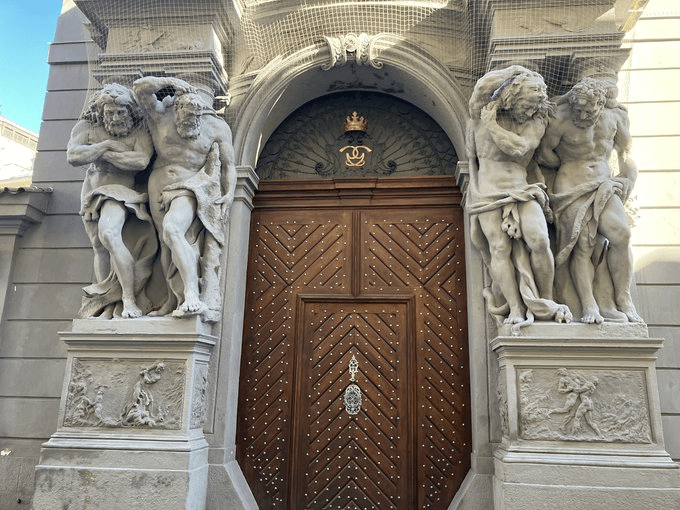
Number 20 on Husova is the Clam-Gallas Palace, once the scene of concerts by Mozart and Beethoven. It’s also hosted the first Ministry of Finance of Czechoslovakia and the municipal archives, and is now owned by the City of Prague.


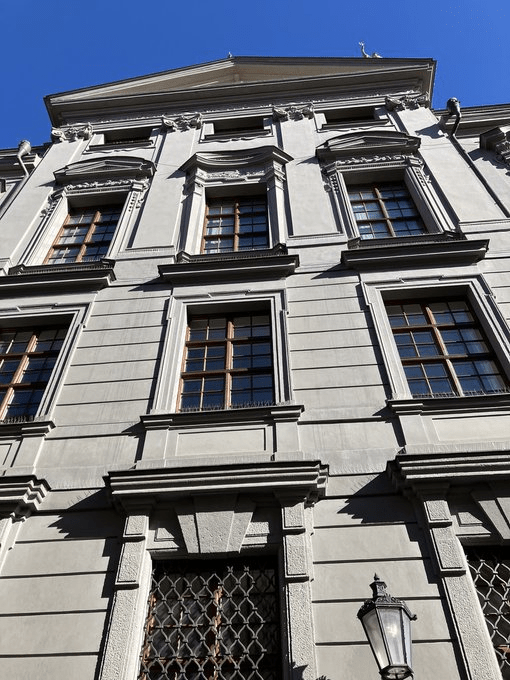
Also, if you look very closely at this picture of the other end of Husova (specifically the sky between the two buildings), you’ll see an example of David Černý doing what David Černý does.

Viselec – the Hanging Man – was created in 1996, and the man in question is actually Sigmund Freud: https://www.atlasobscura.com/places/man-hanging-out.

 What's in a Prague street name
Leave a comment