Originally published on X on 18 March 2024.
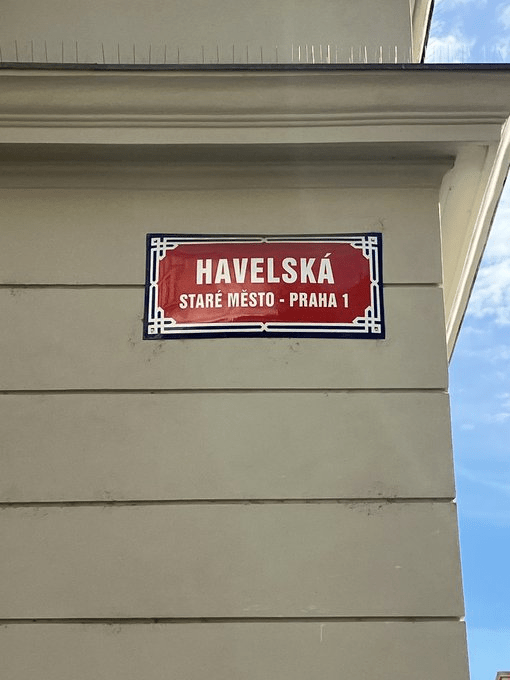
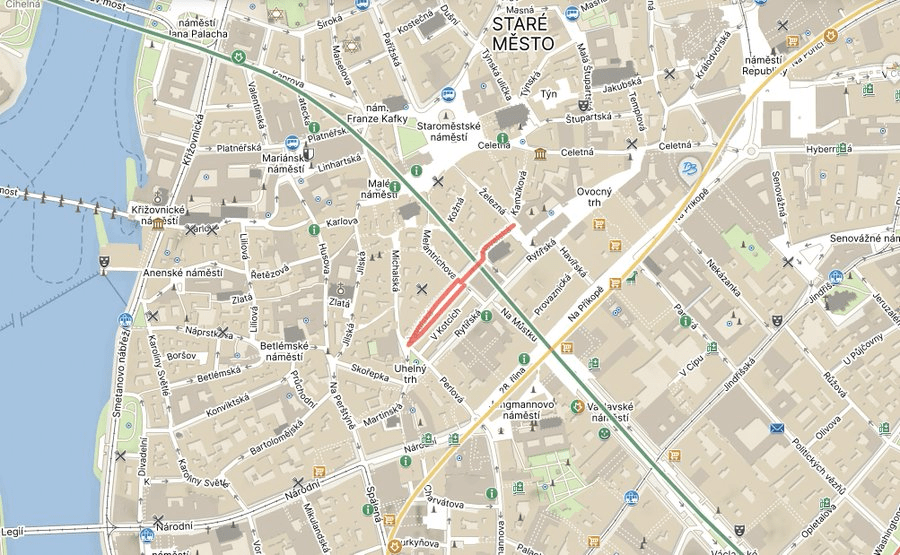
Nothing to do with the Havel you’re probably all thinking of – Svatý Havel is St Gall.
According to his biographers, Gall was born in Ireland around 550, and studied at the abbey in Bangor (County Down, Northern Ireland, not Wales), becoming a disciple of St Columban.
In 610, Columban, Gall and others went to Alamannia, a kingdom entered around Lake Constance, on a mission. Columban moved on to Switzerland, but, due to illness, Gall stayed, and lived as a hermit.
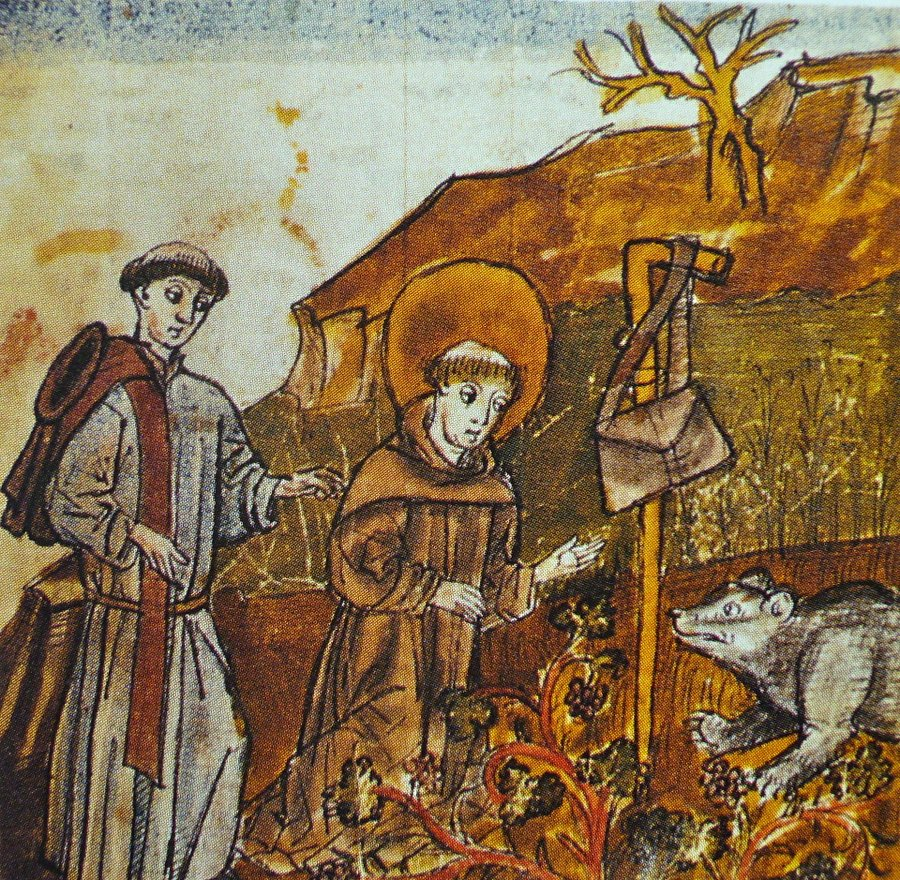
In 625, Gall founded a monastery in what is now called St Gallen.
He died around 645, when almost a hundred years old.
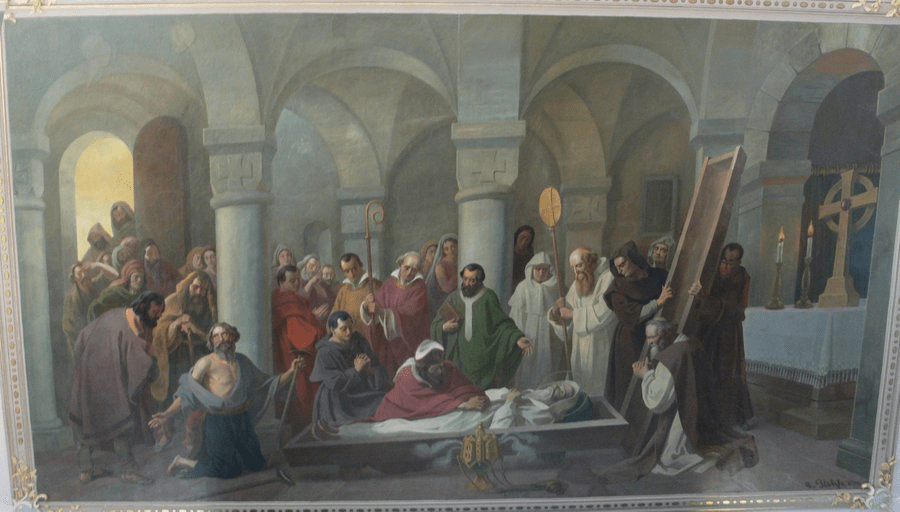
He’s the patron saint of birds, geese, poultry, and – yes – Switzerland. You may also recognise his name from Via San Gallo and Porto San Gallo in Florence.

In 1230, Václav I / Wenceslas I (the ‘One-Eyed’ / Jednooký) was crowned King of Bohemia.
Shortly after this, Havelské město (German: Gallusstadt) was founded, and construction started on a church devoted to St Gall (it would be completed in 1263).
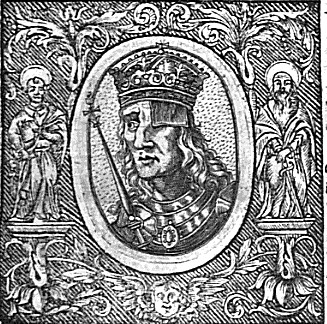
Havelské město was mainly populated by migrants from German cities – especially Regensburg, and, while it was located within Prague’s Old Town, it had a separate legal and administrative system.
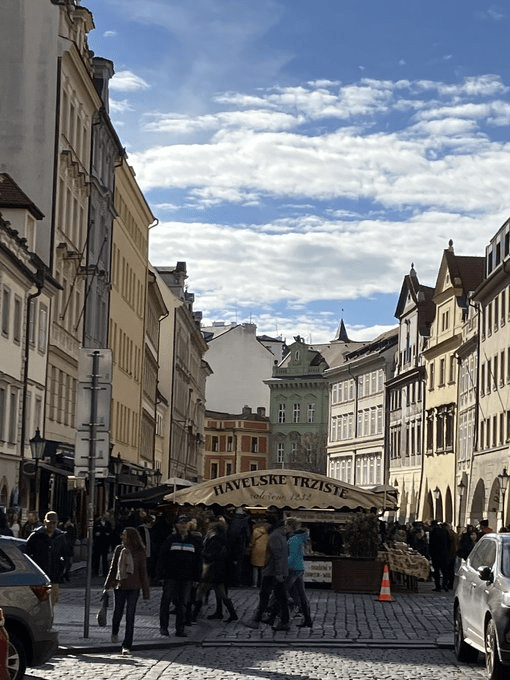
Its centre was the Nové tržiště / New Marketplace, which is still there.
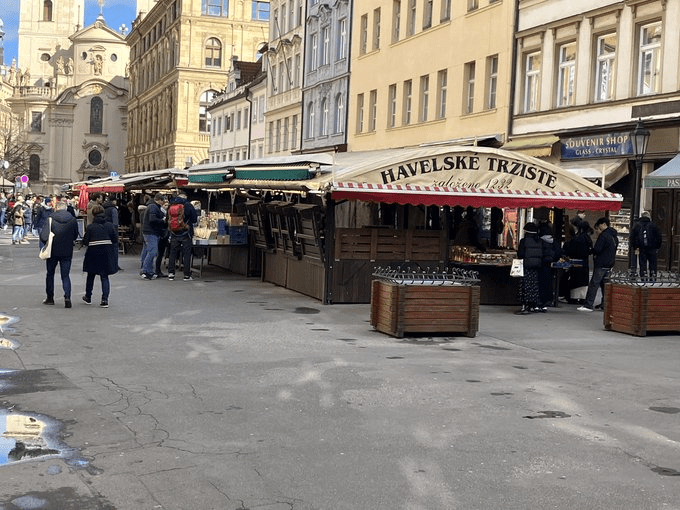
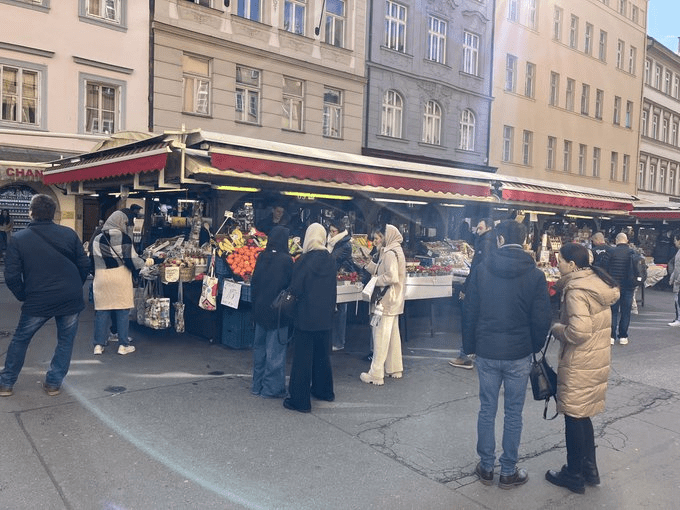
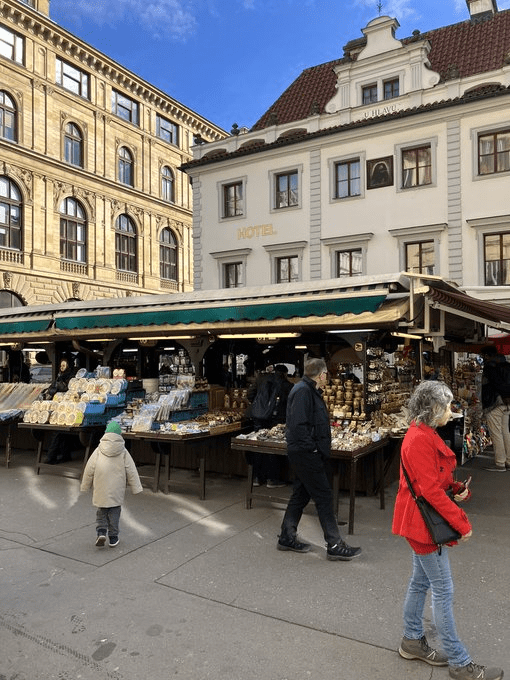
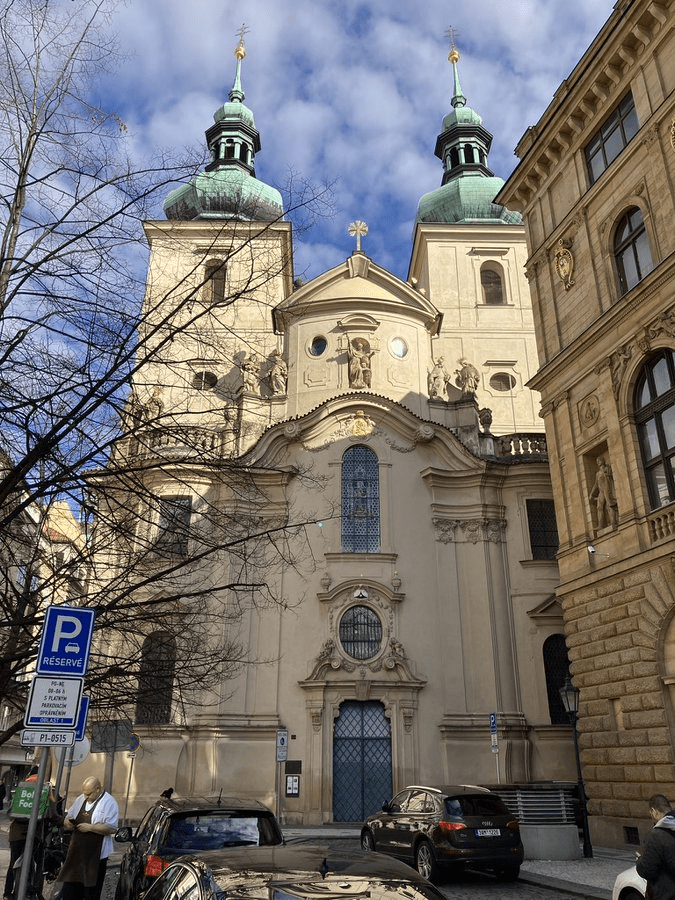
Originally built in the Romanesque style, the church was done over in Gothic style in the 1300s.
In 1353, Charles IV managed to get the Benedictine monks of St Gallen to hand over St Gall’s (supposed) skull.
Over the centuries, as more and more buildings were created, Havelské město was incorporated into the Old Town. Meanwhile, the church – another one which Jan Hus had preached in at one point – was given to the Carmelites (https://whatsinapraguestreetname.com/2024/09/08/prague-1-day-39-karmelitska/) in 1627.
In the 1660s, they built a monastery, and later had the church reconstructed. The monastery was dissolved in 1786, but the church kept going.
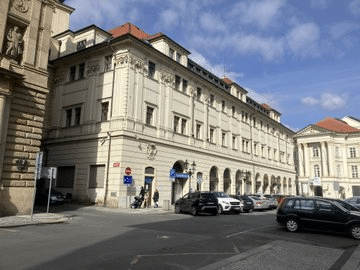
The monastery, meanwhile, having been a lace factory, the Institute of History of the Communist Party of Czechoslovakia, and a not-entirely-welcome Soviet cultural centre, is now partially a theatre and partially used by UNICEF.
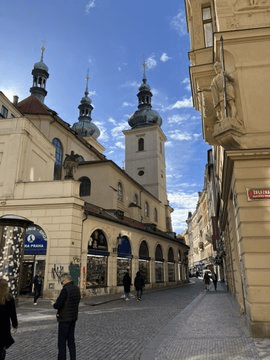
Among the people who were buried in the church are the painter Karel Škréta (https://whatsinapraguestreetname.com/2024/02/18/prague-2-day-34-skretova/).

 What's in a Prague street name
Leave a comment