Originally published on X on 28 March 2024.

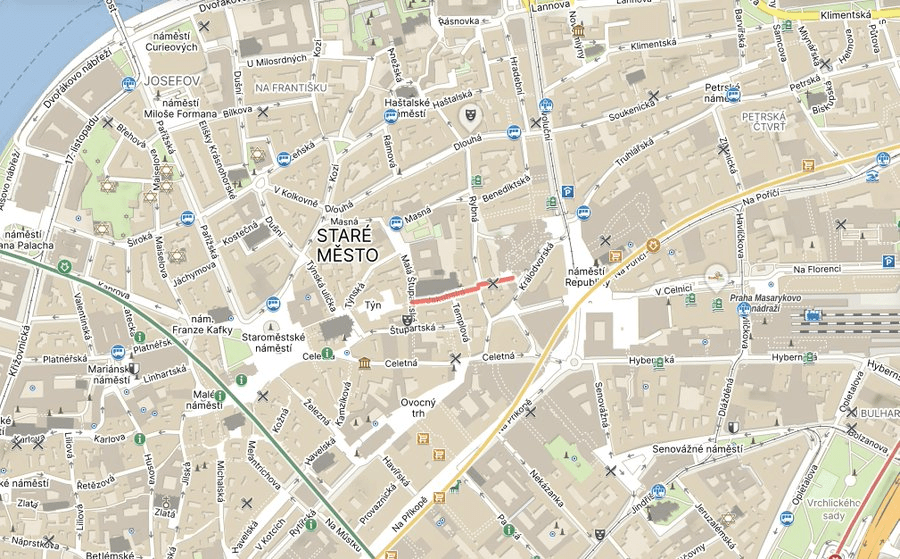
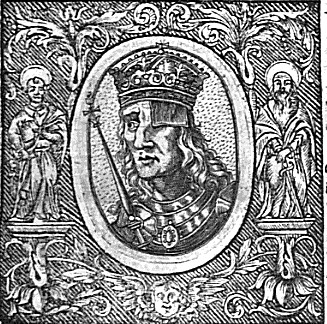
Wenceslas/Václav I – the ‘One-Eyed’ – became King of Bohemia in 1230. The one eye thing was the result of a childhood hunting trip gone wrong. Which isn’t directly relevant to the story, but somebody was going to ask if I didn’t mention it.
Anyway, events in 1230 and the years around it were dominated by the Crusades, one of the less deadly consequences of which was that Christianity became increasingly mainstream in Europe. And church orders became a feature of cities, not just the countryside.
On that note, in 1232, Václav decreed that a church be built for the Franciscan order, who had been founded in 1209. The foundation stone was set in 1232, and the monastery was complete by 1244. The church was dedicated to St Jacob.
Devastated by a fire in 1316, the monastery was clearly still a priority for the leaders of Bohemia, as John of Luxembourg (not yet ‘The Blind’ – that would happen at the Battle of Crécy in 1346) paid for its renovation *and* left it much grander than it had been before.
When Charles IV died in 1378, his body was displayed in the church (though also in other locations).
The church survived the Hussite Wars and the Thirty Years’ War – but a fire, probably started by French arsonists, and probably something to do with the the rivalry between Louis XIV and the Spanish royals (who were Habsburgs, of course), damaged it considerably in 1683.
Renovated within twelve years of that (credit to the Prague builder Jan Šimon Pánek), it was ultimately closed down in 1784, had yet another fire in 1841, and, in 1869, became the location of Bohemia’s first kindergarten.
Also, its outside are spectacular and I should probably start exploring the insides of some of these places too.


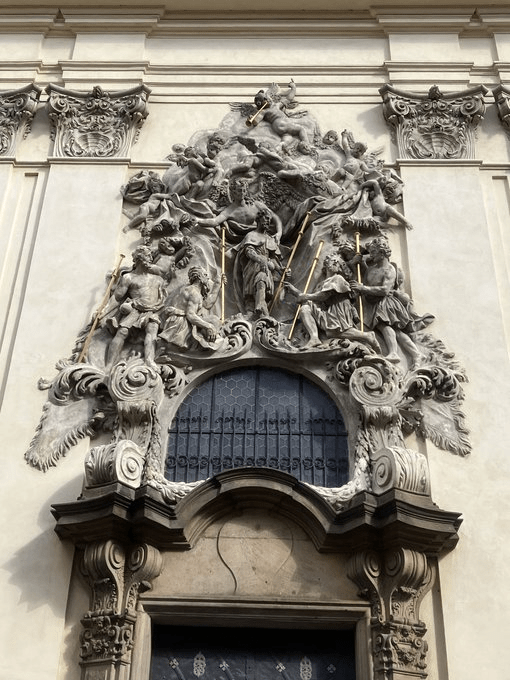
Pope Paul VI declared the church a basilica minor in 1974.

Jakubská also features Kapounovský dům – also rebuilt after that fire in 1689, and presumably the only place in Prague that used to be both a crematorium (in 1713) and an illegal ‘wine and beer tavern and soup house’ (in 1720).
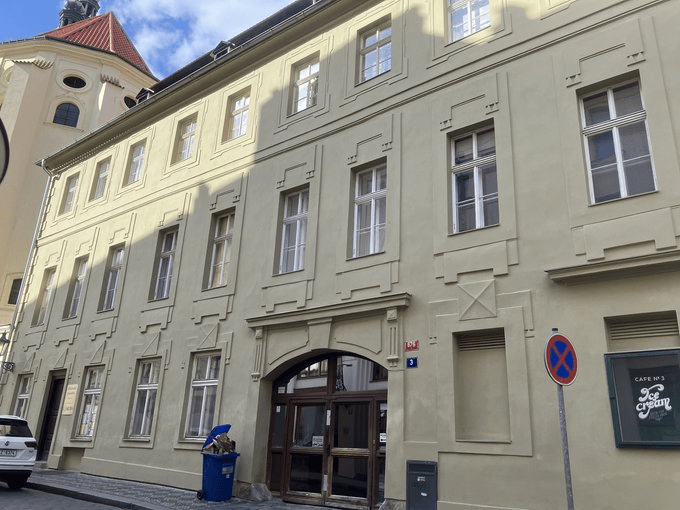

It was rebuilt yet *again* after another how-many-of-these-fires-seriously in 1754.
The house was owned in the late 19th century by Karl David Becher, who worked as a doctor in the spas of Karlovy Vary, and also set up a museum here dedicated to the town.
I’m assuming that Karl David was a relative of Josef Vitus Becher (1769-1840), who invented a drink you might have heard-of-slash-regretted.

Another spa doctor from KV, Leopold Fleckles, had had an office in the house in the 19th century, where he received regular visits from a patient, Karl Marx. Hence the first ever Karl Marx Museum being set up here in 1960. It existed until – you guessed correctly – 1990.

 What's in a Prague street name
Leave a comment