Originally published on X on 10 April 2024.
So I guess anyone who felt I only mentioned the Klementinum very briefly yesterday will feel better now.

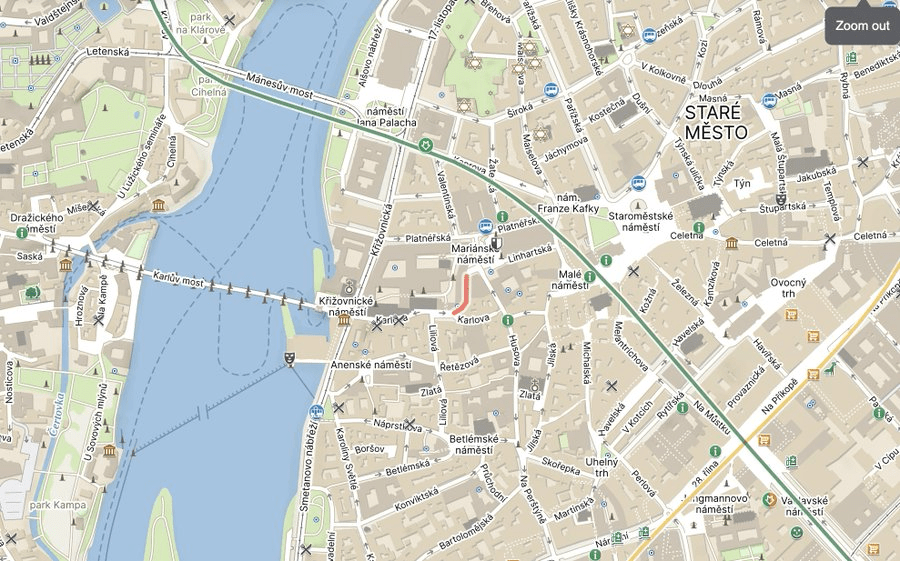
The name comes from the Church of St Kliment, which the Dominicans moved into in 1227, when they also created a monastery.
The monastery was severely damaged by fire at the start of the Hussite Wars in 1420.
It wasn’t until over a hundred years later – when Emperor Ferdinand I asked the Jesuit order to come to Bohemia – that the building’s decline was reversed. He let the Jesuits move in here (pretty incredible location) in 1556, and they turned the monastery into a college.
The Church of the Most Holy Salvator (https://whatsinapraguestreetname.com/2024/10/15/prague-1-day-196-karlova/) followed in 1581 (or, rather, its foundation stone did).
As did the Chapel of the Assumption of the Virgin Mary from 1590 to 1597 (same link as above).
The Jesuits would continue to purchase local houses and land, and also continued to rebuild and renovate (with an unavoidable pause due to the Thirty Years’ War).
So successful was their college, that, in 1616, it was granted university status, and became an even bigger rival to the decidedly non-Catholic Charles University than it had been before.
The Jesuits were expelled from Bohemia in 1618, but were unsurprisingly invited back after Bílá Hora in 1620. In 1622, they were asked to take over the administration of Charles University, and Charles University’s library was moved into the Klementinum.
The two institutions would be merged entirely in 1654.
The complex also featured a printing house (more on that in about two weeks), a pharmacy and an observatory.
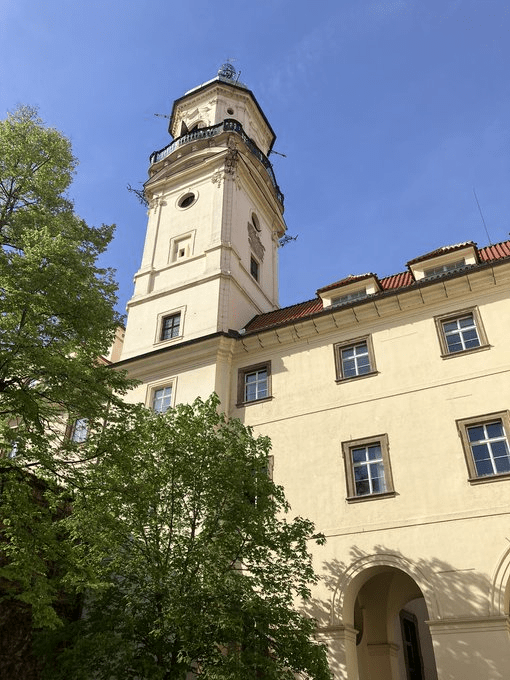
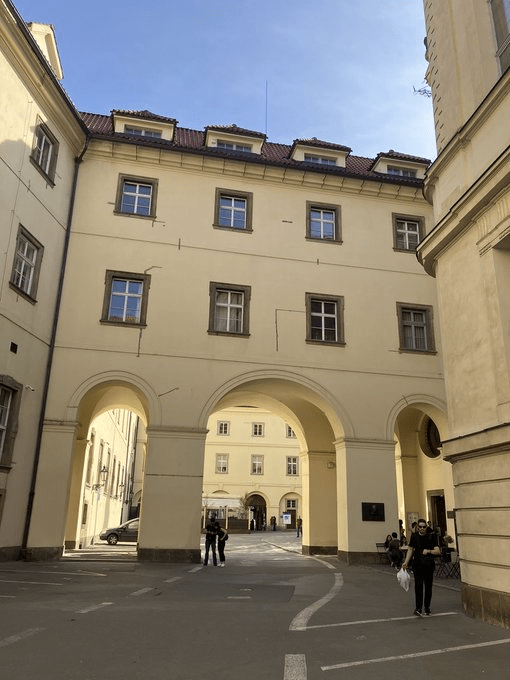
From 1709 to 1726, the Klementinum got a High Baroque makeover, including expansions to the college, a new church for St Kliment, and the astronomical tower.
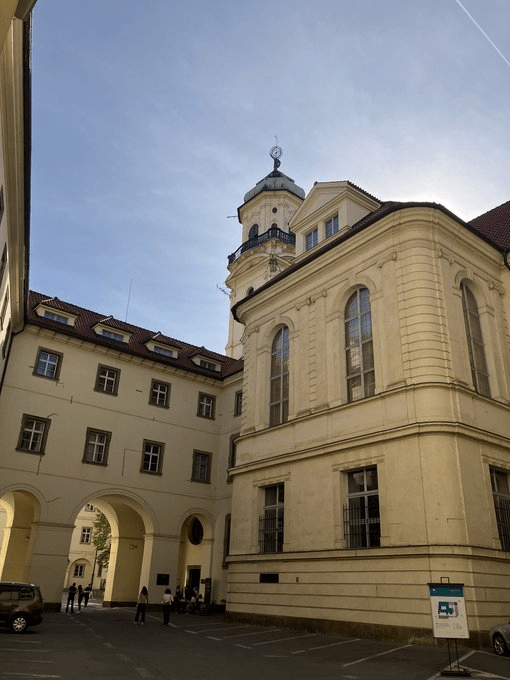
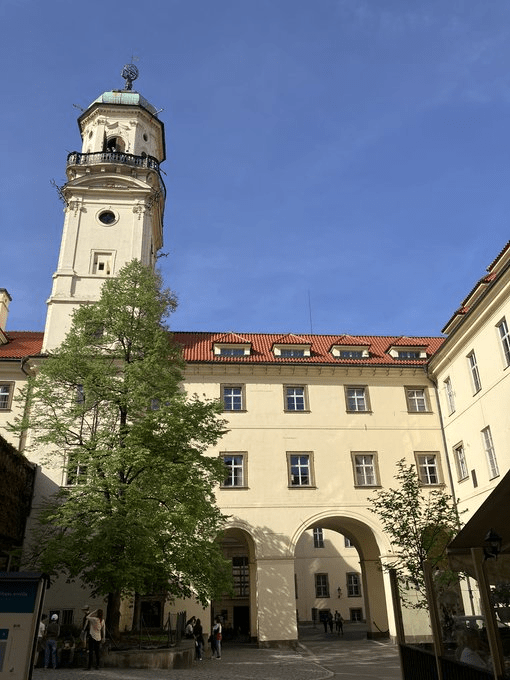
In 1773, however, the Jesuits were abolished by the Holy See.
The university was secularised and, in 1775, an archbishop’s seminary moved in (we got there eventually), staying until 1929.
The street name would follow shortly after.
In 1777, Maria Theresa declared the university library to be a public one. Since 1990, it’s been the National Library.
Again, quite a few untold stories in this one (not least about Charles University / the library), but quite likely to turn up in other posts soon enough.

 What's in a Prague street name
Leave a comment