Originally published on X on 14 April 2024.

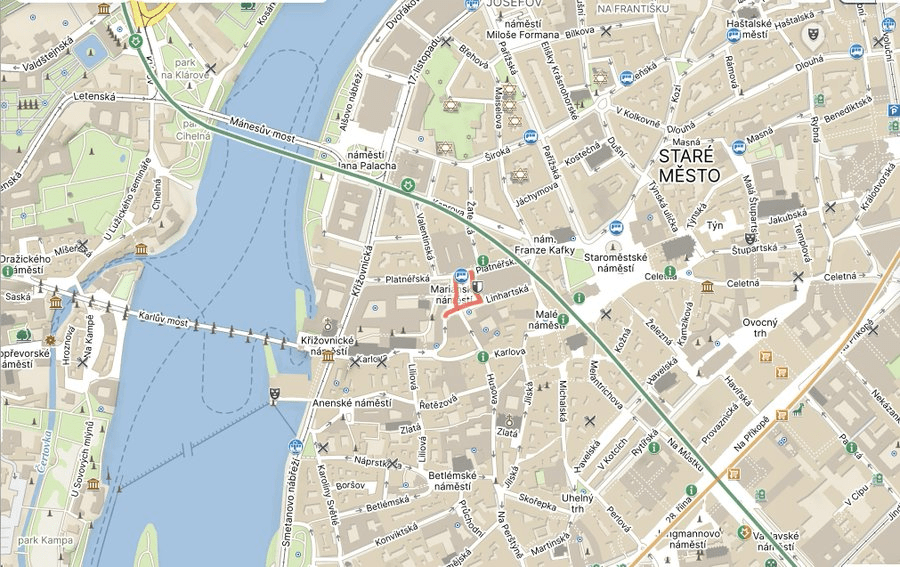
A long time ago, there was a village here called Na Louži. A ‘louže’ is a puddle or a pool, and the name possibly came from the fact that the area, not being too far from the Vltava, was vulnerable to flooding.
In what is now the southern side of the square stood the Church of the Virgin Mary Na louži / Kostel Panny Marie Na louži (first written mention dating from 1268; destroyed in the 1790s).
Hence the name of the square, although, from 1952 to 1990, it was named Náměstí primátora dr. Václava Vacka, after Václav Vacek, co-founder of the Communist Party of Czechoslovakia, mayor of Prague for a brief while in 1945, and again from 1946 to 1954.
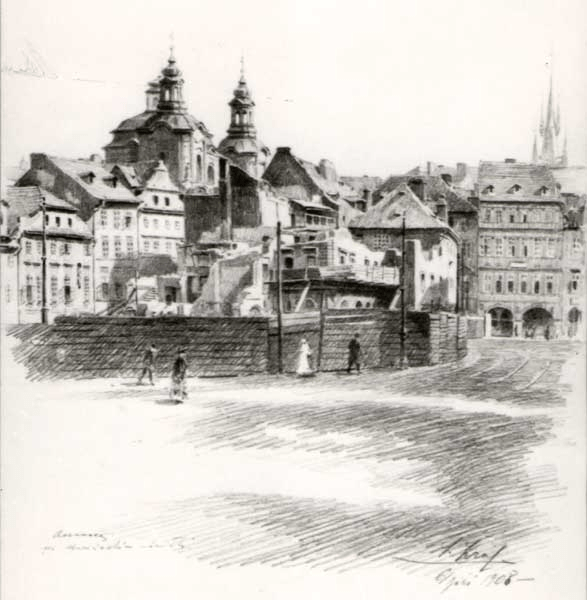
Mariánské náměstí is another one that lost a lot of its buildings around 1900.
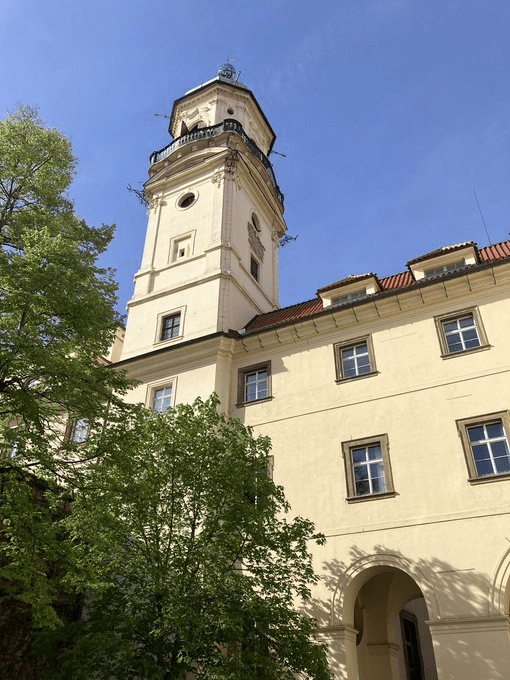
The square includes the eastern entrance to the Klementinum.


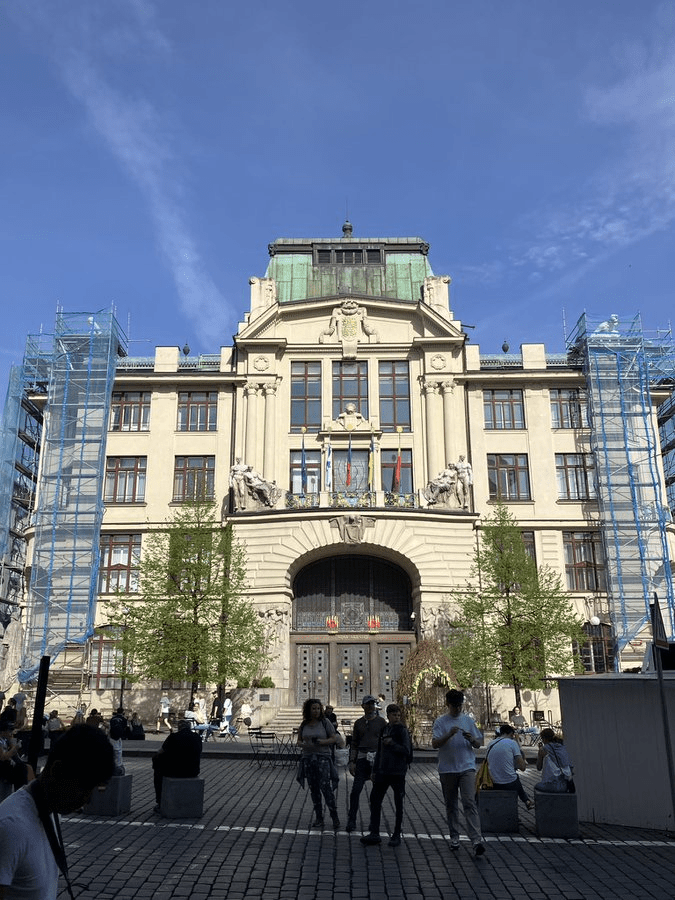
Opposite, meanwhile, is the New City Hall (which I can’t write more about yet because it’ll make an upcoming post extremely empty if I do).
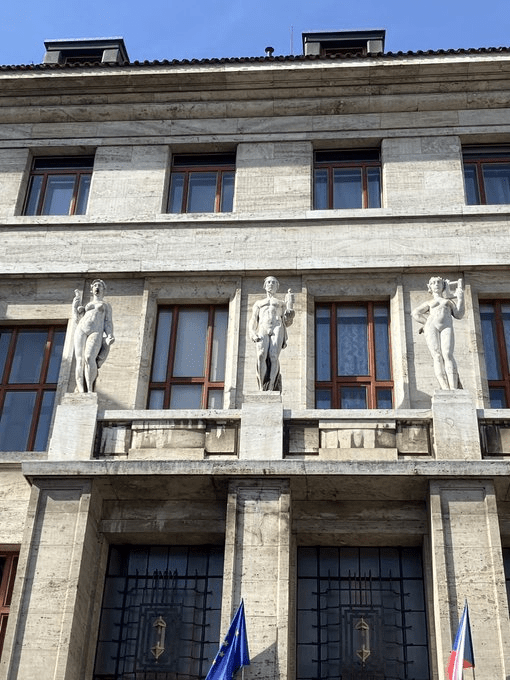
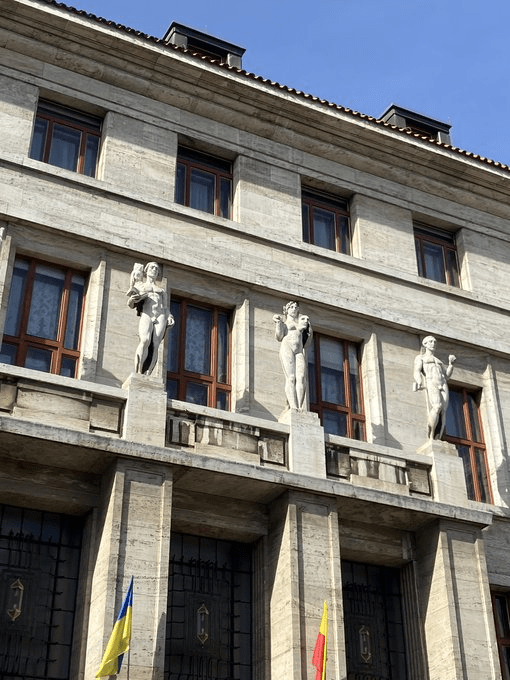
On the northern side is the Municipal Library, Prague’s biggest; these premises were built between 1925 and 1928.
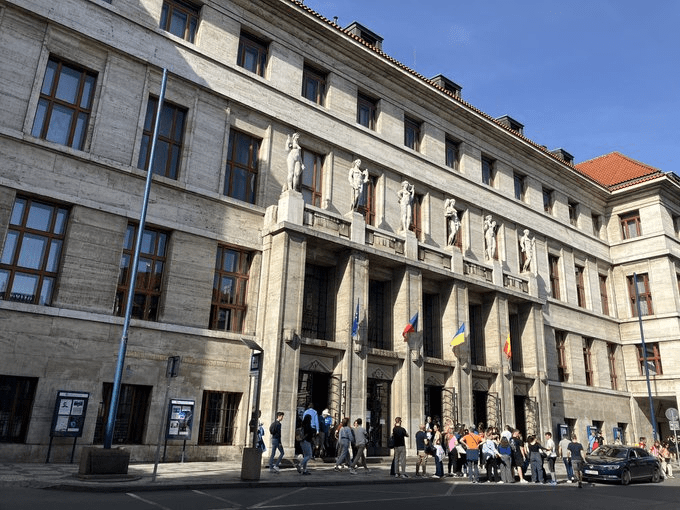
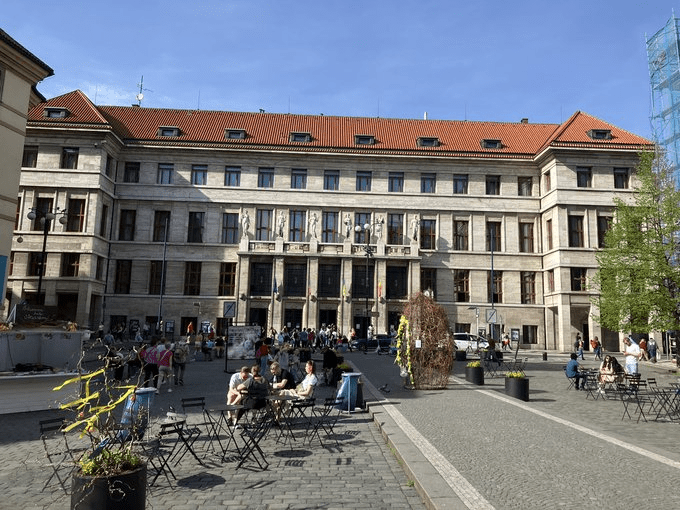
The sculptures on the façade, by Ladislav Kofránek, represent literature, sculpture, music, philosophy, drama and architecture.
On the southern side, you’ve got Clam-Gallas Palace, the location of Czechoslovakia’s first Ministry of Finance. Its entrance on Husova is quite something: see https://whatsinapraguestreetname.com/2024/10/05/prague-1-day-169-husova/.

Take a closer look, and there’s the Terezka Fountain, or, to give it its official full name, ‘Fountain with an allegorical statue of the Vltava’, where the church once stood.

It was sculpted by Václav Prachner, and has stood here since 1812.
The locals apparently started to call the statue Tereza after an attractive local girl who used to come here to get water.

 What's in a Prague street name
Leave a comment