Originally published on X on 28 April 2024.
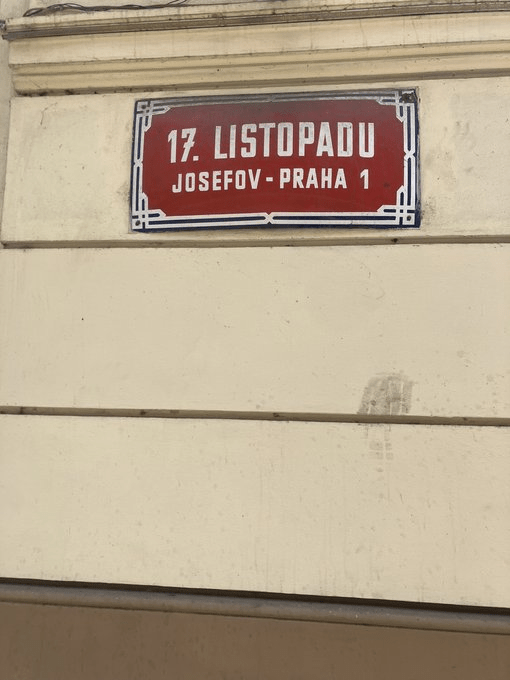
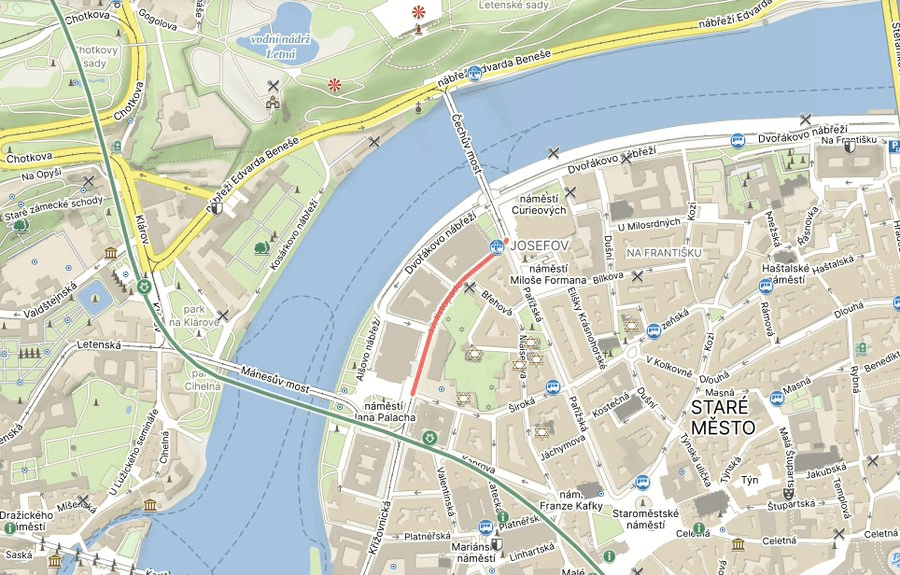
From the 16th century, this street was called Sanytrová, after ‘sanytr’, an Old Czech word for saltpetre, which is used to make gunpowder.
In the 19th century (until 1870), it was known as V krechtách, after the nearby pits and ditches by the Vltava. Sanytrová was used again after that until 1947.
17 November (17. listopadu) 1939 was the date on which the Nazi Protectorate reacted to anti-occupation demonstrations by announcing the closure of all Czech universities for three years (although teaching would ultimately not resume until 1945).
1,200 students were sent to the Sachsenhausen concentration camp; over 15,000 students were no longer able to study, and over 1,300 people found themselves without a job.
For a more detailed account of the events that led to that particular 17 November, you may want to look at https://whatsinapraguestreetname.com/2024/09/18/prague-1-day-125-opletalova/.
The most imposing building on 17. listopadu is the Museum of Applied Arts in Prague (Uměleckoprůmyslové museum v Praze / UPM), built in the Neo-Renaissance style based on a design by Josef Schulz, and opened in 1900.
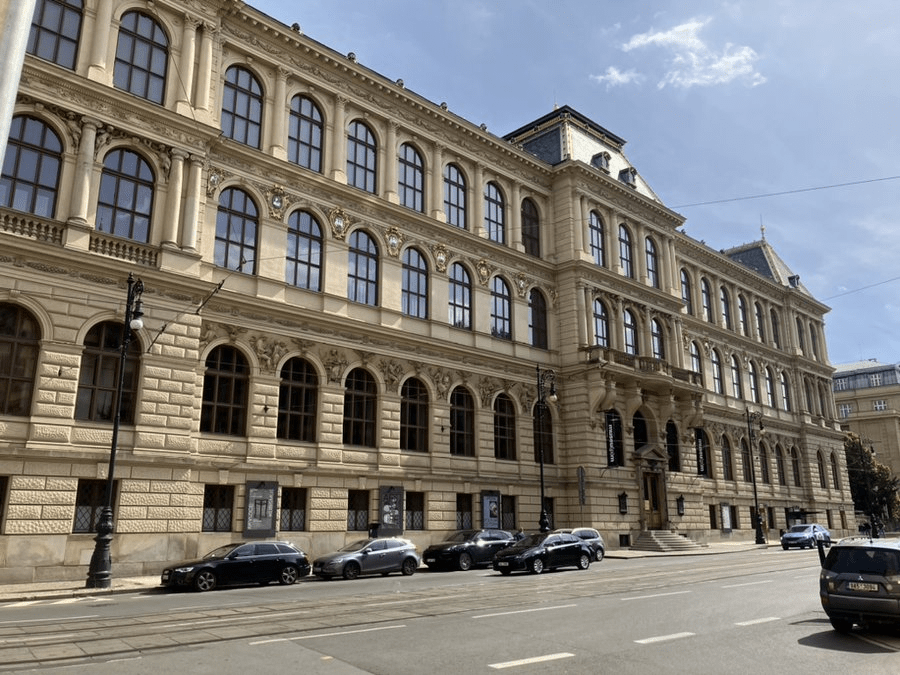
It has the country’s largest library relating to the arts, with over 172,000 titles.

 What's in a Prague street name
Leave a comment