Originally published on X on 30 April 2024.
Starting this story a bit to the north: Štvanice is an island between Karlín and Holešovice; you’re most likely to know it for its tennis arena which hosts the WTA Prague Open.
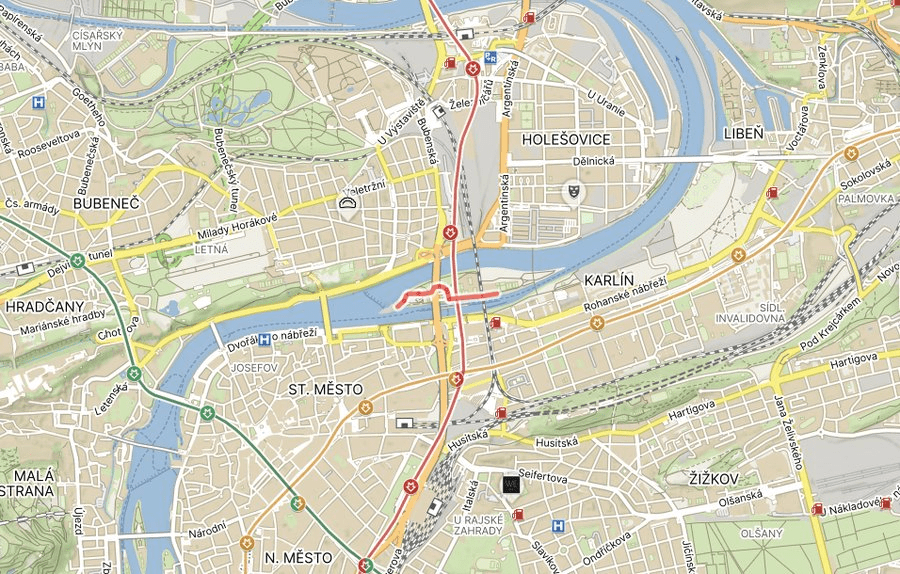
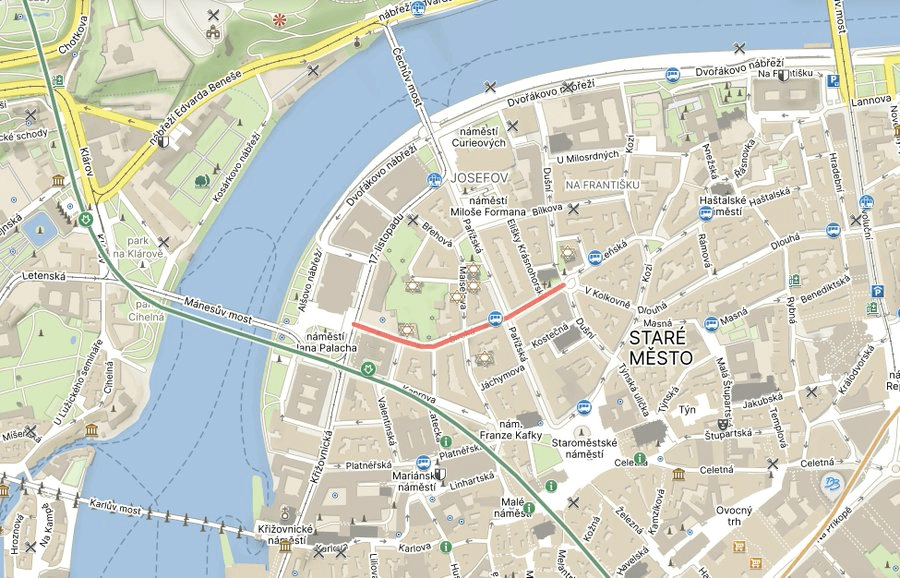
Anyway, once upon a time, there was a ford at Štvanice, and there was a road which led from this ford to another one, namely the one where Mánesův most is now (https://whatsinapraguestreetname.com/2024/09/08/prague-1-day-57-manesuv-most/). Current-day Široká was part of that route.
It was around here that Prague’s Jewish community settled. The area was probably known as V Židech, and the street came to be known as Židovská.
Then, in 1535, the Pinkas Synagogue was founded by a prominent local citizen, Aaron Meshulam Horowitz, and probably named after his grandson, Rabbi Pinkas Horowitz.
The street became known as Pinkasova.
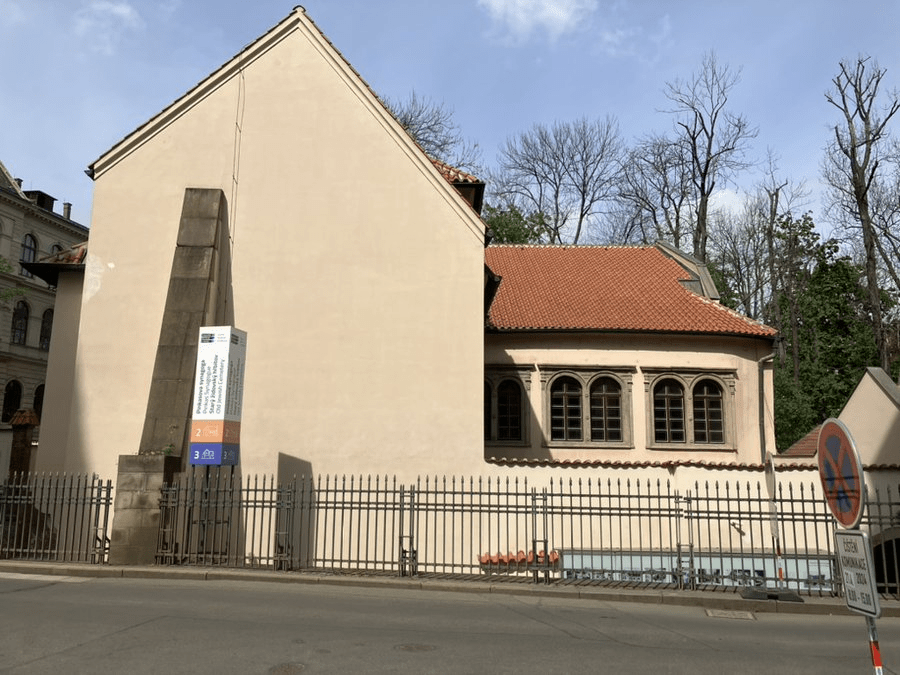
It’s managed by the Jewish Museum, and, from 1955 to 1960, its walls were decorated with the names of 77,297 Bohemian and Moravian victims of the Shoah.
The memorial was closed to the public in 1968, and reopened in 1995.
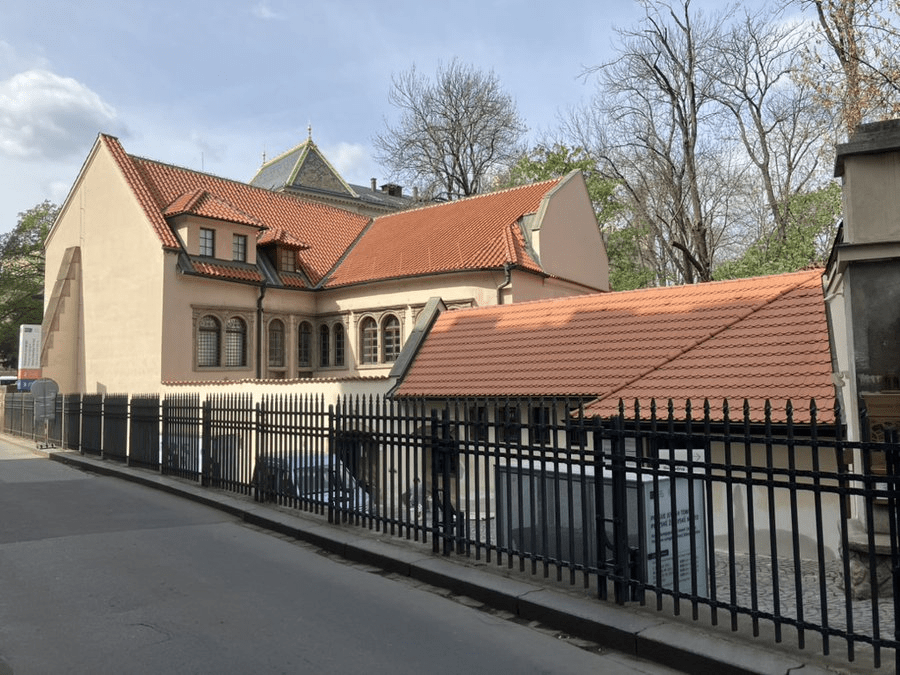
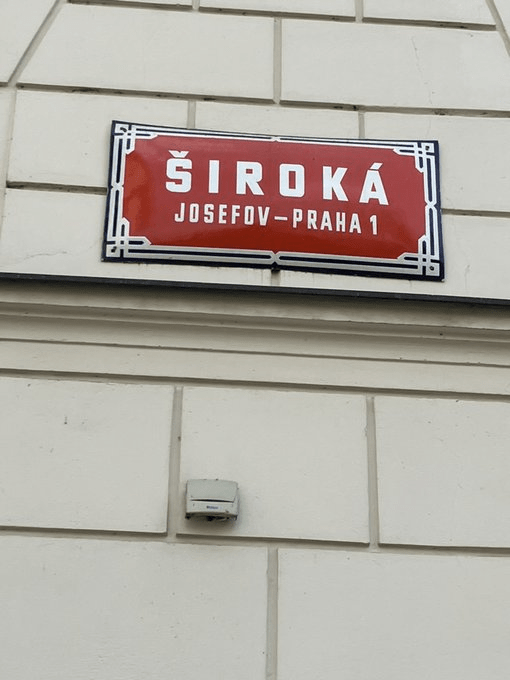
Later in the 1600s, the central part of the street was known as ‘Hlavní’ (because it was a main road), ‘Široká’ (because it was wide, or at least wider than the other streets in the area) or ‘Dlouhá’ (ditto, but replace ‘wide’ with ‘long’, and ‘wider’ with ‘longer’).
And the eastern part was known as Černá (black – explanation presumably the same as for current-day https://whatsinapraguestreetname.com/2024/09/14/prague-1-day-101-cerna/).
In 1850, the Jewish Town was named Josefov, after Joseph II (1741-1790), who not only closed down about a million monasteries (see every other post in this series), but also emancipated the Jews through his Edict of Tolerance (1782). The street was then renamed Josefovská.
In 1958, the name ‘Široká’ was reinstated, supposedly to avoid confusion with this street across the river: https://whatsinapraguestreetname.com/2024/09/09/prague-1-day-61-josefska/.
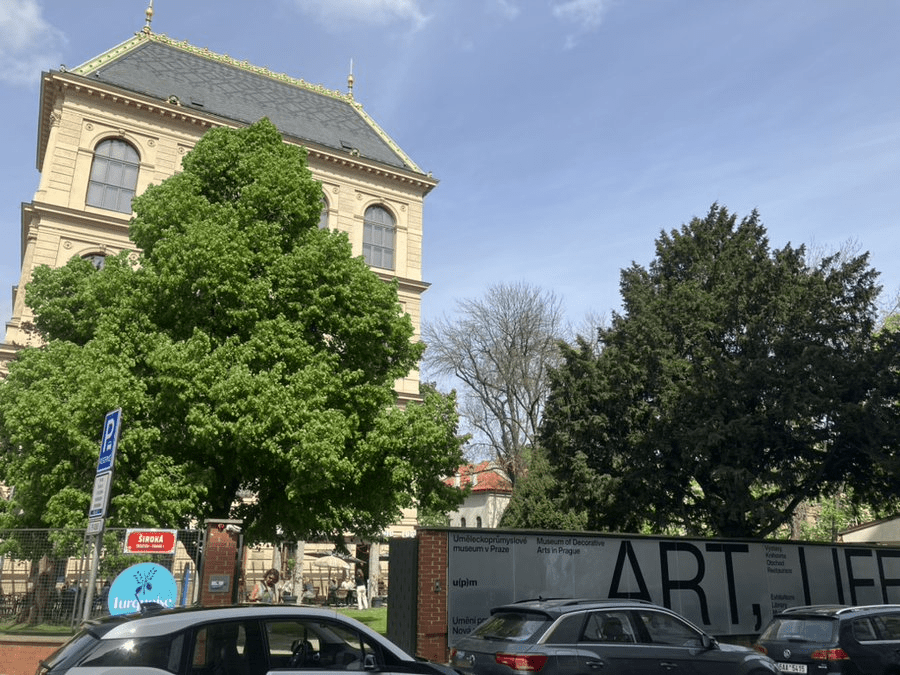
Walk closer to the river, and you’ll see another side of the Museum of Applied Arts (https://whatsinapraguestreetname.com/2024/10/23/prague-1-day-212-17-listopadu/).
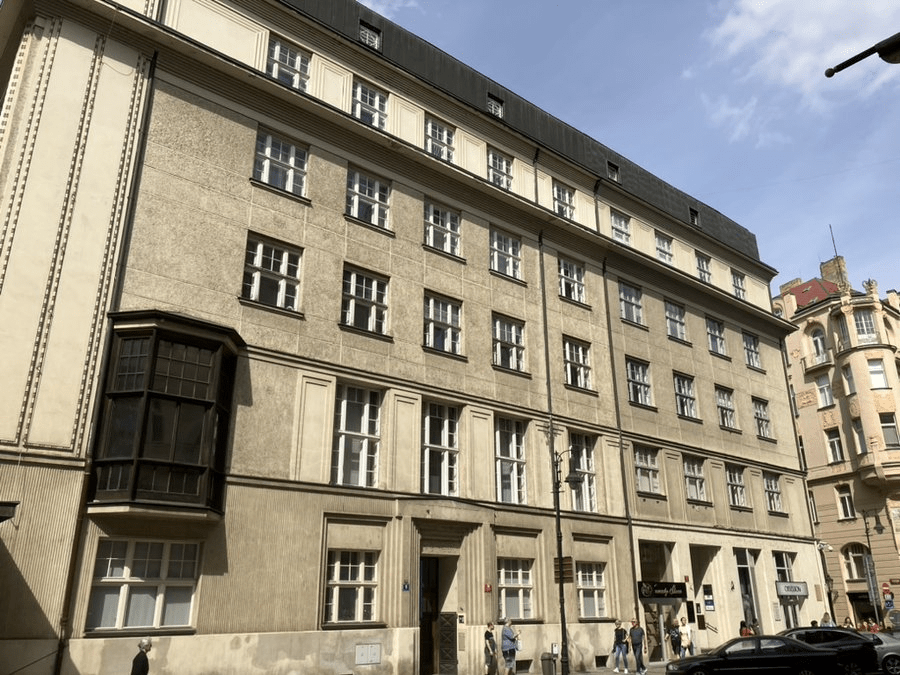
Then, at numbers 5 and 7, you have the Chevra Kadiš community and apartment building, built in 1910-1, and named after a funeral brotherhood founded by the Prague Jewish community in 1564 (‘Chevra Kadiš’ is Aramaic for ‘Holy Brotherhood’).
Then, at number 13, U Dvou Malorusek was built in 1905-6 by Jiří Justich and Matěj Blecha for Tomáš Ryšánek, a director of sugar factories who had worked in Volyn and Podilia in Ukraine.
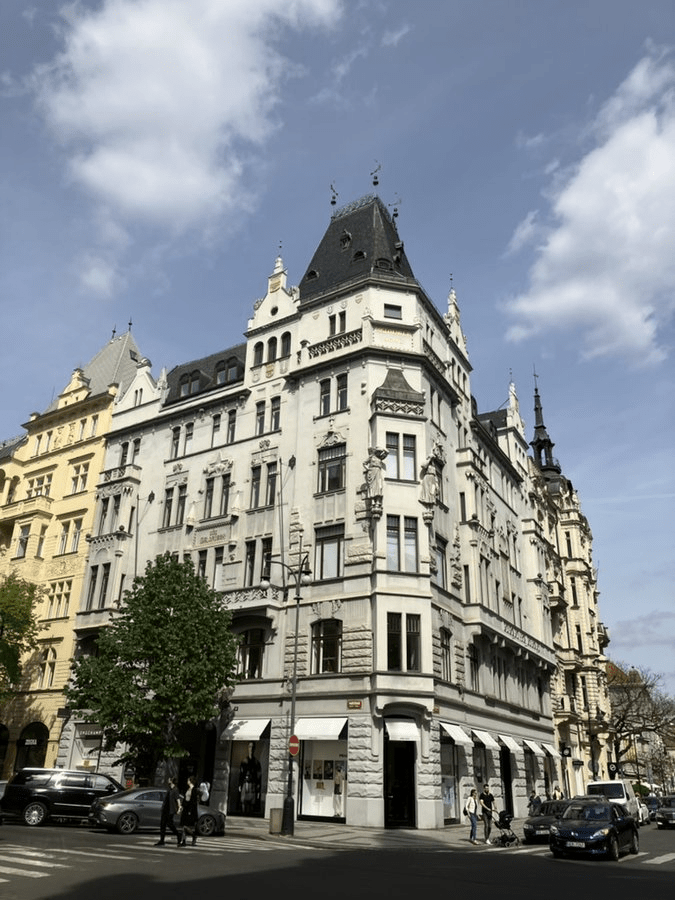
The house was called ‘The Two Little Russian Women’ as a tribute to what Blecha called ‘Little Russia’; you can see them above the entrance. It might be time for somebody to propose a name change, as, no, Ukraine is not Little Russia, and never will be.

 What's in a Prague street name
Leave a comment